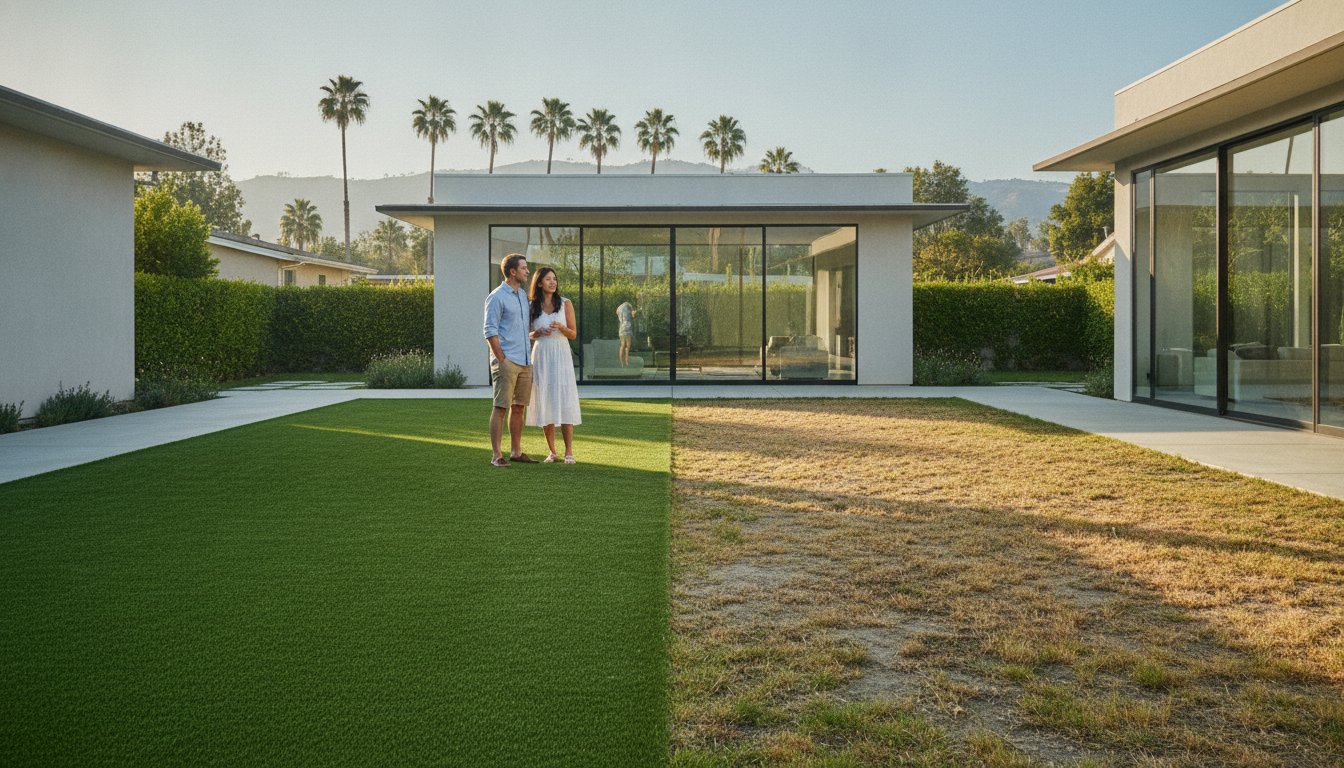
Artificial Turf vs. Natural Grass in Los Angeles: The 2026 Homeowner’s Guide
Did you know a standard 1,000-square-foot lawn in Los Angeles requires about 44,000 gallons of water every year? In a city where Phase 2 watering restrictions limit sprinklers to just three days a week, keeping a yard green often feels like a losing battle against the sun. You want a beautiful outdoor space, but the reality of artificial turf vs natural grass Los Angeles homeowners face involves more than just aesthetics. It's a strategic choice between long-term water security and the traditional feel of living sod.
We understand the frustration of watching your investment turn brown during a July heatwave while utility bills continue to climb. This 2026 guide provides a clear comparison of installation costs, maintenance requirements, and environmental impacts to help you build a functional sanctuary. We'll explore available LADWP turf replacement rebates, analyze heat mitigation strategies, and calculate the true return on investment for your property. By the end, you'll have the professional insight needed to transform your landscape into a lush, sustainable masterpiece.
Key Takeaways
- Navigate 2026 LADWP water mandates, tiered pricing, and rebate opportunities to maximize your property's long-term value.
- Compare the maintenance, durability, and aesthetic appeal of artificial turf vs natural grass Los Angeles to survive the summer heat.
- Balance immediate water conservation with the long-term impact of material lifespans to create a truly sustainable landscape.
- Choose the right surface for your lifestyle, whether you're prioritizing pet-friendly drainage or heat-mitigating designs for the valley sun.
The Los Angeles Landscape Dilemma: Why the Choice Matters in 2026
The era of thirsty Kentucky Bluegrass is quickly fading from the Southern California horizon. Today, homeowners are redefining the modern lawn to prioritize environmental resilience over outdated traditions. Deciding on artificial turf vs natural grass Los Angeles is no longer just about curb appeal; it's a strategic response to our rapidly changing climate. As we move through 2026, water-conscious yards have become essential for preserving both property value and local resources. For those seeking a comprehensive overview of artificial turf, it's clear that material technology now rivals the lush aesthetics of living sod.
Water Restrictions and Your Bottom Line
LADWP and MWD regulations have transformed routine lawn maintenance into a high-stakes financial decision. Phase 2 watering restrictions strictly limit sprinkler use to specific days, often leaving traditional grass struggling to survive peak summer heat. While smart irrigation systems can optimize every drop for natural lawns, tiered water pricing means that excessive consumption leads to exponential utility costs. Modernize your landscape infrastructure now to avoid the rising penalties and stresses associated with outdated, water-heavy designs.
The Rise of Drought-Tolerant Alternatives
Natural beauty doesn't have to mean high consumption. Many residents are exploring native buffalo grass, clover, or micro-clover to maintain a soft, green texture without the heavy environmental toll. Professional sustainable landscape design in Los Angeles balances these living elements with high-quality synthetic options to create a cohesive, low-maintenance sanctuary. This hybrid approach ensures your yard remains vibrant, functional, and fully compliant with local mandates. Sustainable landscape design serves as the vital bridge between artificial turf vs natural grass Los Angeles by integrating efficiency, durability, and aesthetic harmony into one cohesive plan.
Side-by-Side Comparison: Performance, Maintenance, and the Heat Factor
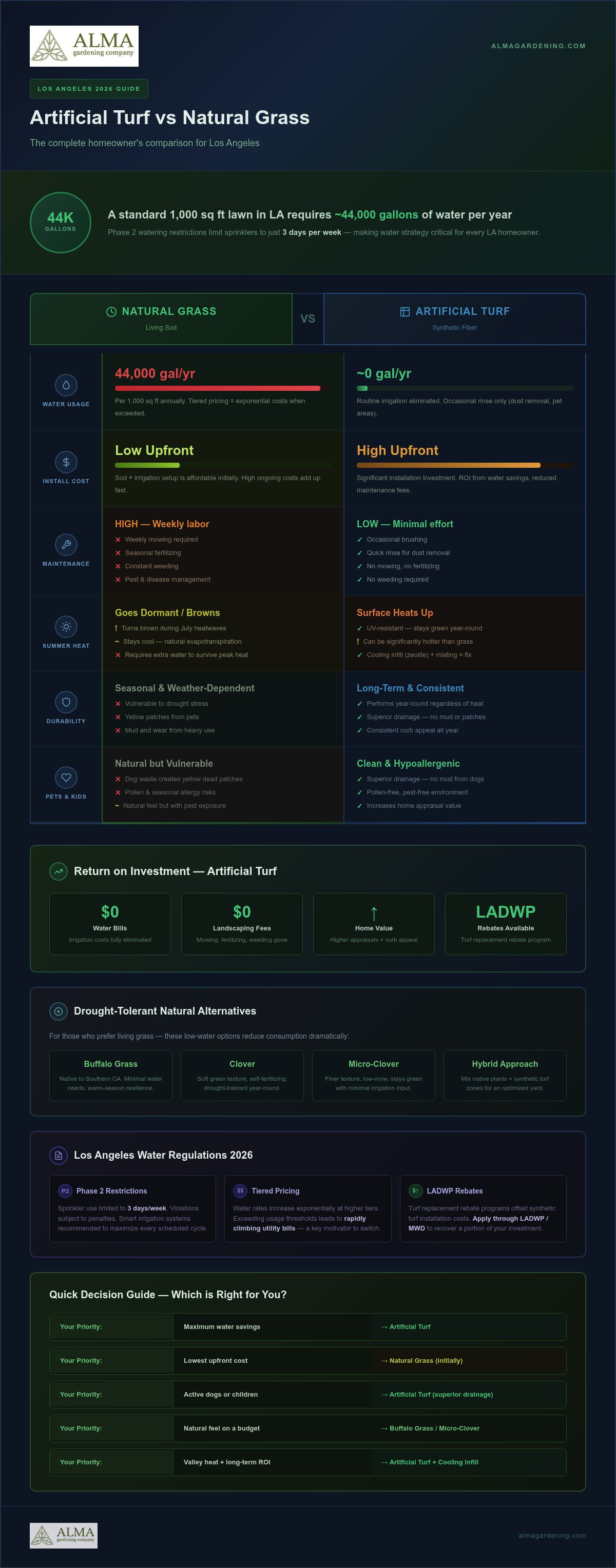
Choosing between artificial turf vs natural grass Los Angeles requires looking beyond the initial green. Natural lawns demand weekly mowing, seasonal fertilizing, and constant weeding. Synthetic options replace this labor with occasional brushing and a quick rinse to remove dust. While real grass often goes dormant and brown during local heatwaves, modern synthetic fibers feature advanced UV resistance to maintain their vibrant hue year-round. This durability ensures your landscape remains a functional sanctuary regardless of the season.
The Reality of Summer Surface Temperatures
Heat management is a primary concern for Valley residents. On a 90-degree day, synthetic surfaces can feel significantly warmer than living grass. The choice of infill is critical here. Zeolite or specialized cooling infills help regulate temperatures far better than traditional crumb rubber. To keep the area comfortable, a brief misting with a garden hose provides immediate evaporative cooling for kids and pets. This simple step ensures the surface remains inviting even during the peak of August.
Longevity and Return on Investment (ROI)
High-quality synthetic turf installation in Los Angeles represents a significant upfront investment that pays dividends over time. Homeowners typically see a full return through eliminated water bills, reduced landscaping fees, and perpetual curb appeal. Beyond the numbers, a lush, hypoallergenic yard increases home appraisal values. If you're ready to modernize your outdoor space, consult with a local design expert to find the right balance for your property.
For households with active dogs, synthetic turf offers superior drainage that prevents mud and eliminates yellow patches. It provides a clean, pollen-free environment for children to play without the risk of seasonal allergies or pests. This combination of durability, hygiene, and aesthetic consistency makes it a formidable contender in the artificial turf vs natural grass Los Angeles debate for any modern home.
The Environmental Impact: Water Conservation vs. Synthetic Materials
Water conservation drives the artificial turf vs natural grass Los Angeles debate for most homeowners. A standard 1,000-square-foot living lawn in the city requires about 44,000 gallons of water every year. Removing this demand provides immediate relief for your utility bill and the local reservoir. We also consider the lifecycle of synthetic materials. While turf offers a 15 to 20-year lifespan, the industry is still developing robust recycling programs within California to handle retired installations at the end of their functional life.
Natural grass fosters a living soil biome that benefits local pollinators. This biodiversity comes with a catch: the frequent use of fertilizers and pesticides. These chemicals often wash away during irrigation or rain, contributing to toxic runoff in our coastal waters. Synthetic options eliminate this chemical dependency entirely. It's a trade-off between supporting a small local ecosystem and protecting the broader watershed from chemical contamination.
Carbon Footprint: Mowers vs. Manufacturing
Gas-powered mowers and blowers are notorious for high emissions. Using a gas mower for just one hour can produce as much smog-forming pollution as a long car trip. Manufacturing synthetic fibers has an upfront carbon cost, but the lack of weekly maintenance offsets this over the years. Choosing a low-maintenance yard directly supports better air quality across the Los Angeles basin by removing gas-powered tools from your weekend routine.
Drainage and Runoff Management
Expert outdoor drainage system installation is the backbone of any sustainable yard. It prevents water from pooling during our intense winter storms and protects your home's foundation. Whether you choose sod or synthetic, a professional system directs water safely into the ground or the proper channels. Schedule a consultation to see how we balance artificial turf vs natural grass Los Angeles considerations with the high-performance technical infrastructure your property requires.
Designing Your Sanctuary: How to Choose the Right Surface for Your LA Home
Think about how you actually use your yard before making a final commitment. If you have large dogs or kids practicing sports every afternoon, synthetic turf's durability is unmatched. However, if your goal is a quiet, shaded meditation garden in the San Fernando Valley, native groundcovers might offer the sensory experience you crave. Modern Los Angeles landscapes often thrive on a hybrid model. Combine professional hardscape design and installation with strategic synthetic turf accents and drought-tolerant native plants to create a balanced, beautiful environment.
Deciding on artificial turf vs natural grass Los Angeles ultimately comes down to your personal priorities and micro-climate. Full-sun exposures in the Valley demand heat-mitigating infills; coastal properties might have more flexibility with living sod. Balance your initial capital investment against the decade of utility savings and lower maintenance hours to find the right fit for your budget. We view every yard as a unique ecosystem where utility must meet aesthetic beauty.
Questions to Ask Your Landscape Designer
- What is the specific drainage rating of this turf product for heavy pet use?
- Can we integrate native plants with a synthetic lawn to support local wildlife?
- How will this choice affect my home's foundation and long-term soil moisture?
Final Verdict: Which is Best for You?
You are likely a Turf Candidate if you prioritize a green look year-round, have high-traffic pets, or want to eliminate weekend mowing. You may be a Natural Native Enthusiast if you enjoy active gardening, have a heavily shaded lot, or want to maximize local pollinator support. When weighing artificial turf vs natural grass Los Angeles homeowners should consider a site evaluation to analyze soil health and sun patterns. Your next step is to schedule a professional consultation to see which sustainable solution fits your lifestyle sanctuary.
Build Your Resilient Los Angeles Sanctuary
Choosing between artificial turf vs natural grass Los Angeles is a defining step toward a more sustainable and enjoyable home. We've explored how modern synthetic surfaces solve the brown-lawn dilemma while natural options offer unique ecological benefits. Whether you prioritize the cooling effect of native sod or the maintenance-free lifestyle of high-quality turf, your landscape should reflect your personal values. Success lies in the technical details, such as professional drainage and soil health, that ensure long-term durability, aesthetic harmony, and peace of mind.
We bring deep expertise in Southern California micro-climates to every project. Our team provides full-service design and installation, specializing in high-quality synthetic turf with superior drainage systems. It's time to stop fighting the summer heat and start enjoying a lush, functional environment. Transform your Los Angeles backyard with a custom sustainable design from Alma Gardening Company today! We look forward to helping you create an outdoor space that offers lasting beauty and utility for years to come.
Frequently Asked Questions
Is artificial turf hotter than real grass in Los Angeles?
Yes, synthetic fibers absorb more solar heat than living plants. While natural grass uses transpiration to stay cool, turf can reach higher temperatures during peak summer hours. Use specialized cooling infills like zeolite or select "cool-touch" blade technologies to manage this. A quick misting with water provides immediate relief for families and pets during the hottest parts of the day.
How long does synthetic turf last in the Southern California sun?
High-quality synthetic turf typically lasts between 15 and 20 years in the intense Los Angeles sun. Modern products feature advanced UV inhibitors that prevent the blades from becoming brittle or fading over time. Proper installation and occasional maintenance, such as brushing to prevent matting, ensure the surface remains resilient. This long lifespan makes it a durable choice for homeowners seeking a permanent, low-maintenance landscape solution.
Does the City of Los Angeles offer rebates for turf replacement?
Yes, the LADWP currently offers a residential turf replacement rebate of $5.00 per square foot for up to 5,000 square feet. This program aims to reduce water consumption across the city by encouraging drought-tolerant designs. Homeowners can receive a maximum rebate of $25,000 for their project. Always verify the current requirements and application process through the official LADWP website before starting your lawn transformation.
Can I install artificial turf if I have dogs?
Synthetic turf is an excellent choice for pet owners when paired with a professional drainage system. It eliminates muddy paws and prevents the yellow patches common with natural grass. Look for antimicrobial infills and high-flow backings that allow liquids to pass through quickly. When debating artificial turf vs natural grass Los Angeles pet owners often prefer the hygienic, easy-to-clean surface that synthetic options provide year-round.
What is the best type of natural grass for a drought-prone LA backyard?
UC Verde Buffalo Grass and Kurapia are among the best living alternatives for a water-wise Los Angeles yard. These varieties require significantly less irrigation than traditional fescue and stay green with minimal intervention. They thrive in our local climate and handle the artificial turf vs natural grass Los Angeles comparison by offering a soft, living texture that supports local pollinators while respecting current Phase 2 watering restrictions.
