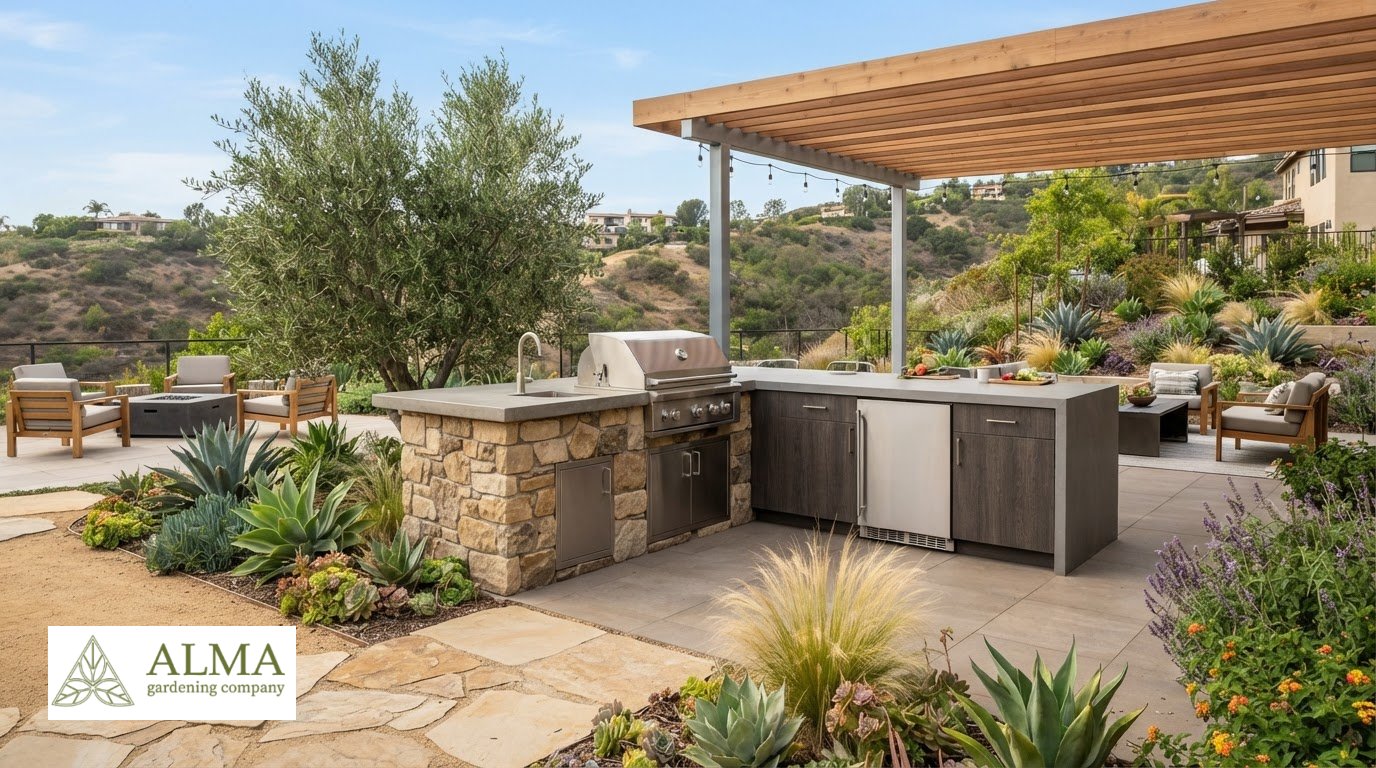
Best Material for Outdoor Countertops: LA Guide
The countertop that looks perfect in a showroom may not be right under the Los Angeles sun. If you’re searching for the best material for outdoor countertops, appearance is only part of the decision. Direct sun, heat, cooking habits, and the care you’re willing to provide all matter. Most engineered quartz, for example, isn’t suited to prolonged outdoor UV exposure, so an indoor favorite may not be a dependable fit outside.
Choose with the whole outdoor kitchen in mind. This guide compares natural stone, concrete, porcelain, and stainless steel by appearance, care, exposure, and everyday use. You’ll find practical questions to ask before choosing, including how to assess shade, verify product requirements, and coordinate the counter with your patio and surrounding hardscape. Use these points to build a shortlist before planning a larger outdoor living project.
Key Takeaways
- The best material for outdoor countertops depends on sun exposure, cooking habits, spill risk, and how much upkeep suits your routine.
- Compare natural stone, concrete, porcelain, and stainless steel by appearance and care needs rather than expecting one option to suit every outdoor kitchen.
- Assess shade, site access, existing hardscape, and drainage before narrowing your material shortlist.
- Plan the countertop alongside the patio, pavers or concrete, and kitchen circulation for a more cohesive outdoor space.
What Makes a Material the Best Choice for Outdoor Countertops?
An outdoor countertop has to suit its actual setting, not just look appealing in a sample. Direct sun, heat, windblown debris, food spills, and cleaning routines all affect how a surface performs and feels in daily use. The best material for outdoor countertops is the one that fits your exposure, cooking habits, and design priorities together.
Start with how you’ll use the surface. A counter used for regular food preparation may encounter more spills and require more frequent cleaning than one used mainly for serving. Consider how the countertop relates to outdoor cooking methods, too. The way you cook and entertain can affect how much work surface you need near the grill and serving area.
How Southern California sun and outdoor use affect the decision
Check whether the proposed counter will be in direct sun for much of the day or beneath a pergola or other shade. Exposure differs from one property to another, even within Los Angeles. Nearby walls, trees, and the kitchen’s orientation can change how much sun reaches the surface. Observe the site at the times you expect to use the kitchen, and remember that shade does not remove the need to choose a product intended for outdoor conditions.
Be realistic about use and upkeep. Will you prepare meals outside, serve guests, or mostly set down drinks? Decide how quickly you want to clean spills and whether you’re comfortable following material specific care instructions. Before choosing, ask the supplier what routine care is recommended for the exact product and finish.
What to compare before choosing a countertop
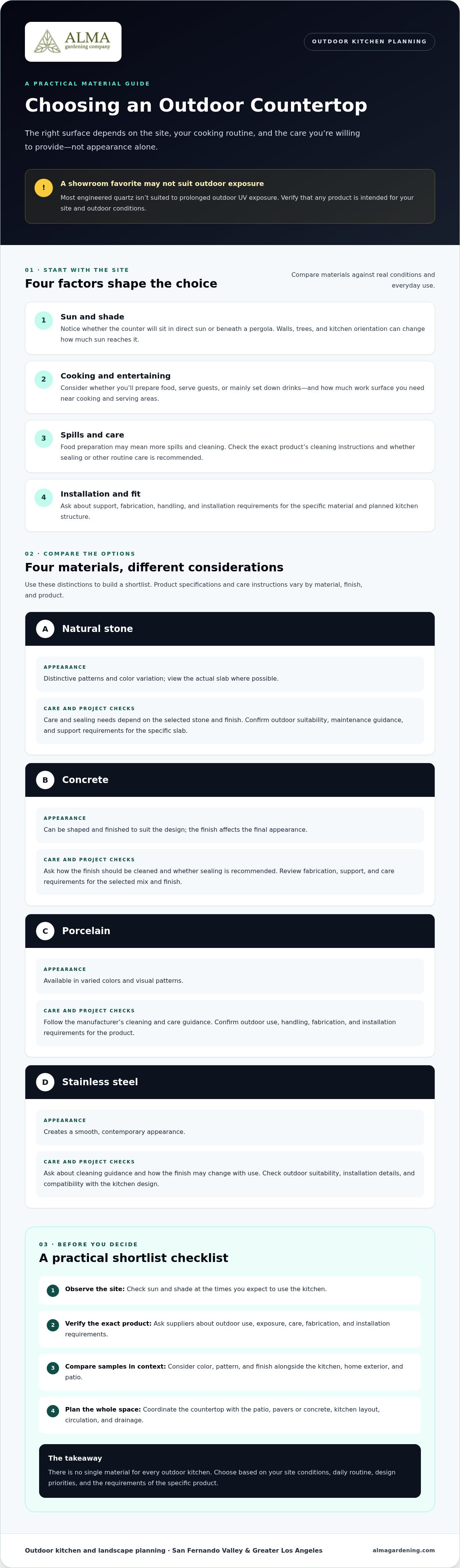
Compare each option across four practical criteria:
- Appearance: Compare color, pattern, and finish with the kitchen, home exterior, and patio. If possible, view a larger sample or the actual stone slab in the intended setting.
- Care: Check cleaning instructions and whether the manufacturer recommends sealing or other routine care for that specific product.
- Use and exposure: Confirm suitability for the site’s sun, heat, food preparation, and entertaining needs.
- Installation: Ask about support, fabrication, and how the material fits the planned kitchen structure.
No single material suits every outdoor kitchen. The right choice balances the site, your routine, and the look you want.
Outdoor Countertop Materials Compared: Stone, Concrete, and Porcelain
Each material brings a different appearance and set of care and installation questions. Use this comparison to shape your shortlist, not as a performance guarantee. Product specifications and care instructions vary, so review those for the exact option before deciding. HGTV’s overview of Outdoor Kitchen Countertop Options also covers several surfaces used in outdoor kitchens.
| Material | Appearance | Care considerations | Exposure and project-fit questions |
|---|---|---|---|
| Natural stone | Distinctive patterns and color variation | Care and sealing needs depend on the selected stone and finish. | Confirm outdoor suitability, maintenance guidance, and support requirements for the specific slab. |
| Concrete | Can be shaped and finished to suit the design. | Ask how the finish should be cleaned and whether sealing is recommended. | Review fabrication, support, and care requirements for the selected mix and finish. |
| Porcelain | Available in varied colors and visual patterns. | Follow the manufacturer’s cleaning and care guidance. | Confirm outdoor use, handling, fabrication, and installation requirements for the product. |
| Stainless steel | Creates a smooth, contemporary appearance. | Ask about cleaning guidance and how the finish may change with use. | Check outdoor suitability, installation details, and compatibility with the kitchen design. |
Distinctive looks come with care questions
Natural stone varies from piece to piece, so view the actual slab where possible and don’t assume every stone performs alike. Concrete offers design flexibility, but the finish affects the final appearance and may affect care. For both, confirm sealing and maintenance recommendations for the exact product rather than relying on general descriptions.
Match the surface to the project
Porcelain and stainless steel can suit different design directions, but a material label alone doesn’t establish whether a specific product is suitable outdoors. Ask suppliers for specifications on intended use, exposure, fabrication, and installation. The best material for outdoor countertops is the one that fits those requirements and your kitchen layout. If you’re planning the wider outdoor space, Alma Gardening Company can discuss outdoor kitchen and landscape design and installation in the San Fernando Valley and Greater Los Angeles. Visit Alma Gardening Company to learn more about its landscape services.
How to Choose an Outdoor Countertop for Your Site and Routine
Use a straightforward sequence to narrow your options: assess the location, define how you’ll use the counter, shortlist materials, then verify care and installation requirements. This keeps the decision grounded in your property rather than a sample’s appearance alone.
Questions to answer during material selection
- Assess exposure: Will the counter receive direct sun, sit in partial shade, or be covered by a pergola? Consider how nearby walls, trees, and the home’s orientation affect the proposed location.
- Define use: Decide whether you’ll regularly prepare food, serve meals, or mainly set down drinks. Factor in how often you’re willing to clean the surface.
- Shortlist and verify: Compare appearance and care needs, then check the manufacturer’s instructions for the specific product, including outdoor suitability, cleaning, and any recommended sealing.
Color and finish matter beyond style. A sample may look different beside your home’s exterior, patio, pavers, or concrete. View options in the intended setting and compare their tones and textures in the light the counter will receive.
Coordinate the counter with patio, drainage, and lighting
Plan the countertop as part of the kitchen and patio layout. Check that there’s practical room to move between cooking, serving, and seating areas, and consider site access for bringing in materials and completing installation. Existing hardscape may affect the layout or require changes to connect the kitchen with the patio.
Map drainage and irrigation routes before finalizing the work area. Plan where water will flow away from the kitchen and adjacent surfaces, and check that irrigation lines won’t conflict with the installation. Include outdoor lighting in the layout so fixtures can serve cooking and circulation areas. Alma Gardening Company plans outdoor kitchens, patios, hardscape, and drainage as connected landscape projects in the San Fernando Valley and Greater Los Angeles.
Plan an Outdoor Kitchen Countertop That Works With the Whole Landscape
A countertop is one part of a larger installation. Its dimensions and placement affect the kitchen layout, supporting structure, adjacent patio, and movement around the work area. Plan these elements together so the surface fits the way you cook and entertain, rather than treating it as a final detail after the hardscape is set.
What to discuss before installation begins
Bring site dimensions, reference images, intended uses, and questions about materials to the planning conversation. Discuss how access for materials and equipment, any demolition, drainage needs, and the overall project scope may affect the sequence of work. Confirm who will supply and install the selected countertop. Alma Gardening Company offers outdoor kitchen and landscape design and installation; ask directly about countertop material options for your project.
Connect the countertop to a cohesive outdoor living space
Look at the counter alongside the patio, concrete or pavers, shade structure, and outdoor lighting. For example, a kitchen opening onto a narrow patio may need a layout that keeps the route between cooking and seating clear. Coordinating colors and finishes across these surfaces can help the kitchen feel integrated with the home and surrounding hardscape. Consider the hardscape design and installation guide when planning how paved areas connect with the kitchen.
Plan drainage and irrigation routes before installation begins. This gives the project team a chance to account for water flow and line locations before the kitchen and patio are in place. Include lighting locations in the plan as well, especially around work surfaces and walking paths.
If you’re planning an outdoor kitchen or a broader landscape project in the San Fernando Valley or Greater Los Angeles, contact Alma Gardening Company to discuss design and installation. Bring your ideas and site questions so the conversation can cover how the kitchen fits into the whole outdoor space.
Plan a Countertop That Fits Your Outdoor Kitchen
The best material for outdoor countertops depends on more than appearance. Match the surface to its sun and shade exposure, how you’ll cook and serve, and the level of care you’re comfortable providing. Confirm product specific requirements before settling on a material, since performance and upkeep can vary by product and finish.
Think beyond the counter, too. Its placement should work with the kitchen layout, patio, surrounding pavers or concrete, drainage, and paths through the space. Planning these pieces together helps create a cohesive outdoor room that’s practical to use.
Alma Gardening Company plans and installs outdoor kitchens and patios, along with landscape design, hardscaping, and concrete work in the San Fernando Valley and Greater Los Angeles. Its local focus includes Los Angeles, Sherman Oaks, Encino, Studio City, North Hollywood, Woodland Hills, West Hills, Glendale, Burbank, Beverly Hills, Culver City, Pacific Palisades, and Malibu. If you’re considering a new kitchen or a broader outdoor project, start by thinking through how the features can come together.
A thoughtful plan gives you a stronger starting point for a welcoming outdoor space built around the way you live.
Frequently Asked Questions
What is the best material for outdoor countertops?
There’s no single best material for every outdoor kitchen. Compare natural stone, concrete, porcelain, and stainless steel based on the counter’s sun and shade exposure, intended use, appearance, and care requirements. Then check the specifications and maintenance instructions for the exact product. A counter used for frequent food preparation may call for different care than one mainly used for serving drinks.
Is granite a good choice for an outdoor countertop?
Granite may be worth considering, but suitability depends on the particular stone, finish, installation, and care requirements. Ask the supplier for guidance on outdoor exposure, cleaning, and whether sealing is recommended for your selection. Look at the actual color and pattern alongside your patio and hardscape, too. Granite pieces can vary, so don’t assume all slabs have the same appearance or care needs.
Can porcelain countertops be used outdoors?
Some porcelain products are made for outdoor applications, but don’t assume every slab is suitable. Confirm the manufacturer’s intended use, installation instructions, and care guidance for the specific product you’re considering. Also discuss how the countertop will be supported and how its location relates to sun exposure and the outdoor kitchen layout. These details help establish whether a particular porcelain option fits your project.
Does an outdoor concrete countertop need to be sealed?
It depends on the concrete mix, finish, sealer, and guidance from the manufacturer or installer. Before choosing a countertop, ask what cleaning routine is recommended and whether sealing is advised for that specific surface. Consider how often you’ll prepare food and clean spills, along with the counter’s exposure. A general rule may not apply to every concrete installation, so get product specific care instructions.
How do I choose an outdoor countertop for a sunny Los Angeles yard?
Start by checking the proposed counter’s actual sun and shade, since exposure can differ across a property. In Los Angeles and San Fernando Valley communities such as Sherman Oaks, Encino, Studio City, North Hollywood, Woodland Hills, and West Hills, assess the specific site rather than assume conditions are uniform. Define how you’ll prepare food, serve, and clean, then compare product guidance and coordinate the choice with the kitchen, patio, drainage, and hardscape.
