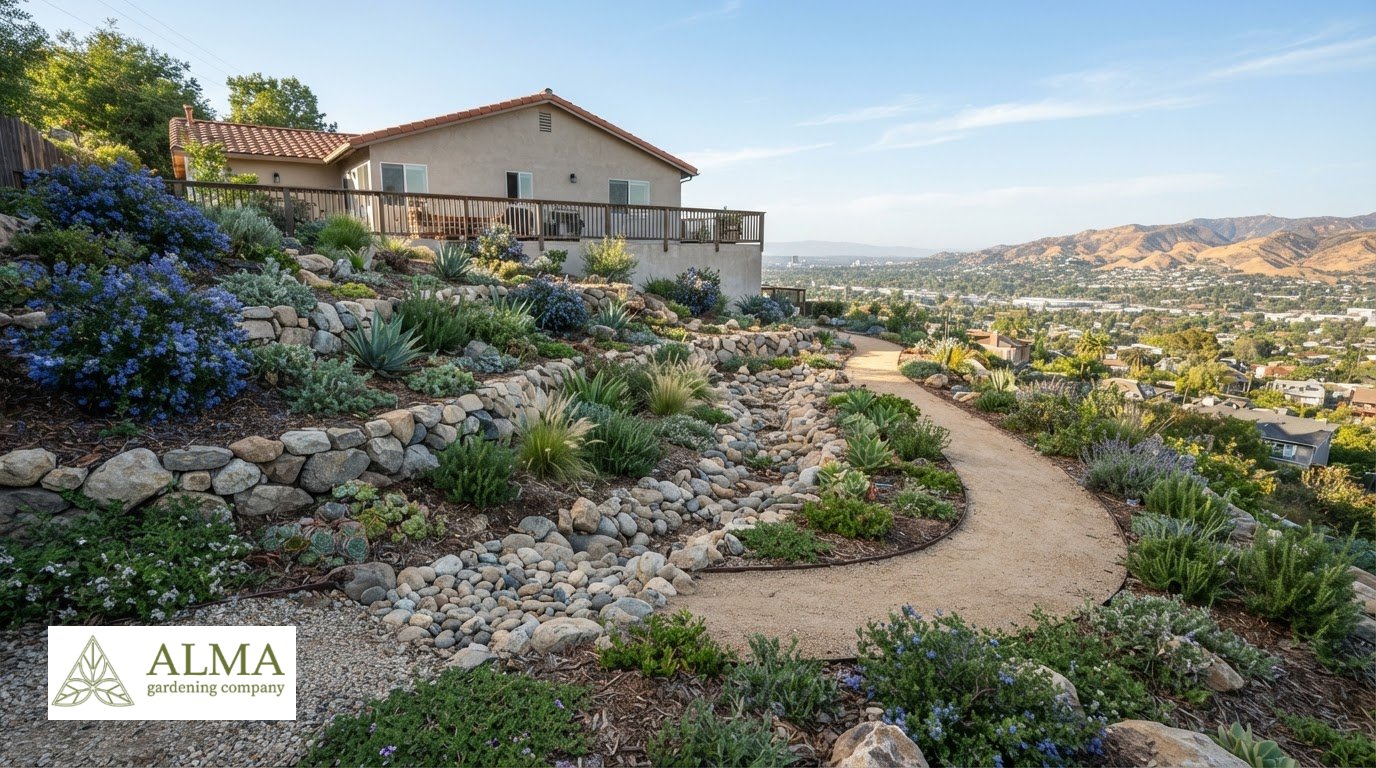
Best Ways to Landscape an LA Hillside on a Budget
What if the most budget-friendly hillside upgrade starts with water, not plants or pavers? When runoff collects in a sloped yard or cuts across it during a storm, it’s natural to look for a quick fix. But the right hillside drainage solutions Los Angeles homeowners need depend on where water begins, how it moves, and where it can safely go. Addressing those conditions first can help prevent a new surface from hiding unresolved erosion or pooling.
This guide explains how to trace runoff and compare practical options, from drainage systems to drought-tolerant planting and planned hardscape. You’ll also learn why project costs vary with site conditions, access, materials, drainage needs, and scope, and when a site assessment can help clarify the next step. Start with the water’s path, then plan a hillside landscape that balances function and appearance.
Key Takeaways
- Trace runoff from its source downhill. Pooling or exposed soil alone may not reveal what’s causing the problem.
- Compare hillside drainage solutions for Los Angeles properties, including grading, swales, French drains, and permeable hardscape, based on site conditions.
- Plan improvements in stages: document water flow, address urgent runoff paths, then consider planting and hardscape.
- Bring site photos, notes on observed flow paths, any existing plans, and project priorities to a consultation. These details can help coordinate drainage with planting, irrigation, and hardscape.
Hillside Drainage in Los Angeles: Identify the Runoff Problem Before Choosing a Fix
Concentrated runoff, pooling, exposed soil, and water moving toward a structure are signs to investigate, not a diagnosis. The source may be higher on the slope, where water follows a worn channel, crosses hardscape, or escapes from an irrigation line. Before choosing among hillside drainage solutions Los Angeles properties might need, trace the flow downhill. A surface patch may hide the symptom without changing where the water comes from.
How to trace water across a sloped yard
Observe the yard during or just after rain, if conditions are safe. Note where runoff begins, where it gathers speed, and where it leaves the property. Photograph visible channels, pooling, saturated areas, downspouts, and possible irrigation leaks. If water crosses a paved area, note where it enters and exits. Don’t walk on unstable or slippery ground. Slope, soil, paving, and planting all influence how quickly water runs off or soaks in. For background on approaches that may help limit soil loss, see this overview of erosion control methods.
Why Los Angeles hillside sites need individual assessment
Hillside conditions differ across the San Fernando Valley and Greater Los Angeles. A paved section may send water toward a planting bed, while another part of the same yard absorbs it differently. Don’t assume the soil type, slope stability, or drainage requirements based on a nearby property. Site conditions determine whether grading, drainage, planting, or a combination deserves attention.
Budget-conscious planning means choosing a suitable, durable scope, not simply applying the cheapest-looking surface fix. Rock or new ground cover may improve appearance, but it won’t necessarily resolve concentrated flow. If runoff approaches a structure, continues eroding soil, or crosses property lines, have the site assessed before making changes. Alma Gardening Company can coordinate landscape design and installation with drainage, irrigation, hardscape, and drought-tolerant planting.
How Hillside Drainage Solutions Work: Direct Runoff Without Creating New Problems
Choose a drainage method based on how water moves across the site, not just where it pools. Surface grading reshapes the ground to guide runoff along a planned route. It may work where there’s room to create a gentle path, but grading can be limited by buildings, property boundaries, and existing hardscape. A swale uses a shallow channel to carry surface flow. It needs a clear route and planting that won’t obstruct it.
Surface drainage and planted channels
Grading and swales can suit visible runoff that travels across open areas. Planting can help cover exposed soil, but the channel still needs to remain functional and accommodate the water moving through it. Consider how plant growth, irrigation, and soil conditions may affect the flow path over time. For more ideas about plant selection and watering on slopes, see this guide to landscaping a hillside garden.
French drains and permeable hardscape
A French drain collects water below the surface and carries it through a buried drainage route. It may help where water accumulates below grade, but it won’t automatically solve surface runoff or an unsuitable discharge route. Permeable pavers allow water to pass through joints into the ground when site conditions support infiltration. Soil that drains poorly or a slope that moves water downhill quickly may limit their usefulness. Both approaches need a plan for keeping drainage paths clear.
Each option has tradeoffs. A swale needs space; a French drain requires subsurface installation; permeable paving depends on the ground beneath it. In every case, collecting water is only part of the design. Decide where it can safely go, and avoid directing it toward buildings or neighboring property. The right hillside drainage solutions for Los Angeles sites depend on slope, soil, available space, and runoff patterns. For complex conditions, consider discussing a coordinated drainage and landscape plan with Alma Gardening Company.
Budget-Conscious Hillside Landscaping: Choose Improvements in the Right Order
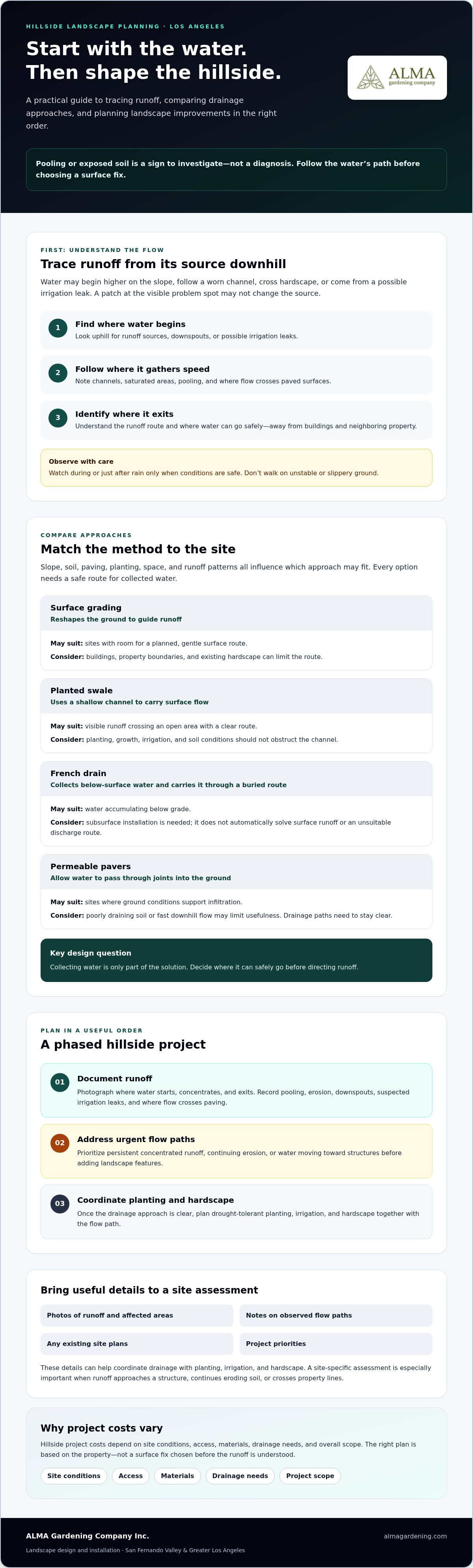
A phased plan can make a hillside project easier to prioritize without treating drainage as an afterthought. Use this sequence:
- Document runoff. Photograph where water starts, concentrates, and exits. Note pooling, erosion, downspouts, and possible irrigation leaks.
- Address urgent flow paths. Prioritize persistent concentrated runoff, erosion, or water moving toward structures before adding landscape features.
- Plan planting and hardscape. Once the drainage approach is clear, coordinate drought-tolerant planting, irrigation, and paths or patios with the intended water flow.
Ask for phased scopes that explain what each stage addresses and where water will be discharged. Project costs vary with site conditions, access, demolition, materials, design, labor, drainage, permits, and overall scope. For broader planning context, review this outdoor drainage system installation guide.
Which lower-cost measures may help first?
Check for a visible irrigation leak and observe where downspouts release water before planning larger changes. Repairing a leak or correcting a discharge issue may address one source of excess water, but it won’t resolve every runoff pattern. Mulch or suitable planting can cover exposed soil, yet neither replaces drainage when water needs a controlled route.
When a hillside needs a designed drainage project
Persistent concentrated flow, recurring erosion, or water near a structure calls for a closer site assessment. Avoid digging on steep slopes or near buried utilities or structural features without qualified guidance. A site-specific plan can match the drainage approach to the slope, soil, and runoff conditions. For complex access or flow paths, discuss a landscape and drainage consultation with Alma Gardening Company.
Plan a Complete Los Angeles Hillside Drainage and Landscape Project
A hillside landscape works best as a coordinated plan. Drainage establishes where water should move; drought-tolerant planting and irrigation support the site’s sun and soil conditions; hardscape creates usable areas without ignoring runoff. Keep drainage routes accessible and clear in the design. Choose plants for the available light and water, and plan patios and paths to fit the slope without redirecting flow toward structures or neighboring properties.
Coordinate drainage with planting and outdoor surfaces
Choose planting for the site’s exposure and available water, and arrange it so established drainage paths remain functional. Irrigation should deliver water where plants need it without creating avoidable runoff. Hardscape is part of the layout, not a substitute for assessing drainage. This hardscape design and installation guide offers additional context for integrating outdoor surfaces into a landscape plan.
What to ask during a drainage consultation
Bring site photos, notes on where water flows, any existing plans, and a short list of priorities. Ask how the proposed scope will collect, direct, and discharge runoff. Also clarify which site assumptions, approvals, and project variables need confirmation before work begins. These details help connect the drainage approach to the broader landscape instead of treating each feature separately.
A well-prepared discussion can make options and tradeoffs easier to compare. Alma Gardening Company provides project-based landscape design and installation, including drainage, irrigation, hardscape, pavers, and drought-tolerant landscaping. Its local focus includes the San Fernando Valley and Los Angeles, as well as Sherman Oaks, Encino, Studio City, North Hollywood, Woodland Hills, West Hills, Glendale, Burbank, Beverly Hills, Culver City, Pacific Palisades, and Malibu.
Build a Hillside Landscape That Works With the Water
A budget-conscious hillside project starts with understanding runoff, not covering up its symptoms. Trace where water begins and travels, then choose a drainage approach suited to the slope, soil, and site layout. Address urgent flow paths before investing in planting or hardscape, and make sure the plan accounts for where collected water will go.
Thoughtful hillside drainage solutions for Los Angeles properties can be part of a larger landscape plan. Drainage, drought-tolerant planting, irrigation, and hardscape work best when considered together, with project stages shaped around site conditions and priorities.
Alma Gardening Company provides landscape drainage systems and can coordinate drainage with landscape design, hardscape, irrigation, and drought-tolerant landscaping. If you’re planning a sloped property in the San Fernando Valley or Greater Los Angeles, contact Alma Gardening Company to discuss a hillside drainage and landscape project.
Frequently Asked Questions
What is the most affordable way to manage runoff on a hillside?
A useful first step is to look for a correctable source before committing to larger landscape work. Check for visible irrigation leaks and observe where downspouts release water during rain. Then note where runoff concentrates and where it exits. If water keeps eroding soil or moving toward structures, a site-specific drainage plan may be more appropriate than a surface-level patch.
Can plants alone prevent erosion on a Los Angeles hillside?
No. Plants can help cover exposed soil, but they don’t replace drainage when runoff needs to be collected and directed. Choose plants suited to the slope’s sun exposure and water needs, and keep intended flow paths functional. Mulch may also cover bare ground, but it won’t correct water concentrating in a channel or approaching a structure.
Is a French drain the right solution for every sloped yard?
No. A French drain is a subsurface collection system, not a universal fix for every slope. It may be considered where water collects below the surface, but it won’t automatically control runoff moving across the ground. Suitability depends on soil, slope, water patterns, and a workable discharge route. Assess those conditions before choosing a drain or combining it with surface drainage.
How do I know if my hillside needs professional drainage work?
Consider a professional assessment if concentrated runoff persists, erosion recurs, or water reaches areas near a structure. These signs don’t identify the cause by themselves, so tracing water from its source to its exit can help clarify the issue. Avoid digging on steep slopes or near buried utilities or structural features without qualified guidance. Complex flow paths or difficult access are also reasons to seek site-specific advice.
What affects the cost of a hillside drainage project in Los Angeles?
Project costs depend on site conditions, access, demolition, materials, design, labor, drainage needs, permits, and overall scope. A straightforward correction and a project involving several parts of a slope may require different planning and work. Conditions can vary across Los Angeles and the San Fernando Valley, including Sherman Oaks, Encino, Studio City, North Hollywood, Woodland Hills, West Hills, Glendale, Burbank, Beverly Hills, Culver City, Pacific Palisades, and Malibu.
