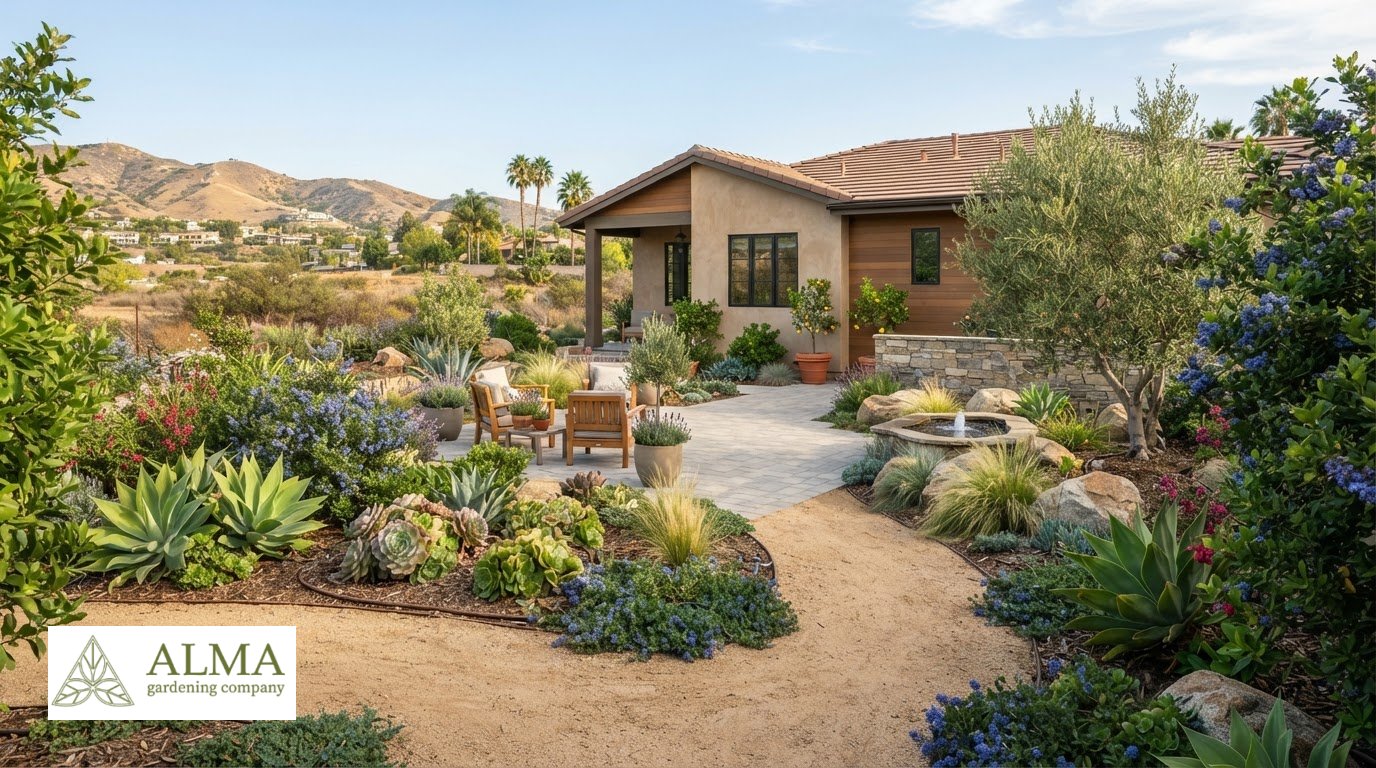
Complete Eco-friendly landscaping Los Angeles Guide for Success
What if an eco-conscious yard could feel lush, inviting, and useful without relying on a thirsty lawn? Eco-friendly landscaping Los Angeles projects depend on more than choosing drought-tolerant plants. Sun exposure, soil, drainage, irrigation, and how you use the space all shape the design. Saving water does not have to mean creating a sparse yard or giving up places to relax and gather.
With a thoughtful plan, water-wise planting and carefully selected hardscape can work together to create a beautiful, functional landscape. This guide covers practical choices for the San Fernando Valley and Greater Los Angeles, including how to consider plants, materials, irrigation, drainage, patios, and other outdoor living features. You’ll also find site details to prepare before speaking with a landscape professional.
Key Takeaways
- Plan eco-friendly landscaping Los Angeles projects around the property’s sun, soil, heat, drainage, and everyday use.
- Set priorities before choosing plants and irrigation, and match both to the site instead of relying on a one-size-fits-all plan.
- Compare planting areas, pavers, concrete, and synthetic turf by function and site suitability, including their tradeoffs.
- Prepare for a landscape consultation by noting your goals and existing conditions. Project costs depend on scope and site details.
Eco-friendly landscaping Los Angeles: What it means for your property
Eco-friendly landscaping is a site-responsive way to plan planting, materials, water use, and outdoor living so they suit local conditions and create a useful, attractive space. In Greater Los Angeles, that means considering water conservation alongside heat, sun exposure, soil, and how rain moves across the property. Sustainability is not a single look or fixed plant list. It is a coordinated approach that may include drought-tolerant planting, efficient irrigation, hardscape, drainage, and comfortable outdoor areas. The principles of sustainable landscaping also include conserving water and reducing stormwater runoff.
How Los Angeles conditions shape a sustainable yard
Two properties in the same neighborhood can need different plans. A sunny, west-facing slope may heat up quickly and shed water downhill, while a shaded, level area may hold moisture differently. Existing drainage patterns matter too. Paving or changing planting beds without considering runoff can send water where it should not go. Before selecting plants or materials, note sun and shade throughout the day, slopes, areas that dry quickly, and places where water collects.
Does eco-friendly landscaping have to look sparse?
No. A water-conscious landscape can feel layered and inviting. Combine varied plant forms and textures with thoughtfully placed paths, patios, and shaded seating to create visual interest and useful outdoor areas. Planting density and species still need to suit the site’s sun, heat, soil, available space, and intended use. A gathering area, for example, may need a clear, durable surface alongside planting that frames it without crowding it.
Plan the landscape as a whole for a cohesive result. Planting, irrigation, drainage, and hardscape affect one another, so coordinating them from the start helps the yard work as well as it looks.
How to Plan Water-Wise Planting, Irrigation, and Drainage
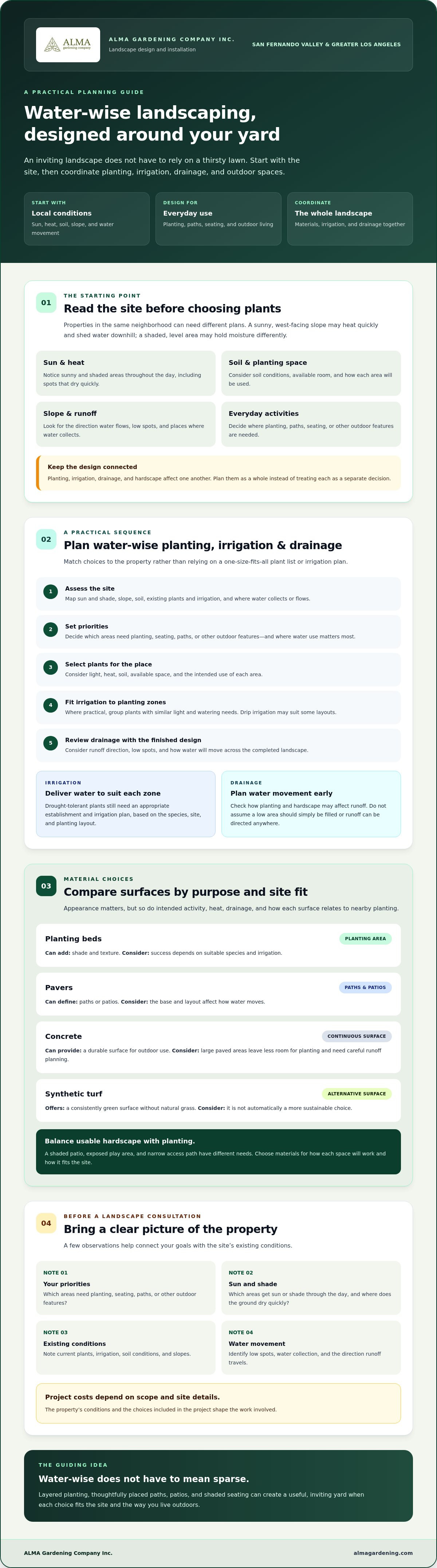
A practical plan for eco-friendly landscaping Los Angeles projects starts with the property, not a plant list. Work through these steps:
- Assess the site: Map sun and shade, slope, soil conditions, existing plants, irrigation, and areas where water collects or flows.
- Set priorities: Decide which areas need planting, seating, paths, or other outdoor features, and where water use matters most.
- Select plants: Match choices to light, heat, soil, available space, and how each area will be used.
- Plan irrigation: Consider delivery methods that fit each planting zone, including drip irrigation where it suits the layout.
- Review drainage: Check how the finished design may affect runoff, low spots, and water movement across the property.
Efficient irrigation starts with matching water delivery to the needs of each planting area. Where practical, group plants with similar light and watering needs instead of treating the entire yard as one zone. Drought-tolerant plants still need an appropriate establishment and irrigation plan. The right approach depends on the species, site, and planting layout. LA County Public Works offers additional ways to save water daily.
Coordinate irrigation with drainage
Pay attention to runoff direction and low areas early in the planning process, not only after choosing plants and hardscape. Irrigation should support the planting without creating persistently wet spots, while drainage improvements should account for how water moves through the finished landscape. Do not assume a low area should simply be filled or that runoff can be directed anywhere. For more planning detail, see this Los Angeles outdoor drainage system installation guide.
If you are weighing planting, irrigation, and drainage changes together, discuss your landscape design and installation project with Alma Gardening Company.
Compare Eco-Friendly Landscaping Materials Without Overlooking Tradeoffs
Choose materials based on how each area needs to work, not appearance alone. Planting beds can add shade and texture, but their success depends on suitable species and irrigation. Pavers can define paths or patios, though the full base and layout still affect how water moves. Concrete creates a continuous, durable surface for outdoor use, but large paved areas leave less room for planting and require careful runoff planning. Synthetic turf offers a consistently green surface without natural grass, but it is not automatically a more sustainable choice.
Eco-friendly material decisions depend on use, site conditions, and project priorities. Consider sun and heat, drainage, intended activity, and how a surface relates to nearby planting. A small patio shaded by a pergola has different needs from an exposed play area or narrow access path. Balance usable hardscape with planting space, and consider where rainwater will go before finalizing the layout.
Use hardscape to support the landscape
Patios and paths can make a yard more comfortable and accessible, especially when they connect entrances, seating, and other outdoor areas. The goal is not to pave as much as possible. Review the proposed hardscape area alongside runoff routes and the space needed for planting. For design considerations, explore this hardscape design and installation guide.
Evaluate synthetic turf for its intended role
Synthetic turf may suit a defined area where a consistent, low-maintenance surface is a priority. Before choosing it, consider direct sun and heat, how the installation will handle drainage, and whether surrounding planting can soften its appearance. Compare it with other surfaces based on how the space will actually be used. The synthetic turf installation guide for Los Angeles covers additional planning points.
For help coordinating planting, pavers, concrete, or synthetic turf in a complete design, discuss your landscape project with Alma Gardening Company.
Turn Your Eco-Friendly Landscaping Plan Into a Los Angeles Project
Turn your ideas into a practical project brief before comparing individual materials or features. For eco-friendly landscaping Los Angeles properties, a clear picture of how you use the space and what the site needs can guide design decisions from the start.
Prepare a useful landscape project brief
Before a consultation, note what you want the yard to do and which concerns matter most. Use this checklist to organize your thoughts:
- Goals and use: Describe who will use the space and whether you need places to gather, walk, or relax.
- Site conditions: Note areas with strong sun or shade, slopes, low spots, and drainage concerns.
- Water: Share what you know about the existing irrigation and which areas you want to make more water-conscious.
- Features: List priorities such as drought-tolerant planting, a patio, pavers, shade, lighting, or a water feature.
- Existing conditions: Identify surfaces, planting, or other elements that may need to remain, change, or be removed.
Lead with your priorities. This gives a designer context for discussing materials and landscape elements that fit the site and your intended use.
Choose a partner for coordinated design and installation
Ask how the proposed design responds to sun, site conditions, water use, and drainage. Clarify what the project includes, which materials are proposed, how installation will be sequenced, and how planting, hardscape, irrigation, drainage, and outdoor living features will work together.
Project costs vary with site conditions, access, demolition, materials, design, labor, drainage, permits, and overall scope. A coordinated plan brings those details into the discussion before decisions are finalized. Alma Gardening Company provides landscape design and installation throughout the San Fernando Valley and Greater Los Angeles, with services including drought-tolerant landscaping, hardscape, drainage, and irrigation. Contact Alma Gardening Company for a landscape consultation to discuss your site and project goals.
Shape a Landscape That Works for Your Property
A successful eco-friendly landscaping Los Angeles project starts with your property’s conditions and how you want to use the space. Match planting and irrigation to sun, soil, and water needs, then plan drainage alongside patios, paths, and other hardscape. Materials should support the space’s purpose, not just its appearance.
Thoughtful coordination can bring water-conscious planting, functional outdoor areas, and practical site solutions into one cohesive plan. Alma Gardening Company provides landscape design and installation throughout the San Fernando Valley and Greater Los Angeles, with services including drought-tolerant landscaping, hardscape, drainage, and irrigation.
Start with your goals and existing site conditions, then turn them into a plan that fits. Contact Alma Gardening Company to discuss your landscape project.
Frequently Asked Questions
What is eco-friendly landscaping in Los Angeles?
Eco-friendly landscaping in Los Angeles is a site-responsive approach that balances water use, outdoor function, materials, and visual appeal. It accounts for local sun, heat, soil, and drainage rather than relying on a standard plant list. A plan might combine drought-tolerant planting, appropriately designed irrigation, paths or patios, and drainage solutions to create an attractive yard suited to the property.
Is drought-tolerant landscaping completely maintenance-free?
No. Drought-tolerant landscaping still needs care, especially while plants establish. Watering needs depend on the plants and site, and occasional pruning, weeding, or irrigation adjustments may be appropriate. Drought tolerance does not mean a plant can thrive without water or attention. Discuss the site’s sun, soil, and intended use when selecting plants so the landscape and its ongoing care expectations are a realistic fit.
Can synthetic turf be considered eco-friendly landscaping?
Synthetic turf can be considered for a specific functional need, but it is not automatically an eco-friendly choice. It may provide a consistent surface in an area where natural grass is not a priority, yet heat exposure, drainage, material choice, and surrounding planting all matter. Compare it with planting or other surfaces based on how the space will be used, and consider the full landscape rather than one material alone.
How can I make my Los Angeles yard use water more efficiently?
Start by matching irrigation to the landscape. Group plants with similar light and watering needs where practical, and consider drip irrigation for planting areas when it suits the layout. Check that irrigation reaches the intended plants, and review the system as the landscape changes. Also consider sun exposure, soil, and drainage so watering supports the plants without creating persistently wet areas or unnecessary runoff.
What should I discuss with a landscape designer about an eco-friendly yard?
Describe how you want to use the space, your water-conscious goals, and any concerns with sun, slopes, low spots, or existing irrigation. Ask how planting, hardscape, drainage, and outdoor features will work together, and clarify proposed materials and project scope. Alma Gardening Company provides landscape design and installation in the San Fernando Valley and Los Angeles area, including Sherman Oaks, Encino, Studio City, North Hollywood, Woodland Hills, West Hills, Glendale, Burbank, Beverly Hills, Culver City, Pacific Palisades, and Malibu.
