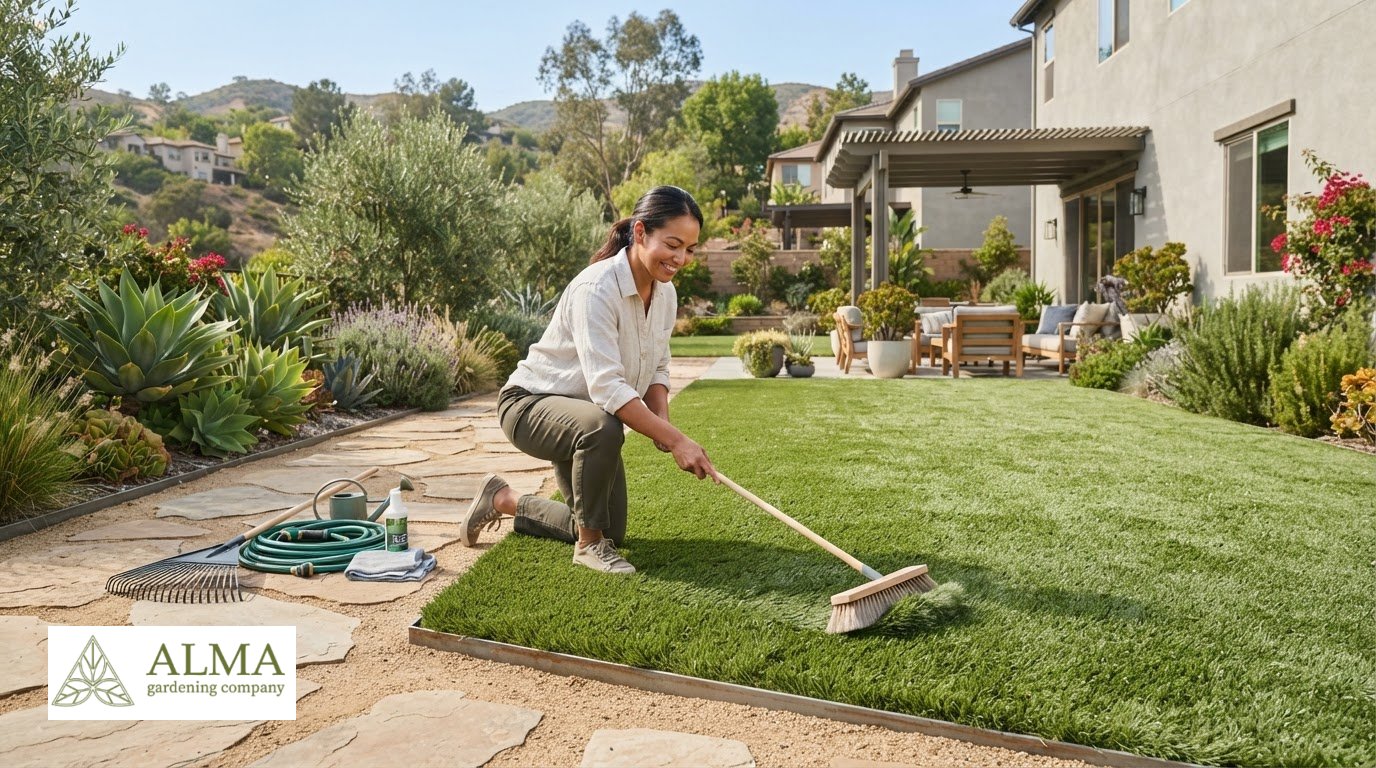
Complete How to maintain artificial turf Guide for Success
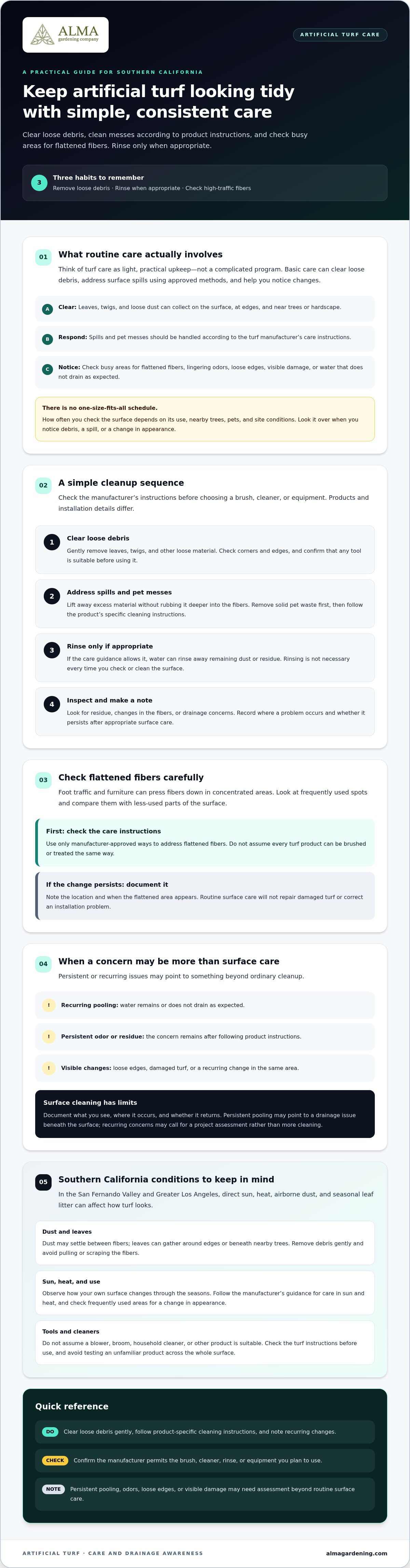
Artificial turf stays presentable through simple, consistent care, not a complicated maintenance program. If you’re wondering how to maintain artificial turf through Southern California’s heat, dust, and seasonal changes, start with three habits: clear loose debris, rinse only when appropriate, and check busy areas for flattened fibers.
Leaves and dust can collect on the surface, while foot traffic may leave frequently used spots looking matted. Spills, pet waste, and lingering odors can raise questions about which cleaning methods are suitable. A practical routine helps you handle common messes without turning ordinary upkeep into a major chore.
This guide explains how to remove debris, clean spills and pet messes according to product instructions, and check flattened fibers. You’ll also learn what to look for when water doesn’t drain as expected, since persistent pooling may point to an issue beyond surface cleaning. With a few sensible habits, your turf can remain cleaner, more upright, and ready to enjoy.
Key Takeaways
- Learn how to maintain artificial turf with a simple routine for clearing debris, addressing spills, and checking the surface.
- Choose brushes, cleaners, and equipment only after checking the turf manufacturer’s care instructions.
- Check where foot traffic or furniture leaves fibers flattened, and use only manufacturer approved methods to address it.
- Document recurring pooling, persistent odors, loose edges, or visible damage. These may call for a project assessment rather than routine upkeep.
How to Maintain Artificial Turf: What Routine Care Actually Involves
Artificial turf maintenance means removing debris, responding to spills, checking the fibers, and noticing changes in drainage. If you’re learning how to maintain artificial turf, think of it as light, practical upkeep rather than a complex care program. Clearing leaves and dust helps the surface look tidy. Checking busy areas can reveal flattened fibers or other changes worth addressing.
Low maintenance doesn’t mean no upkeep. How often you need to tend the surface depends on how it is used, nearby trees, pets, and site conditions. A lightly used area with few nearby trees may need less attention than turf under trees or in a frequently used yard. Rather than follow a fixed schedule, check the surface when you notice debris, spills, or a change in appearance.
What routine artificial turf care can, and cannot, do
Basic care can remove loose debris and address surface spills according to the turf manufacturer’s instructions. It can also help you notice changes early. It won’t correct installation problems, repair damaged turf, or resolve a drainage issue beneath the surface. The Artificial turf maintenance overview offers general context, but product specific care instructions should come from your manufacturer.
Check the fibers and edges during a routine look over. If a concern persists after appropriate surface care, note its location and when it appears instead of treating it as a cleaning task.
Why Southern California conditions matter
In the San Fernando Valley and Greater Los Angeles, direct sun, heat, airborne dust, and seasonal leaf litter can all affect how the surface looks. Dust may settle between fibers, while leaves collect around edges or beneath nearby trees. Foot traffic can make frequently used spots look different from less used areas. These conditions are relevant for outdoor spaces in Los Angeles, Sherman Oaks, Encino, Studio City, North Hollywood, Woodland Hills, West Hills, Glendale, Burbank, Beverly Hills, Culver City, Pacific Palisades, and Malibu.
Observe how your own site changes through the seasons, and follow the manufacturer’s guidance for care in sun and heat. Don’t assume every turf product can be cleaned or brushed the same way. Check the product instructions before choosing tools, cleaners, or a cleaning method, and avoid trying an unfamiliar product on the whole surface.
A Simple Artificial Turf Cleaning Routine for Leaves, Dust, and Spills
A consistent sequence keeps ordinary cleanup manageable. Before selecting a brush, cleaner, or other equipment, check your turf manufacturer’s instructions. Products and installation details differ, so a method that suits one surface may not suit another.
- 1. Clear loose debris. Gently remove leaves, twigs, and other loose material. Check corners and edges, where debris can gather. Confirm that a tool is suitable for your turf before using it.
- 2. Address spills promptly. Lift away excess material without rubbing it deeper into the fibers. For pet mess, remove solid waste first. Then follow the manufacturer’s specific cleaning instructions.
- 3. Rinse if appropriate. If the care guidance allows it, use water to rinse away remaining dust or residue. Rinsing is not necessary every time you check or clean the surface.
- 4. Inspect the area. Look for residue, changes in the fibers, or signs that water isn’t draining as expected. Note anything that remains after routine care, including where it occurs.
Clear leaves, dust, and everyday debris
Dry leaves and loose dust can affect the surface’s appearance, especially around nearby trees and along borders. Remove debris gently, taking care not to pull or scrape the fibers. Check the edges, corners, and areas beside hardscape, where windblown material may settle. Before using a blower, broom, or other equipment, confirm that the manufacturer permits it.
Handle spills and pet mess carefully
Acting promptly can make cleanup simpler, but don’t assume household cleaners are safe for every turf system. Use only cleaning methods identified by the manufacturer, and check before applying a product. If an odor or stain persists despite following the instructions, avoid repeated experimentation. Note where it occurs and whether it returns, then consider whether the issue may need more than surface cleaning.
If recurring cleanup concerns appear connected to the layout or drainage, Alma Gardening Company’s synthetic turf and drainage installation may be relevant to a project assessment in the San Fernando Valley or Greater Los Angeles.
How to Restore Flattened Artificial Turf and Check Drainage
Foot traffic and furniture can press turf fibers down in concentrated areas. A patch that looks flatter than its surroundings isn’t automatically damaged, but check the product’s care instructions before trying to lift or brush the fibers. The appropriate method depends on the turf, so don’t assume a tool or technique is suitable without manufacturer guidance.
When flattened fibers may need attention
Compare the affected area with nearby turf. If the difference is limited to the appearance of the fibers, follow the manufacturer’s approved care method and check whether the surface changes. Loose seams, lifted edges, or visible backing are different signs. They may indicate damage or an installation concern rather than ordinary matting. Note where the change appears and whether it grows or returns.
How to recognize a possible drainage problem
Observe the surface after rain or an appropriate rinse. Note where water gathers, whether pooling recurs in the same place, and how nearby hardscape or planting areas relate to the low spot. Avoid judging performance by a fixed drainage time. Site conditions and installation details can vary.
Persistent pooling may involve the surrounding grade, the base beneath the turf, or the drainage design. Routine care can help you spot a pattern, but it can’t correct an underlying site issue. For more on planning and resolving outdoor water movement, see The Ultimate Guide to Outdoor Drainage System Installation in Los Angeles.
ALMA Gardening Company provides synthetic turf installation and landscape drainage design and installation for projects in the San Fernando Valley and Greater Los Angeles. A site assessment can help determine whether the concern relates to the installation or broader landscape conditions.
When Artificial Turf Care Becomes a Design or Installation Issue
Routine upkeep can address ordinary surface debris, but it won’t resolve every turf concern. Recurring pooling, persistent odors, loose edges, or visible damage are worth documenting, especially if they continue after you follow the manufacturer’s care instructions. These signs don’t identify a cause on their own, but they can show when an issue may need a closer look.
What to document before seeking an assessment
Record where the problem appears, when you notice it, recent weather, and how the area is used. Take clear photos of standing water, lifted edges, visible damage, or spots where an odor keeps returning. Note whether the issue changes after rain or regular use. This record can help distinguish an occasional concern from a recurring pattern.
Plan turf and drainage as one outdoor system
Turf is part of a larger site. Its performance can relate to grading, drainage, surrounding hardscape, and nearby planting areas. If water repeatedly gathers at an edge or low spot, the cause may involve site conditions rather than the turf surface alone. Consider these elements together when planning a new project or renovation.
For a closer look at project planning, see The Ultimate Guide to Synthetic Turf Installation in Los Angeles. ALMA Gardening Company provides synthetic turf installation and landscape drainage design and installation in the San Fernando Valley and Greater Los Angeles. Routine upkeep remains the owner’s responsibility. ALMA Gardening Company does not provide recurring turf maintenance. If you’re planning a turf or drainage improvement, discuss whether a project assessment fits your needs.
Keep Your Turf Ready for Everyday Use
Learning how to maintain artificial turf comes down to a few practical habits: clear debris, handle spills according to the manufacturer’s instructions, and keep an eye on fibers and drainage. Southern California dust, sun, seasonal leaves, and foot traffic can affect how the surface looks, so adjust your care to the site and the turf product.
Routine upkeep can keep the surface tidy, but recurring pooling, persistent odors, loose edges, or visible damage may call for a closer assessment. Turf performance also depends on how the installation, grading, and surrounding landscape work together.
ALMA Gardening Company provides synthetic turf installation and landscape drainage systems for projects in the San Fernando Valley and Greater Los Angeles. If an ongoing drainage concern or a planned improvement needs professional attention, a project assessment may help clarify the next step.
With attentive care and thoughtful planning, your outdoor space can stay clean, functional, and welcoming.
Frequently Asked Questions
How often should you clean artificial turf?
Clean artificial turf when debris, dust, or spills accumulate, and check it periodically rather than following a fixed schedule. The right frequency depends on nearby trees, pets, foot traffic, and site conditions. For how to maintain artificial turf in a San Fernando Valley yard, remove loose material as needed and follow the turf manufacturer’s guidance for rinsing and cleaning.
Can you use a leaf blower on artificial turf?
Use a leaf blower only if the turf manufacturer’s care instructions allow it. Check the product guidance first, then use the equipment carefully to clear loose leaves without disturbing or damaging the fibers. If the instructions don’t address blowers, choose a cleaning method the manufacturer approves. Pay attention to corners and edges where leaves and dust can collect.
How do you remove pet waste and odors from artificial turf?
Remove solid pet waste first, then clean the affected area according to the turf manufacturer’s instructions. Don’t assume a household cleaner or odor treatment is suitable for your particular turf. If an odor persists after you’ve followed the product guidance, note where it returns and how the area is used. Persistent odors may need investigation beyond routine surface cleaning.
What should you do if water pools on artificial turf?
Observe whether pooling recurs after rain or an appropriate rinse, and note its location and duration. Repeated standing water may relate to grading, the base beneath the turf, or the site’s drainage design, rather than surface cleanliness alone. ALMA Gardening Company installs landscape drainage systems in the San Fernando Valley and Greater Los Angeles for project based improvements.
Does artificial turf need to be brushed?
Brushing may be appropriate for some turf, particularly where foot traffic leaves fibers looking flattened, but care requirements vary by product. Check the manufacturer’s instructions before choosing a brush or brushing method. Don’t use an unapproved tool or technique. If fibers remain flattened, or you notice loose seams or visible damage, document the area and seek product specific guidance.
