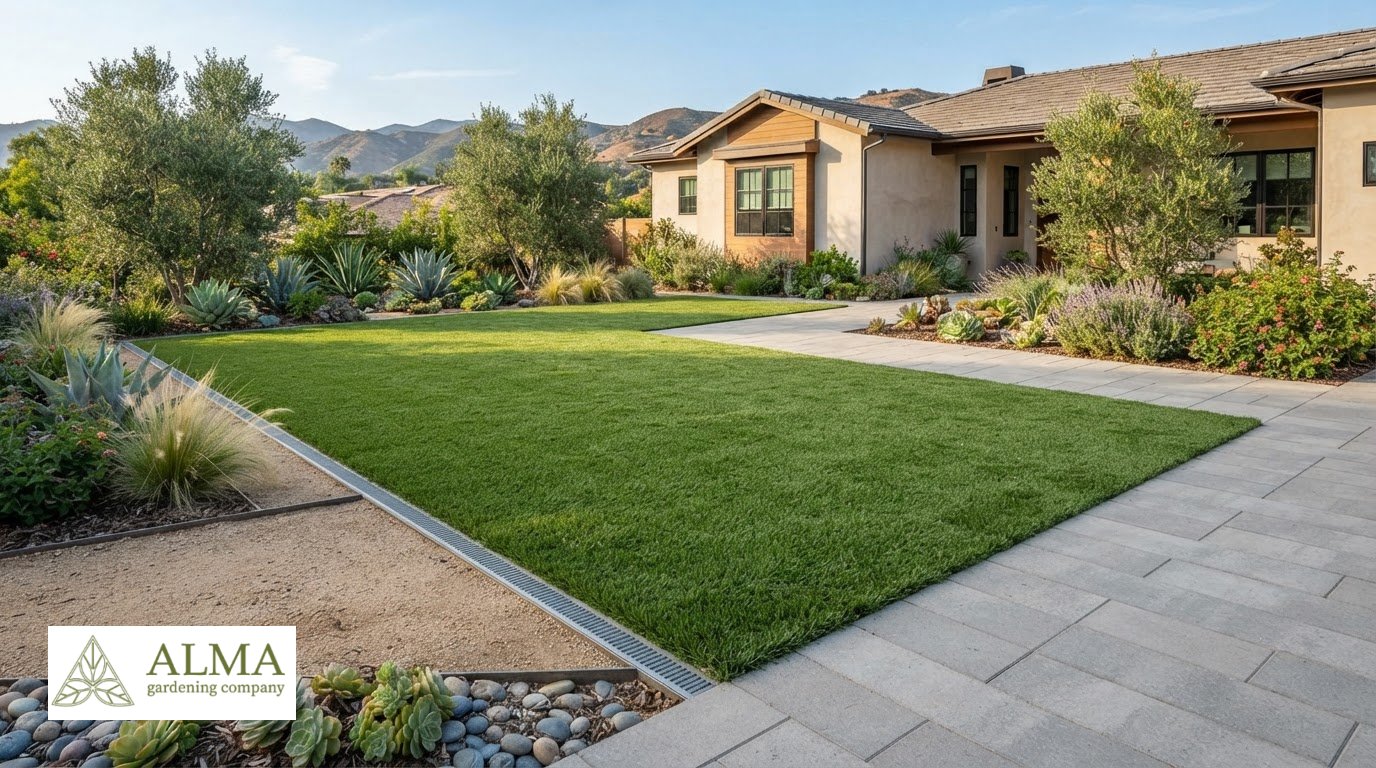
Complete Turf installation cost Guide for Success
Turf installation cost depends less on the roll of turf than on the work beneath it. A level, open yard may need a different scope from a sloped space with old lawn, limited access, or drainage concerns. That’s why estimates can be hard to compare when one lists only a per-square-foot figure and another describes preparation, removal, base materials, and disposal. In Los Angeles and the San Fernando Valley, a property’s sun exposure, soil, and runoff patterns can also shape the design and installation plan.
You shouldn’t have to guess what an estimate includes. This guide explains how access, demolition, grading, drainage, materials, labor, permits, and project scope can affect the work. It also offers practical questions to ask before choosing an installer and property details to gather before a local consultation. With a clear scope, you can compare proposals more fairly and decide whether synthetic turf suits your outdoor space.
Key Takeaways
- Turf installation cost depends on more than the size of the area. Preparation, access, drainage, and project scope matter too.
- Identify site conditions and design choices that may add work, then share those details when requesting an estimate.
- Compare proposals by checking whether removal, base preparation, materials, labor, drainage, and cleanup are clearly included.
- Consider how synthetic turf fits your landscape goals, including how you’ll plan for Southern California heat, water movement, and upkeep.
What Determines Turf Installation Cost in Los Angeles?
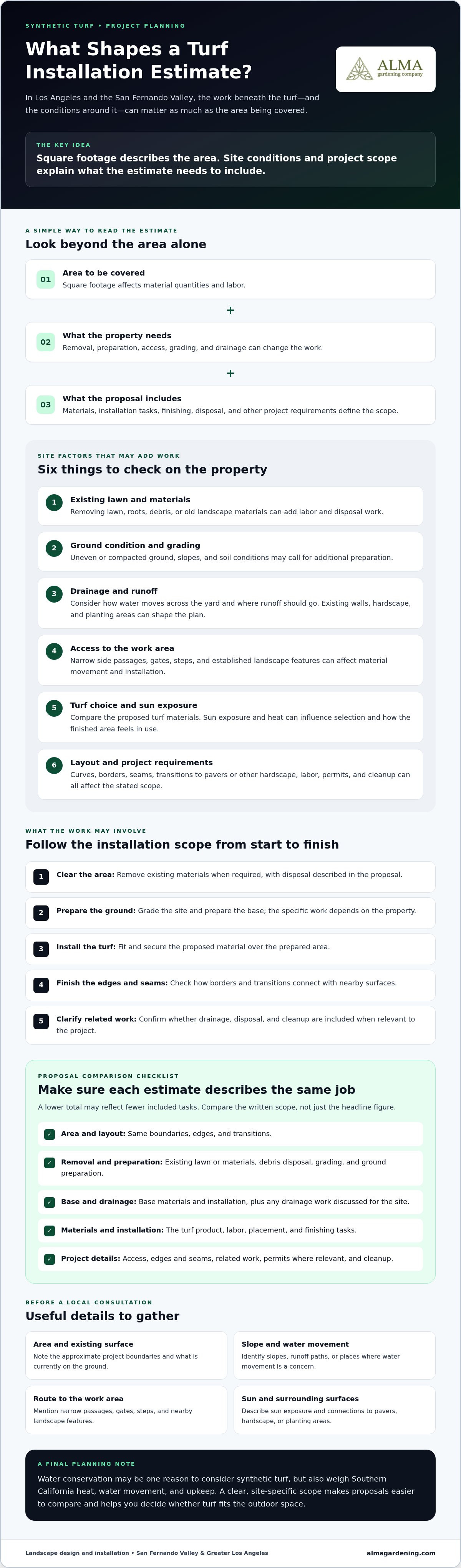
A synthetic turf estimate is specific to the property and the work it needs. It isn’t a universal rate you can calculate from area alone. Square footage affects material quantities and labor, but demolition, ground preparation, access, turf selection, drainage, design details, permits, and cleanup can also change the scope. Square footage shows how much area is involved, while site conditions and project requirements determine what a reliable estimate needs to cover.
That distinction matters in Los Angeles and the San Fernando Valley, where a yard’s slope, soil, existing surfaces, and runoff patterns can call for different preparation. Artificial turf covers a broad category of materials and applications, so assess the specific product and installation plan proposed for your property.
Why similar-size turf projects can have different scopes
An open, accessible area with a suitable, prepared surface may need less removal and site work than a yard where existing lawn, debris, or old materials must be cleared first. A slope may require additional grading, while soil conditions or runoff paths may make drainage planning relevant. Narrow side passages, steps, gates, and established landscape features can also affect how crews move materials and complete the work.
What synthetic turf installation can include
A project may involve removing existing materials, preparing and grading the ground, installing and compacting a base, fitting and securing the turf, and finishing edges and seams. Drainage work, disposal, and design details may be included when the site or project calls for them. The precise sequence and scope depend on the property. Ask the contractor to assess the area and explain which preparation, materials, and finishing tasks are included before you compare estimates.
Which Turf Project Factors Can Change a Los Angeles Estimate?
Removing an existing lawn, roots, debris, or old landscape materials adds labor and disposal work before new turf can be laid. The amount of preparation depends on what’s underfoot: compacted or uneven ground, slopes, and soil that affects grading may require additional attention. In the San Fernando Valley and Greater Los Angeles, assess how water moves across the property before covering the surface.
Removal, ground preparation, drainage, access, turf materials, design details, labor, permits, and related landscape work can all change the scope of an estimate. A narrow side yard or limited route for moving materials may affect equipment choices and the time needed to complete the job.
Site preparation, drainage, and access
Grading and drainage should be considered together so runoff has a planned path rather than collecting where it shouldn’t. Existing hardscape, walls, and planting areas may shape that plan. If water movement is a concern, review the broader project alongside outdoor drainage system installation. Ask the contractor to explain any proposed drainage work and how difficult site access affects the installation scope.
Materials, design, and related landscape work
Compare the turf materials and installation tasks in each proposal, not just the headline total. Sun exposure and heat can influence material selection and how the finished area will feel in use. Turf borders, curves, transitions, and connections to pavers or other hardscape also require design and coordination. If your project combines surfaces, explore hardscape design and installation as part of the overall plan.
Water conservation may be one reason to consider synthetic turf, but it isn’t the only planning question. Penn State Extension’s guide to turfgrass installation and maintenance discusses natural turfgrass, which has different establishment and upkeep needs. For a site-specific scope, discuss turf alongside drainage and related landscape improvements with a local landscape contractor.
How to Compare Turf Installation Estimates Before You Hire
To compare turf installation cost fairly, make sure each contractor is estimating the same area and scope. A lower total may reflect fewer included tasks, not a more efficient approach. Use this checklist to review proposals side by side:
- Confirm the project area and layout. Check that each estimate describes the same turf boundaries, edges, and transitions.
- Review removal and preparation. Ask whether existing lawn or materials, debris disposal, grading, and ground preparation are included.
- Check the base and drainage scope. Look for a description of base materials and installation, plus any drainage work discussed for the site.
- Compare materials and installation tasks. Confirm the turf product and what the labor, placement, finishing, and cleanup cover.
- Ask about permits and exclusions. Have the contractor identify whether permits may apply and which tasks are outside the proposal.
Questions to ask about the written scope
Ask what preparation and materials are included and what could be treated as additional work. If access is limited or drainage concerns have been identified, ask how they’re reflected in the plan. Clarify how changes in site conditions would be discussed and documented before work proceeds. Specific answers make proposals easier to compare.
Red flags in a turf estimate
Vague descriptions such as “install turf” don’t show who handles removal, base preparation, drainage, or cleanup. Missing material details and unclear exclusions also make it difficult to understand what the total covers. Don’t label a bid too high or too low without comparing the property assessment and written scope. Detail matters more than a headline figure.
For a project-specific discussion in Greater Los Angeles, Discuss your turf project with ALMA. A clear review of site conditions and included work can help you make an informed comparison.
Plan a Synthetic Turf Project with a Local Landscape Contractor
Synthetic turf may suit a property owner seeking a consistently finished area with less routine lawn care, but it isn’t the right fit for every space. Sun exposure can affect surface heat, and drainage, turf material, intended use, and occasional upkeep all deserve consideration. A site assessment can help determine whether turf supports your goals and how it might fit with the rest of the landscape.
Prepare property details before requesting a consultation
Gather approximate dimensions, photos, access details, and notes about existing lawn, paving, or other surfaces. Point out where water collects or flows, describe sun exposure and intended use, and mention connected work such as pavers, planting, or irrigation. These details give the contractor a clearer starting point for discussing project boundaries and turf installation cost. For more background, consult the synthetic turf installation information elsewhere in this article.
What a site-specific conversation should clarify
Discuss the appearance you want, where turf should begin and end, what preparation may be needed, and how drainage will be addressed. If the project includes other landscape improvements, ask how the work can be coordinated. Alma Gardening Company provides synthetic turf installation, drainage, irrigation, and broader landscape installation in the San Fernando Valley and Greater Los Angeles, including Los Angeles, Sherman Oaks, Encino, Studio City, North Hollywood, Woodland Hills, West Hills, Glendale, Burbank, Beverly Hills, Culver City, Pacific Palisades, and Malibu. The estimate should reflect reviewed site conditions and an agreed project scope, not assumptions made before assessment.
Bring your property details and goals to the conversation, then review what each proposed task includes. Contact ALMA about your landscape project to discuss the site and potential scope.
Move Forward with a Clear Turf Project Plan
A useful estimate reflects the property, not just the turf area. Removal, preparation, access, materials, drainage, and related landscape work all help define the project scope. Compare proposals by checking that they describe the same work and clearly identify what’s included and excluded. That’s the practical way to understand turf installation cost without relying on a headline total alone.
Before requesting an assessment, gather approximate dimensions, photos, access details, and notes about sun exposure, intended use, and drainage concerns. These details can help frame a focused conversation about your goals and the work your site may require.
Alma Gardening Company provides synthetic turf installation in the San Fernando Valley and Greater Los Angeles, along with landscape drainage, irrigation, hardscape, and landscape installation services. If you’re in Los Angeles, Sherman Oaks, Encino, Studio City, North Hollywood, Woodland Hills, West Hills, Glendale, Burbank, Beverly Hills, Culver City, Pacific Palisades, or Malibu, discuss how these options may fit your property and project scope. Contact ALMA to discuss your turf project and take the next step with a clearer plan for your outdoor space.
Frequently Asked Questions
How much does turf installation cost in Los Angeles?
There isn’t one reliable price for every Los Angeles property because each estimate depends on the site and the work involved. Area is one factor, but removal, ground preparation, access, selected materials, drainage, labor, permits, and project scope can also affect the estimate. Request a site-specific assessment and compare written proposals that describe the same work rather than relying on a per-square-foot figure alone.
What factors affect the cost of synthetic turf installation?
Turf installation cost can change with the amount of existing lawn or material to remove, grading and base preparation, site access, turf selection, design details, and any drainage work. For example, a clear, accessible area may need a different scope from a sloped yard with narrow access and existing landscape features. Ask the installer to explain how these property conditions and any exclusions are reflected in the estimate.
Is synthetic turf installation more expensive than natural grass?
It depends on what costs you’re comparing. Synthetic turf involves material selection and installation preparation, while natural grass has its own establishment, irrigation, and ongoing care considerations. The right comparison includes both the initial landscape work and the care each option may require over time. In Southern California, also consider water use, sun exposure, surface heat, intended use, and how each choice fits your landscape goals.
Does turf installation include drainage and removal of old landscaping?
Not automatically. Some proposals include removal of existing lawn, debris, and ground preparation; others may list these as separate work or exclusions. Drainage needs also depend on the property and should be assessed rather than assumed. Check the written scope for removal, disposal, grading, base work, and any drainage tasks. Ask the installer to clarify how existing surfaces or site conditions could change the planned work.
What should I ask a turf installer before accepting an estimate?
Ask what removal, preparation, base materials, turf, labor, drainage, and cleanup are included, and which tasks are excluded. Confirm how access limitations or unexpected site conditions will be handled, and whether permits may apply to your project. Alma Gardening Company offers synthetic turf installation in the San Fernando Valley and Greater Los Angeles, along with drainage and irrigation services. Compare written scopes before deciding.
