Concrete vs Pavers for LA Patios: Which is Better?
In Los Angeles, the ground beneath your feet is constantly moving, making your choice of patio material a structural gamble rather than just a design preference. Many homeowners believe a solid slab is the ultimate standard for durability. However, when comparing concrete vs pavers for patio Los Angeles projects, the reality of our expansive clay soils and seismic activity often tells a different story. You want an outdoor sanctuary that reflects the beauty of your home, not a collection of unsightly cracks and drainage puddles. It's natural to worry about the longevity of your investment when Southern California's rare but heavy rains arrive.
Discover how to select a surface that withstands our unique climate while enhancing your property's long-term value. This guide explores the critical differences in maintenance, heat resistance, and structural integrity between these two popular options. We examine the impact of soil movement, the benefits of permeable surfaces, and how to complement your home's architectural style. Learn how to create a durable, low-maintenance outdoor space that stays pristine for decades. By understanding these technical nuances, you can transform your backyard into a functional sanctuary that stands the test of time.
Key Takeaways
- Understand the structural trade-offs of concrete vs pavers for patio Los Angeles homes to ensure your investment survives the region's unique environmental stresses.
- Learn how modular hardscaping flexes with seismic activity and expansive clay soils to prevent the unsightly cracking common in traditional slabs.
- Evaluate the long-term value of repairable surfaces that allow for simple, targeted fixes instead of costly, full-scale demolitions.
- Discover the benefits of permeable designs that manage heavy seasonal rainfall and protect your property's foundation through professional drainage.
The Hardscape Debate: Concrete vs Pavers for Your Los Angeles Patio
In Los Angeles, your backyard is often more than just a garden; it's an extension of your living room. The patio acts as the anchor for this outdoor lifestyle, providing a stage for summer dinners and evening relaxation. Choosing between a monolithic poured concrete slab and a modular system of interlocking concrete paver units involves more than just picking a color. It's a decision that impacts the long-term functionality and aesthetic harmony of your home. When deciding between concrete vs pavers for patio Los Angeles designs, look beyond the initial installation quote. Consider the total cost of ownership, which includes maintenance, durability, and the ease of potential repairs over several decades.
Poured Concrete: The Modern Minimalist Choice
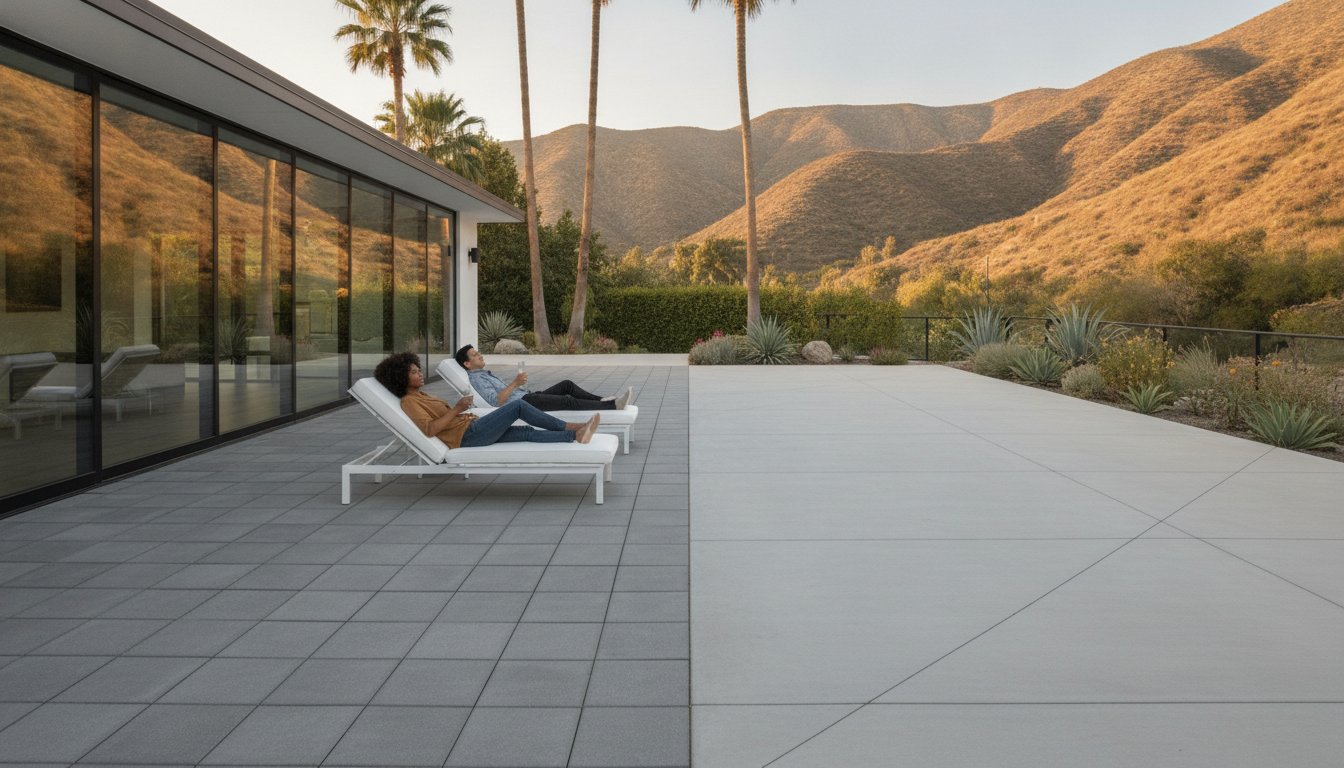
Many homeowners favor poured concrete for its clean lines and seamless appearance. It perfectly complements the Mid-Century Modern architecture found throughout the Hollywood Hills and Silver Lake. Customize the look with various finishes to suit your personal style. A broom finish provides a non-slip, practical surface, while a salt finish creates a subtly textured, high-end feel. You might also opt for colored concrete to blend the hardscape with your home's exterior palette. It offers a sleek, uninterrupted plane that emphasizes minimalist design and simplifies your outdoor layout.
Interlocking Pavers: Versatility and Texture
Pavers bring a rich sense of texture and timelessness to a property. They are the ideal choice for Spanish Colonial and Craftsman homes prevalent in areas like Santa Clarita and the San Fernando Valley. Select from a wide array of materials, including classic brick, natural stone, or high-quality concrete modules. This variety allows you to create intricate patterns that add character and visual interest to your landscape. When researching concrete vs pavers for patio Los Angeles residences, homeowners often find that pavers offer superior flexibility. The modular nature of these systems provides a structural advantage in our local climate. They adapt to the environment, ensuring your outdoor sanctuary remains elegant and stable even as the ground shifts.
Durability and the 'LA Crack': Why Soil and Seismic Activity Matter
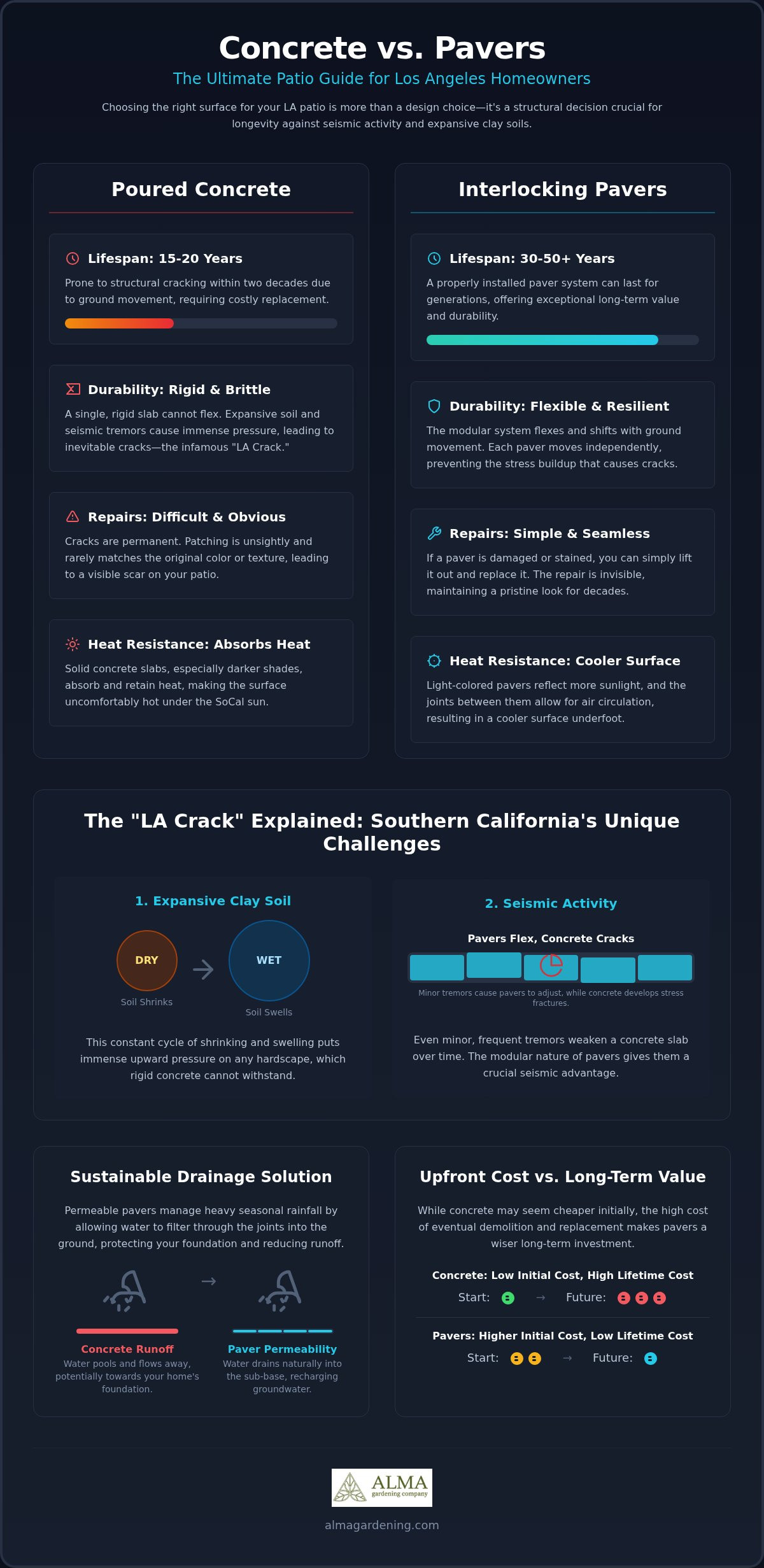
Walk through almost any neighborhood in Pasadena or the Hollywood Hills, and you'll likely spot a common sight: jagged fractures running through backyard slabs. This is the infamous 'LA Crack'. When debating concrete vs pavers for patio Los Angeles projects, durability is the most significant factor for local homeowners. A standard concrete slab typically lasts 15 to 20 years before structural cracking becomes a major issue. In contrast, a high-quality paver system can endure for 30 to 50 years. The difference lies in how these materials interact with the ground beneath them. While concrete is rigid and unforgiving, pavers are modular and resilient.
Our region is defined by constant movement. Frequent seismic activity means the earth is rarely truly still. Modular paver systems possess a unique 'seismic advantage' because the individual units can shift and flex independently during minor tremors. They don't break; they adjust. Intense heat also plays a role. In the San Fernando Valley, where summer temperatures regularly exceed 100°F, heat retention becomes a comfort issue. Light-colored pavers often stay cooler underfoot than dark, heat-absorbing concrete slabs. Consulting with an expert in sustainable hardscaping can help you select materials that remain comfortable and intact throughout the hottest months.
Understanding LA's Expansive Clay Soil
The primary culprit behind patio failure in Southern California is expansive clay soil. This soil acts like a sponge, swelling significantly when wet and shrinking as it dries. This constant cycle puts immense pressure on a rigid concrete slab, which eventually snaps under the tension. Pavers are considered a 'flexible' pavement. They rest on a bed of crushed stone and sand, allowing the entire system to breathe and settle without losing its structural integrity. It's a smarter way to build on unstable ground.
The Reality of Stamped Concrete in SoCal
Stamped concrete is often marketed as a low-cost alternative to pavers, but it comes with a hidden maintenance cycle. The intense LA sun eventually causes the surface colors to fade, requiring you to reseal the slab every two to three years. If a section of the concrete does crack or need repair, matching the original color and pattern is nearly impossible. You're often left with a visible patch that ruins the aesthetic. When weighing concrete vs pavers for patio Los Angeles homes, the long-term repairability of modular systems often outweighs the initial simplicity of a pour. If one unit is damaged, you simply replace that specific piece for a seamless look.
Cost Analysis: Upfront Investment vs Long-Term Value
When evaluating concrete vs pavers for patio Los Angeles homeowners often focus on the immediate quote. A concrete pour is undeniably faster and requires less initial labor. However, this upfront savings often masks the true cost of ownership. Paver installation is a meticulous, labor-intensive process that involves precise excavation, base preparation, and individual placement. In high-stakes markets like Beverly Hills or Santa Monica, this level of craftsmanship translates directly into curb appeal. Investing in professional hardscape design and installation ensures your project is built to last, maximizing your return on investment from day one.
The repairability factor is where the financial scales truly tip. If an underground pipe leaks or a single section settles, concrete requires a jackhammer and a full repour. This creates a permanent, mismatched patch that devalues the space. With modular systems, you simply lift the affected units, fix the underlying issue, and replace them. It's clean, efficient, and cost-effective. For those considering long-term environmental costs, using permeable pavements can also prevent expensive drainage failures during our seasonal downpours. Contact our team for a comprehensive hardscaping consultation to protect your property's value.
The Hidden Costs of 'Cheap' Concrete
A lower initial price tag often leads to significant future expenses. Beyond the inevitable crack repairs, poor concrete work can compromise your home's foundation. If the slab isn't sloped correctly, water pools against the house, leading to moisture intrusion and structural rot. You aren't just paying for a patio; you're paying for the risk of future remediation. Eventually, the combined cost of patching and eventual total replacement often exceeds the price of a premium paver system.
Pavers as a Permanent Investment
Think of pavers as a 'one-and-done' solution for your landscape. When installed with a properly compacted sub-base, they remain stable for decades without requiring major overhauls. They are a durable asset that grows with your home. In the competitive 2026 Los Angeles real estate market, a professionally installed paver patio consistently ranks as one of the highest-yielding outdoor upgrades for total home valuation.
Sustainable Hardscaping: Permeability and Drainage in LA
Traditional concrete creates an impermeable barrier that forces rainwater into the street, overwhelming municipal systems and carrying pollutants to the coast. Permeable pavers offer a sophisticated alternative. These systems allow water to filter through the joints and return to the local aquifer. When evaluating concrete vs pavers for patio Los Angeles projects, this ecological benefit is a significant long-term advantage. It transforms your backyard from a source of runoff into a functional part of the local water cycle. You gain a beautiful living space while contributing to the region's environmental health.
True sustainability requires a holistic view of your property. We integrate every hardscape project with professional outdoor drainage system installation to ensure water moves away from your home's foundation. This approach protects your structural integrity while maintaining a lush, healthy environment. Alma Gardening Company balances high-end aesthetics with responsible engineering. We create spaces that are durable, beautiful, and environmentally conscious. Our designs ensure your investment remains protected during those rare but intense seasonal downpours.
Managing Stormwater and Local Building Codes
Los Angeles enforces Low Impact Development (LID) requirements to manage stormwater at its source. New hardscaping projects must often incorporate features that capture and infiltrate runoff. Pavers help you meet these mandates more efficiently than solid concrete. Their modular design naturally facilitates infiltration, reducing the need for complex and expensive mechanical drainage solutions. It's a streamlined path to compliance that enhances your property's functionality.
The Sustainable Advantage of Pavers
Choosing the right materials also mitigates the urban Heat Island Effect. Solid concrete slabs absorb and radiate heat, significantly raising the temperature of your outdoor living area. Light-colored, permeable pavers remain cooler under the intense Southern California sun. Using locally sourced stone and concrete units also reduces the carbon footprint of your renovation. It's a choice that benefits both your home and the greater LA environment. Ready to transform your backyard? Contact Alma Gardening Company for a custom hardscape consultation today.
Build a Legacy in Your Backyard
Choosing the right foundation for your outdoor lifestyle requires a balance of aesthetic vision and technical precision. We've explored the structural realities of our local environment, from expansive clay soils to the necessity of professional drainage. When weighing concrete vs pavers for patio Los Angeles projects, the superior flexibility and longevity of modular systems often make them the wiser investment for homeowners seeking peace of mind. You deserve a space that remains pristine through seismic shifts and seasonal rains while maximizing your property's resale value.
Alma Gardening Company specializes in navigating these specific regional challenges with a sustainable design-build approach. Our team of licensed and insured local hardscape specialists focuses on creating functional sanctuaries that stand the test of time. We integrate beauty, durability, and environmental responsibility into every installation. Take the first step toward a transformed landscape that reflects your unique style. Schedule Your Professional Hardscape Consultation with Alma Gardening Company to secure the future of your outdoor living space. Your dream sanctuary is within reach.
Frequently Asked Questions
Which is cheaper for a patio in Los Angeles: concrete or pavers?
Poured concrete typically requires a lower initial investment than a modular system. The speed of the pour and reduced labor hours make it the most budget-friendly choice for immediate installation. However, when evaluating concrete vs pavers for patio Los Angeles homes, consider the total cost over twenty years. Pavers eliminate the need for full slab replacements or expensive patching, making them more cost-effective as the landscape matures.
Will my concrete patio crack during an earthquake in LA?
Rigid concrete slabs are highly susceptible to cracking during seismic events because the material cannot flex. The energy from a tremor often results in jagged, structural fractures that are difficult to repair seamlessly. Pavers offer a distinct advantage in our region. Their interlocking design allows individual units to shift independently, absorbing ground movement without breaking. This resilience keeps your outdoor sanctuary intact and beautiful during minor tremors.
How do I prevent weeds from growing between my patio pavers?
Install your system with high-quality polymeric sand to create a durable barrier against wind-blown seeds. This specialized material hardens when activated with water, effectively sealing the joints between individual units. Maintain this protective seal by keeping the surface clear of organic debris that could turn into soil. A properly compacted gravel and sand base also discourages root growth from beneath the patio, ensuring a clean, low-maintenance finish.
Do pavers increase my home value more than concrete in Southern California?
Pavers generally offer a higher return on investment than standard concrete in the Southern California market. Appraisers and buyers often view premium hardscaping as a high-end upgrade that enhances curb appeal and functional living space. This choice signals quality craftsmanship and long-term durability. It differentiates your property in competitive neighborhoods like Santa Monica or Pasadena, where the outdoor lifestyle remains a primary selling point for potential homeowners.
Can I install pavers over my existing concrete patio in Los Angeles?
You can install thin remodel pavers over an existing concrete slab if the surface is stable and properly sloped for drainage. Ensure the concrete is free of major structural failures or significant sinking before proceeding with the overlay. This method saves on demolition costs while completely transforming the aesthetic of your backyard. Always consult a professional to verify that the added height won't interfere with doorway thresholds or existing drainage paths.
How long does it take to install a paver patio vs a concrete patio?
Concrete installation is significantly faster, often taking only one or two days for a standard pour. You must then wait several days for the slab to cure before placing heavy furniture or walking on the surface. Paver projects are more time-intensive, frequently requiring a week or more for proper excavation, base compaction, and placement. However, you can use a paver patio immediately after completion. This eliminates the waiting period associated with wet materials.
