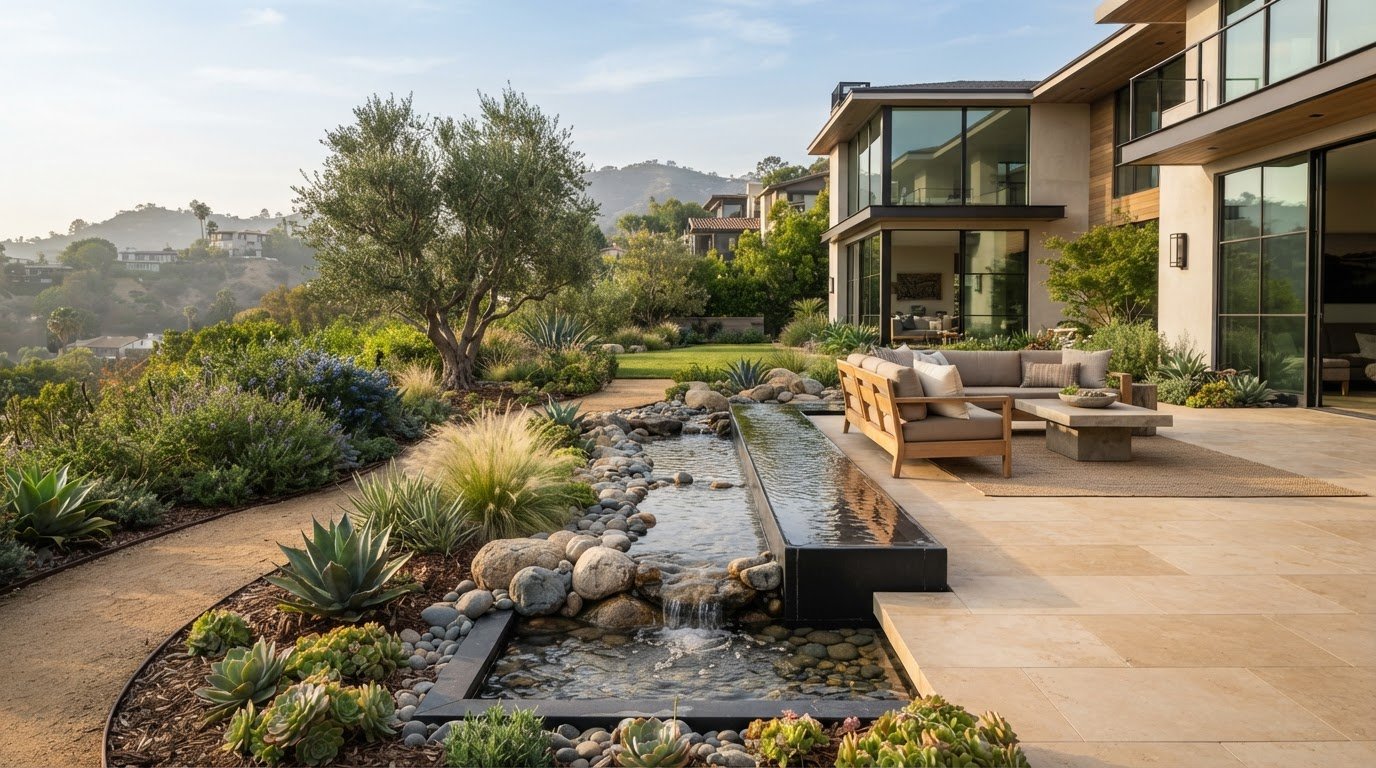
Custom Water Features: A Water-Smart Design Guide
When planning custom water features backyard homeowners can enjoy, start with a design that fits the space, style, and practical needs, not simply the most dramatic focal point. The right feature can bring soothing movement outdoors without creating an unexpected maintenance burden.
It’s natural to wonder how much upkeep a feature requires and whether it will work with your irrigation, drainage, and hardscape. In Los Angeles and the wider Southern California area, water-smart planning matters, too. A recirculating feature may offer the sensory appeal of moving water while keeping water use in view.
This guide compares popular feature styles and the decisions that shape their appearance, function, and ongoing care. Use it to think through placement, water use, maintenance, and connections to the surrounding landscape, then prepare clear questions for a landscape design professional.
Key Takeaways
- Compare fountains, reflecting basins, and recirculating streams based on the space, sound, and visual presence you want.
- Before choosing a design for custom water features backyard projects, assess sun exposure, slopes, soil, utilities, and seating.
- Plan for water use and routine upkeep, including cleaning the feature and maintaining its recirculation components.
- Prepare a project brief with inspiration, priorities, site concerns, and maintenance expectations to guide landscape planning.
Custom Water Features Backyard Planning: Understand the Main Design Options
A custom backyard water feature is planned around the shape of your yard, its existing conditions, and how you want to use the space. It might draw the eye, add the sound of moving water, or create a visual pause beside a patio. The broader water feature category includes many forms. For a residential landscape, fountains, reflecting basins, and recirculating streams are options to consider, not one-size-fits-all choices.
A landscape water feature is designed for visual and sensory appeal, while a swimming pool is designed for swimming. Clarifying the purpose at the start helps keep the design focused.
Which water feature concept fits your backyard?
A compact fountain or small basin can create a focused accent without taking over the yard. A broader basin or stream has a more expansive visual presence and may need more space, coordination with nearby paving and planting, and practical access for upkeep. Neither scale is automatically the better choice.
Start by deciding what you want to see and hear. Do you prefer a gentle ripple or more noticeable water movement? Would a clean-lined basin suit the setting, or would a flowing form feel more cohesive? Consider how much open space is available, whether the feature should be visible from a seating area, and whether it should serve as a destination within the yard.
In a Los Angeles yard, site conditions help determine what’s practical. Existing slopes, sun exposure, soil conditions, available utilities, and maintenance access can all shape placement and design. The feature should also work with the surrounding landscape, including hardscape, drainage, and irrigation, rather than feel like an isolated fixture. Discussing these details early helps align the concept with the site and the level of care you’re prepared to provide.
Design a Southern California Water Feature Around Your Yard
The best location balances the feature’s footprint and sound with how you move through and enjoy the yard. A compact fountain near a seating area can provide a close-up focal point. A longer recirculating stream needs more room and coordination with nearby paving and planting. Decide whether you want a soft background sound or a stronger presence, and keep paths clear with practical access for maintenance.
How should location and scale guide the design?
Walk the yard from inside the home and outdoors. Note the views through windows, where people gather, and which paths need to stay open. Shade and sun exposure can affect the setting, while slopes and soil conditions can influence placement and drainage planning. Available utilities matter, too. Discuss pump access, safe electrical planning, and a service route before finalizing the layout, not after the feature is built.
Choose a feature scale that suits your yard’s dimensions, the distance from which you’ll view it, and how you intend to use the space. A wildlife pond is another possible concept to explore; Backyard wildlife ponds from Clemson University offers a useful overview of that approach. For water-conscious planning, ask whether a recirculating design fits your goals and how its components will be maintained.
Water-use rules and installation requirements can vary across the Los Angeles area. Check current local requirements for your property and proposed design before work begins. A landscape professional can help coordinate the feature with hardscape, drainage, and irrigation. Learn more about residential landscape design and installation.
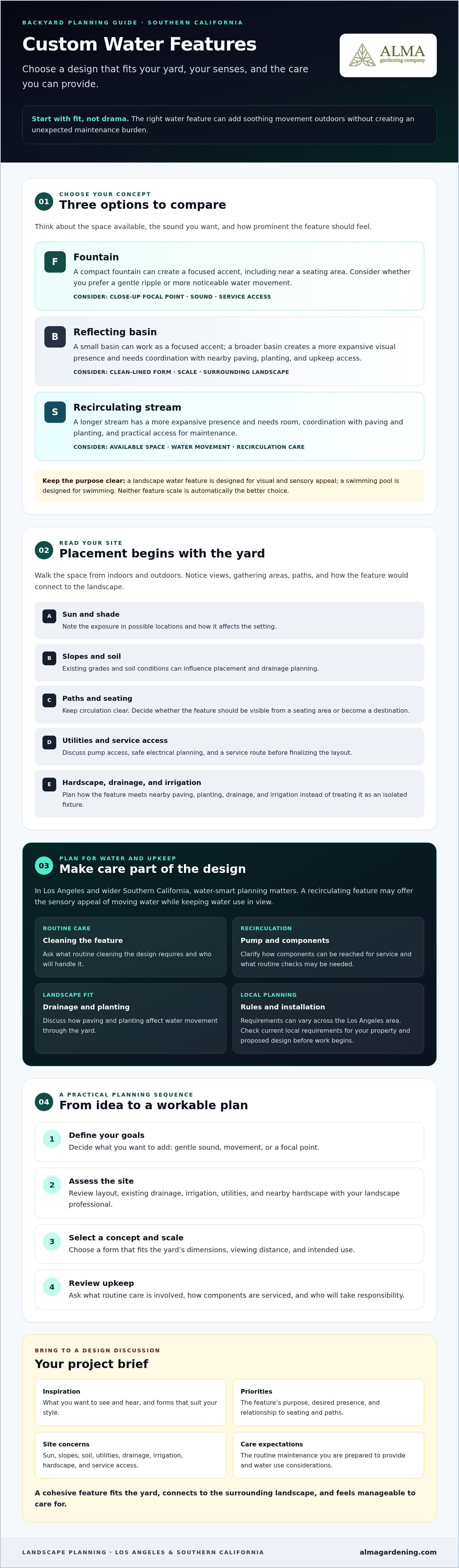
Plan Water Use, Maintenance, and Landscape Integration
A water feature works best when its upkeep and connections to the rest of the yard are part of the design, not afterthoughts. Use this sequence to move from inspiration to a practical plan:
- Define your goals. Decide what you want the feature to add, such as gentle sound, movement, or a focal point.
- Assess the site. Review the layout, existing drainage, irrigation, and nearby hardscape with your landscape professional.
- Select a concept. Choose a form and scale that suit your goals and fit naturally into the yard.
- Review upkeep. Ask what routine care the design requires and who will handle it.
For recirculating designs, clarify how you’ll keep the feature clean and maintain its pump and other recirculation components. Ask where these parts can be reached for service and what routine checks may be needed. Clear expectations help you compare custom water features backyard options by both their visual effect and ongoing care.
Plan drainage and irrigation alongside the feature. Discuss how nearby paving and planting affect water movement through the yard, and how irrigation can be coordinated without treating the feature as part of the watering system. For more on site water management, read this guide to outdoor drainage system installation.
What should homeowners ask before installation?
Before approving a plan, ask how it provides access for cleaning and service, how drainage will be addressed, and how the feature connects with surrounding hardscape and irrigation. Confirm what routine maintenance involves and who is responsible for it. Check current local water-use rules and installation requirements for your property, since they can vary by location and project. Learn about custom water feature design and installation as part of a coordinated landscape plan.
Bring a Custom Backyard Water Feature Into a Cohesive Landscape
A water feature feels intentional when it belongs to the landscape around it. Coordinate its edges with paving, choose planting that complements its form, and consider how outdoor lighting will reveal its shape after sunset. Include drainage and irrigation in the plan so the feature fits with how the rest of the yard handles water. For ideas on creating connected outdoor surfaces, explore hardscape design and installation.
Good planning brings visual details and practical questions together. A project brief gives your landscape professional a clear starting point for shaping a feature around your priorities, site, and maintenance expectations.
What to bring to a landscape design conversation
Gather a few useful details before discussing the project. You don’t need a finished design, just a clear picture of what matters to you:
- Photos of the yard and approximate dimensions, including the areas you’re considering.
- Examples of styles or features you like, plus notes on how you use the space.
- Priorities such as sound, visual presence, seating, or a particular view from inside the home.
- Questions about upkeep, water use, drainage, and connections to existing paving or other hardscape.
With this brief, a professional can consider the water feature alongside planting, lighting, hardscaping, drainage, and irrigation rather than treating it as a separate fixture. Alma Gardening Company designs and installs residential landscapes in Los Angeles, including custom water features and surrounding landscape elements. Explore landscape design and installation for a coordinated outdoor plan.
Shape a Water Feature That Belongs in Your Yard
The best custom water features backyard projects begin with a clear purpose and a design that fits the way you live outdoors. Choose a concept that suits your space and preferred atmosphere, then weigh its upkeep alongside its appearance. Thoughtful planning also connects the feature to the surrounding landscape, so paving, planting, drainage, irrigation, and lighting feel considered as one composition.
For Los Angeles homeowners, Alma Gardening Company offers custom water features as part of its residential landscape services. Its work also includes hardscaping, drainage, irrigation, and outdoor lighting, making it possible to consider the feature in the context of the wider yard.
Ready to explore a cohesive design for your outdoor space? Discuss a custom backyard water feature with Alma Gardening Company.
Frequently Asked Questions
What is the best type of water feature for a backyard?
The best choice depends on your space, preferred sound, visual style, and maintenance expectations. A compact fountain or reflecting basin can create a focused accent, while a recirculating stream may need more room and coordination with surrounding paving and planting. For Los Angeles yards, consider sun exposure, slope, utility access, and views from seating before settling on a concept.
Do backyard water features use a lot of water?
Water use varies with the feature’s design, exposure, and operation, so there isn’t one answer for every yard. Recirculating systems reuse water, but evaporation and splash may mean occasional refilling. Ask how the proposed design manages water and what ongoing attention it needs. Before finalizing plans in Los Angeles, check current local water-use rules that may apply to your property and feature.
Are backyard water features difficult to maintain?
Maintenance depends on the design and its components, but routine care may include removing debris, keeping surfaces clean, and checking the pump and other recirculation parts. Before installation, ask how these components can be reached and what upkeep the chosen feature requires. Practical service access can make routine care easier to manage and help you understand the commitment in advance.
Can a water feature be added to a small backyard?
Yes. A smaller yard can accommodate a water feature if its footprint and placement suit the available space. A compact focal point may fit beside a seating area or along a garden edge while keeping circulation paths clear. Compare the feature’s scale with the viewing distance and intended use, and account for room to access it for cleaning and service.
Should a backyard water feature be planned with drainage and landscaping?
Yes. Plan it with the surrounding landscape so paving, planting, irrigation, and drainage work together. Site grading and nearby surfaces can affect how water moves through the yard, so discuss those conditions before installation. For custom water features backyard projects in Los Angeles, also check current local requirements for water use and installation. Coordinated planning helps the feature feel integrated rather than added as an afterthought.
