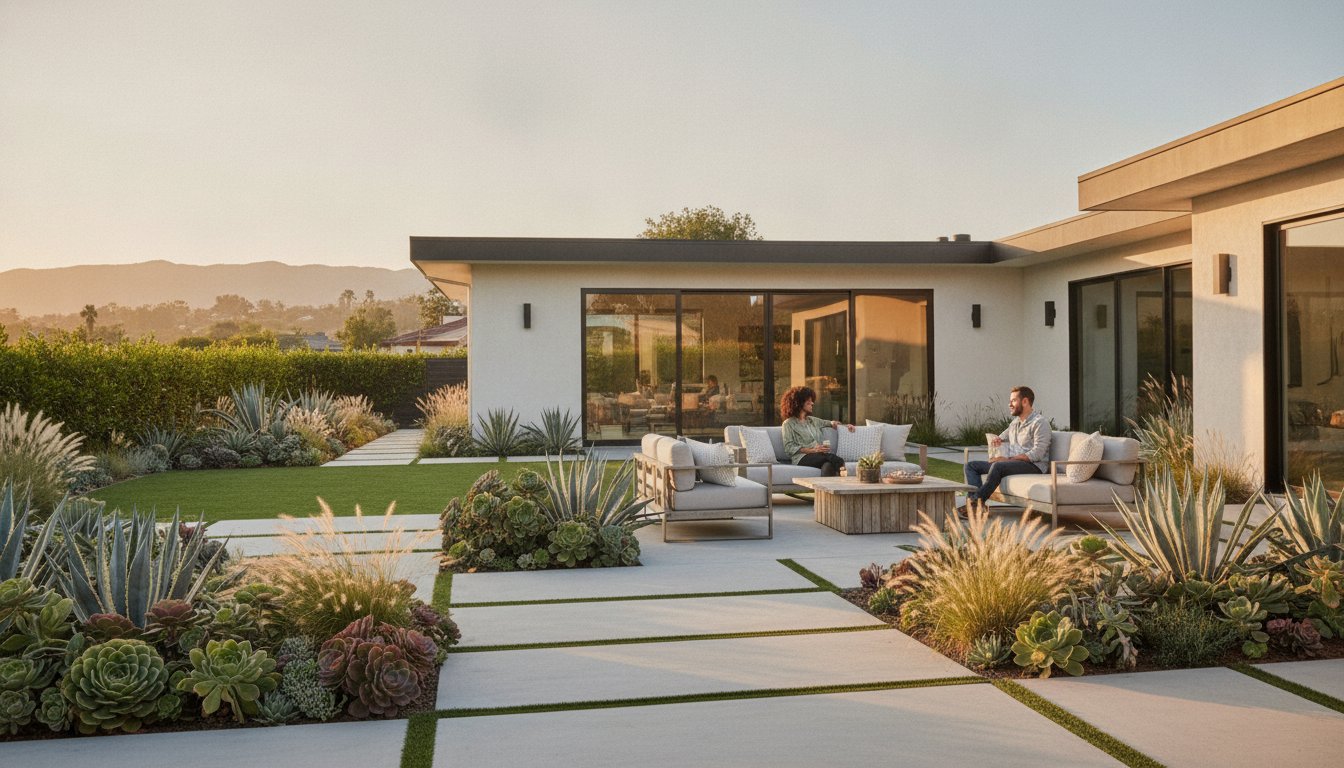
Drought Tolerant Garden Design Southern California: The 2026 Guide
Did you know that landscape irrigation can account for up to 90% of residential water use? This reality makes drought tolerant garden design Southern California more than just a trend; it's a necessity for Los Angeles homeowners facing skyrocketing LADWP bills. You likely feel the frustration of trying to maintain a vibrant yard while navigating confusing restrictions and the fear of creating an ugly, "dead-looking" xeriscape. You deserve an outdoor space that reflects your style without draining your bank account or the local reservoir.
This 2026 guide shows you how to transform your yard into a lush, water-wise sanctuary that balances luxury hardscaping with ecological resilience. We'll explore how to create a garden that thrives in the summer heat and manages the rare heavy winter rains. You'll learn about integrating professional drainage, high-end pavers, and synthetic turf to build a functional outdoor living space. We'll also cover the latest "Zone Zero" wildfire safety regulations, ensuring your new landscape is beautiful, compliant, and sustainable for years to come.
Key Takeaways
- Master the balance between permeable hardscaping and climate-adapted biology to significantly reduce your reliance on traditional, thirsty lawns.
- Evaluate the performance of high-quality synthetic turf alongside keystone native plants to create a custom drought tolerant garden design Southern California that suits your lifestyle.
- Learn why professional drainage and smart irrigation systems are critical for safeguarding your home foundation during rare but intense heavy rain events.
- Streamline your yard renovation by understanding the full design-build timeline, from the initial site analysis to the final touches of custom outdoor lighting.
The Foundation of Drought-Tolerant Design in SoCal
In Southern California, residential landscape irrigation often accounts for 60% to 90% of total water usage. This reality makes drought tolerant garden design Southern California a vital investment for local homeowners. A successful project isn't just about removing grass; it's a strategic balance between permeable hardscaping and climate-adapted biology. We call this a "Functional Sanctuary." This design philosophy creates a space that works with the environment to lower utility bills, secure municipal rebates, and protect your home foundation from the cycles of extreme dry and wet soil.
Understanding the Mediterranean Climate
The Los Angeles basin is a semi-arid environment. Traditional English lawns fail here because they require the constant, gentle moisture found in temperate regions. Instead of fighting the heat, we utilize hydrozoning. This practice involves grouping plants with identical water needs into specific zones. It prevents overwatering, reduces maintenance, and ensures your garden stays vibrant even during the peak of August. It's about working with our natural rhythm to create lasting beauty.
The Role of Permeability
Expert hardscape design and installation must facilitate water movement into the ground. Solid, non-porous surfaces often lead to poor drainage and wasted runoff. Sustainable landscaping moves beyond basic gravel; it integrates the principles of xeriscaping with living systems that thrive. By choosing permeable pavers and smart layouts, you create a drought tolerant garden design Southern California that captures rare rainfall, feeding the soil and keeping your sanctuary lush without the heavy water costs.
Selecting Elements: Native Plants vs. Synthetic Turf
Choosing the right materials is the most critical step in drought tolerant garden design Southern California. While many homeowners assume they must choose between a barren rocky look and a thirsty lawn, the modern reality is a sophisticated blend of both. Keystone native species like Ceanothus (California Lilac) and various Sages provide deep greens and vibrant purples with minimal irrigation. These plants are biologically programmed for our local climate; they resist pests and thrive where non-native ornamentals usually wither.
Hardscape as the Garden Anchor
Custom concrete and pavers provide the necessary structure to make native plantings look intentional rather than wild. By defining specific "outdoor rooms" for dining or lounging, you create a functional sanctuary that feels organized and luxurious. Professional hardscaping prevents the "overgrown" look often associated with native gardens. It creates a clear boundary between the wild beauty of California flora and your primary living areas. Using decorative gravel or organic mulch between these elements suppresses weeds and retains soil moisture during heatwaves. If you are ready to define your space, our team at Alma Gardening Company can help you select the perfect materials.
Synthetic Turf: The Modern Lawn Alternative
For families with pets or active children, synthetic turf installation in Los Angeles offers a high-performance solution. It provides a year-round green aesthetic without the high water bills or chemical fertilizers required by natural sod. We recommend blending turf with stone borders and native perennials to soften the edges and improve ecological balance. This integration ensures your drought tolerant garden design Southern California looks natural while remaining durable enough for high-traffic daily use.
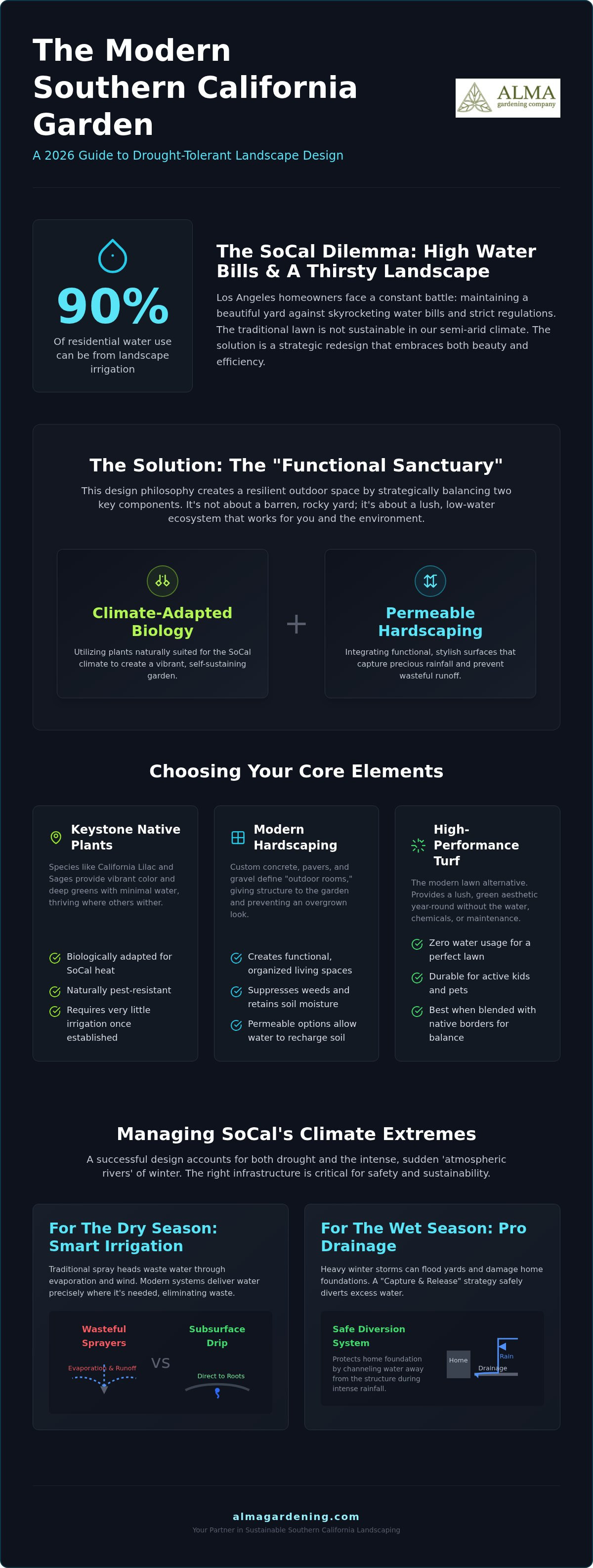
Technical Infrastructure: Irrigation and Drainage
A common misconception suggests that a dry garden requires no technical infrastructure. In reality, a successful drought tolerant garden design Southern California must account for our region's intense, sudden atmospheric rivers. Without proper planning, the same yard that survives a heatwave can become a flood zone during a winter storm. We implement a "Capture and Release" strategy to manage this volatility. This method ensures that rainfall is either absorbed by the soil or safely diverted away from your property, balancing water conservation with structural safety.
Smart Irrigation for Zero Waste
Precision is the key to sustainability. We replace traditional spray heads, which lose water to evaporation and wind drift, with subsurface drip irrigation. This system delivers moisture directly to the root zone, significantly reducing waste. To maximize efficiency, we install weather-based smart controllers. These devices monitor local forecasts and adjust schedules automatically when the Santa Ana winds arrive, ensuring your plants stay hydrated without wasting a single drop.
Protecting the Home Foundation
Technical infrastructure is as much about protection as it is about growth. Poorly managed runoff can lead to soil expansion and foundation damage. We prioritize outdoor drainage system installation to safeguard your home. By integrating French drains and precise grading with your drought tolerant garden design Southern California, we prevent water from pooling against concrete slabs. This synergy between permeable hardscaping and technical drainage allows for groundwater recharge while keeping your primary living space dry. If you want to secure your property against the next big storm, consult with Alma Gardening Company to review your site's specific drainage needs.
Implementation: Transforming Your Yard into a Sanctuary
Turning a thirsty lawn into a functional sanctuary requires a methodical design-build approach. This transformation is a structured evolution of your property's ecosystem. A typical project follows a sequence that ensures every layer, from subterranean drainage to the final decorative mulch, is installed with precision. This careful coordination guarantees your drought tolerant garden design Southern California thrives for years to come while immediately enhancing your home's aesthetic appeal and property value.
Phase 1: Demolition and Site Grading
Begin by clearing the canvas. While sheet mulching is an eco-friendly method for suppressing old turf, mechanical removal is often necessary for projects with complex hardscaping needs. Once the grass is removed, we focus on grading. Proper site contouring is a critical step for long-term success. It directs runoff toward your new drainage systems and away from your home's foundation, preventing the pooling issues that often occur during heavy winter rains.
Phase 2: Hardscape and Infrastructure
Construct the garden's structural "bones" before introducing any biology. This phase involves laying custom pavers, pouring concrete paths, and burying high-efficiency irrigation lines. Installing these elements first protects your investment by preventing heavy machinery from compacting the specialized soil needed for native plants. Once the infrastructure is set, prioritize professional soil preparation. Local Los Angeles soil often requires specific amendments to ensure proper aeration and drainage for your new drought-tolerant species.
Illuminate your new environment to maximize its utility after dark. Use these backyard hardscape lighting ideas to highlight architectural plants and safe pathways. High-quality outdoor lighting transforms your yard from a daytime garden into an evening retreat, allowing you to enjoy your water-wise sanctuary long after the sun sets.
Secure Your Los Angeles Sanctuary Today
Transforming your yard into a water-wise environment is an investment in both your lifestyle and the local ecosystem. You've learned how a successful drought tolerant garden design Southern California relies on the perfect balance of high-end hardscaping, technical drainage, and climate-adapted biology. These elements work together to reduce your utility bills while creating a durable, high-value outdoor living space. By focusing on a professional design-build approach, you ensure your garden survives the heat and thrives during the rains.
Don't leave your property's resilience to chance. Partner with a licensed and insured Los Angeles contractor that specializes in sustainable transformations. We bring deep expertise in both hardscape and softscape to every project we touch. Take the first step toward a more beautiful, efficient home. Book Your Sustainable Landscape Consultation with Alma Gardening and start envisioning your new sanctuary. Your future-proof garden is within reach.
Frequently Asked Questions
Is a drought-tolerant garden more expensive to install than a regular lawn?
Upfront costs for drought tolerant garden design Southern California are often higher than basic sod due to the technical grading and high-end hardscaping required. However, you'll see a return on investment through lower LADWP bills and reduced maintenance expenses. While a lawn is a constant drain on resources, a sustainable landscape functions as a high-value asset. It increases your property's curb appeal while providing a durable space that thrives in our heat.
Will my drought-tolerant garden look brown and dead during the summer?
A professionally designed garden remains lush and vibrant throughout the year. We achieve this by selecting evergreen native species and integrating high-quality hardscaping or synthetic turf. By using hydrozoning and smart irrigation, we ensure your plants receive exactly what they need to stay healthy in the peak of August. Your yard will look like a functional sanctuary, avoiding the "dead" look often associated with poorly planned, dry landscapes.
Do I still need an irrigation system for California native plants?
Yes, supplemental water is critical during the first two years of growth. While mature native plants are resilient, they need a reliable drought tolerant garden design Southern California infrastructure to establish deep root systems. We install subsurface drip irrigation to deliver moisture directly to the soil without evaporation waste. Once established, your garden will require far less water than traditional turf, but a smart controller remains essential for long-term health.
Can I get a rebate for replacing my lawn in Los Angeles in 2026?
Many local water districts offer substantial financial incentives for turf removal. Programs like SoCal Water$mart currently provide rebates starting at $2 per square foot, while some areas like Anaheim offer up to $3 per square foot through October 2026. It's important to verify current eligibility with the LADWP or your specific provider before starting your project. These rebates help offset initial costs while you transition to a more sustainable yard.
How long does it take for a drought-tolerant garden to become established?
Most gardens require one to two full growing seasons to reach full maturity. During this establishment phase, your plants focus on building robust root structures rather than rapid surface growth. You'll notice a significant increase in density and beauty by the second spring. With professional soil preparation and a well-calibrated irrigation system, your landscape will transition quickly from a new installation to a thriving, low-maintenance sanctuary that survives our regional climate cycles.
