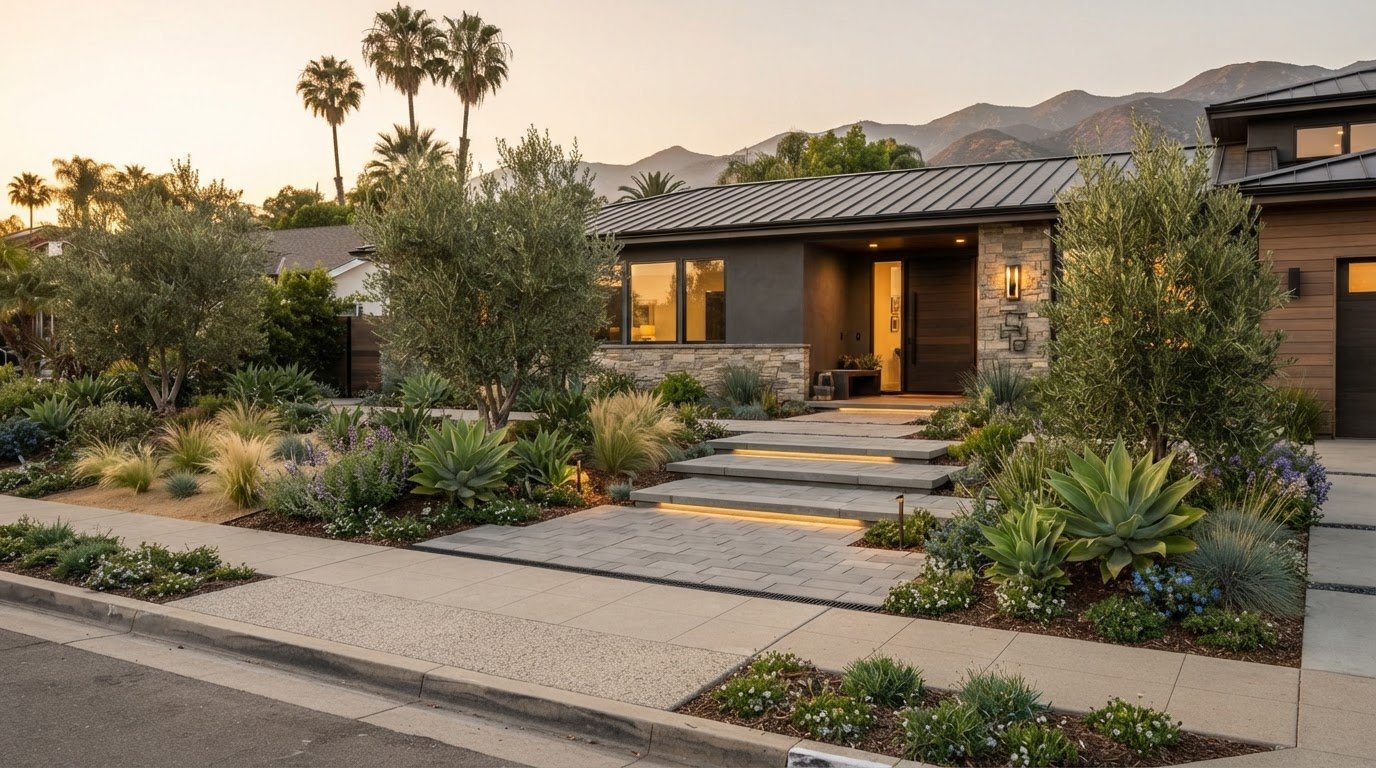
Front Yard Curb Appeal: Complete Architectural Guide (2026)
A weekend trip to the nursery won't fix a dated exterior. Lasting visual impact relies on deliberate hardscape architecture, not temporary floral arrangements. If you're tired of battling patchy brown lawns, steep water bills, and the frustration of coordinating competing materials, you aren't alone. Balancing pavers, subterranean grading, and living plants can quickly overwhelm any homeowner. A truly transformative front yard makeover for curb appeal requires stepping back from quick surface fixes to address structural form, functional circulation, and site engineering first.
Your home deserves an exterior that unites refined elegance with everyday resilience. In this guide, you'll discover how to transform your front yard into an elegant, water-wise showpiece that permanently elevates curb appeal while slashing weekly maintenance. We'll walk you through the essential architectural steps, exploring durable pavers, modern drainage systems, low-voltage outdoor lighting, and climate-adapted plantings so you have a crystal-clear master plan before hiring a contractor.
Key Takeaways
- Anchor your front yard makeover for curb appeal with balanced hardscaping, climate-resilient plants, and clear sightlines directed toward your entryway.
- Discover why interlocking concrete pavers and geometric architectural steppers resist ground movement far better than standard poured slabs.
- Safeguard your investment by pairing precision slope grading and concealed drainage systems with warm, integrated outdoor lighting.
- Streamline your project from day one with a structured design-build roadmap that moves smoothly from 3D modeling through final site excavation.
Principles of Modern Front Yard Makeovers for Lasting Curb Appeal
True exterior transformation runs far deeper than fresh door paint or potted annuals. In landscape architecture and real estate, curb appeal represents the deliberate harmony between structural masonry, site grading, and climate-resilient plants. A successful front yard makeover for curb appeal establishes an immediate, welcoming sense of arrival. Instead of relying on fleeting seasonal trends, anchor your yard with permanent structural elements. Balancing formal architectural lines with organic, asymmetrical plantings flatters your home's unique footprint while standing resilient through changing seasons.
Establishing Clear Architectural Sightlines and Entry Focal Points
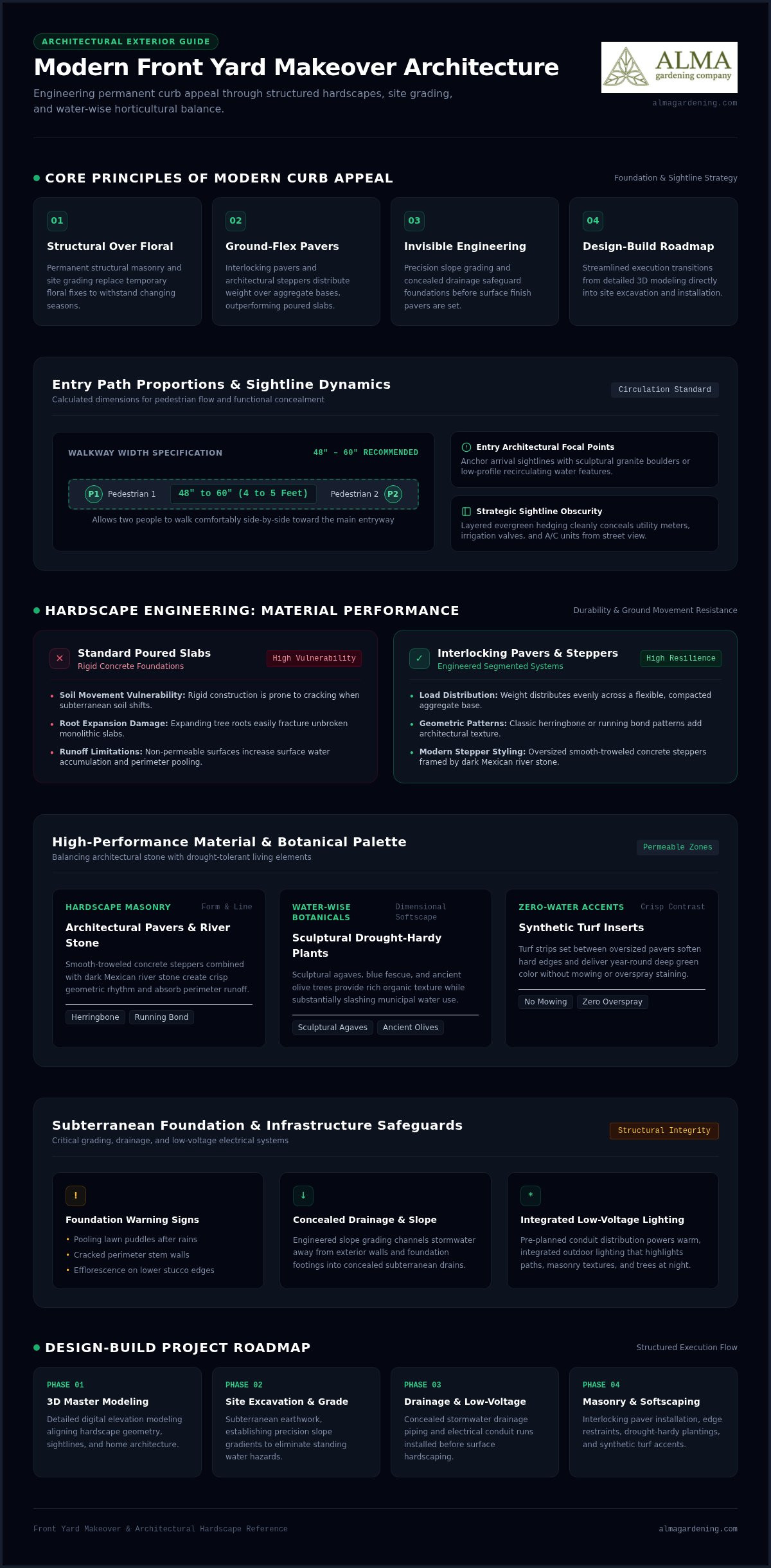
Design entry paths with generous intention. Walkways should measure at least 48 to 60 inches across, allowing two people to walk comfortably side-by-side toward your entrance. Anchor sightlines with architectural focal points, such as sculptural granite boulders or a low-profile recirculating water feature. Position these features to guide pedestrian flow naturally, using layered evergreen hedging to frame clean facade lines while cleanly obscuring utility meters, irrigation valves, and air conditioning units from street view.
Balancing Permeable Hardscapes with Organic Softscapes
Visual equilibrium requires a calculated balance between functional circulation and living ground cover. Avoid overwhelming the lot with unbroken pavement. Instead, integrate permeable hardscape zones with breathable, drought-tolerant plantings that absorb runoff and soften harsh angles. When planning a front yard makeover for curb appeal, select paver hues and stone aggregates that directly complement your exterior stucco, trim, and rooflines. This disciplined approach delivers effortless elegance, enduring durability, and superior structural balance.
High-Impact Materials and Features for a Modern Front Yard Transformation
Selecting durable surfaces and sculptural vegetation defines how your property looks and weathers over time. Applying the fundamental principles of landscape design requires balancing proportion, line, and material unity. When engineered properly, high-performance hardscaping and climate-resilient elements form the structural backbone of an enduring front yard makeover for curb appeal.
Architectural Pavers and Custom Concrete Walkways
Standard poured concrete slabs often crack under shifting soil conditions and expanding tree roots. Interlocking concrete pavers solve this vulnerability by distributing weight evenly across a flexible, compacted aggregate base. Laying pavers in a classic herringbone or running bond pattern introduces subtle architectural texture to entry paths and driveways. For a bolder, minimalist look, oversized smooth-troweled concrete steppers framed by dark Mexican river stone establish crisp geometric rhythm. Explore professional hardscape design and installation to ensure proper grading and sturdy edge restraints from the start.
Drought-Tolerant Foliage and Premium Synthetic Turf Accents
Water-wise landscaping doesn't mean barren gravel expanses. Sculptural agaves, blue fescue, and ancient olive trees provide rich, dimensional texture while dramatically cutting municipal water consumption. You can soften crisp masonry edges by installing vibrant synthetic turf strips between oversized pavers. These modern turf inserts deliver deep green contrast without mowing or overspray stains. For properties in dry microclimates, specialized synthetic turf installation Los Angeles delivers year-round color. Consulting with the design specialists at Alma Gardening Company ensures your synthetic surfaces and drought-hardy plants blend seamlessly into your home's exterior elevation.
Essential Infrastructure: Grade, Drainage, and Lighting Systems
Enduring beauty requires invisible engineering. Without solid subterranean groundwork, high-end masonry and rare botanicals won't survive harsh downpours. A complete front yard makeover for curb appeal starts below the surface, solving slope gradients, stormwater flow, and low-voltage electrical distribution before any finish pavers are placed.
Protecting Home Foundations with Professional Drainage Solutions
Standing water near exterior walls threatens structural integrity. Look for telltale warning signs: pooling lawn puddles, cracked perimeter stem walls, and efflorescence along lower stucco edges. Under the 2024 International Residential Code (IRC), soil directly adjacent to your foundation must slope away at a minimum 5% grade for at least 10 feet. Protect your home by combining subsurface French drains with decorative dry creek beds lined with smooth river cobble. These dry washes act as functional bioswales during cloudbursts and architectural dry gardens during summer. Review our guide on outdoor drainage system installation to master foundational water deflection.
Layered Architectural and Path Lighting Design
Curb appeal shouldn't vanish at sunset. Modern exterior illumination utilizes balanced, low-voltage LED layers rather than glaring floodlights. Group your lighting into three primary zones:
- Uplighting: Cast warm 2700K beams upward into multi-trunk olive trees or tall agaves to produce striking nighttime silhouettes against facade walls.
- Path lighting: Position concealed brass fixtures along entry walkways and driveway perimeters, directing glare-free light down onto walking surfaces.
- Hardscape accents: Tuck discreet under-cap LED strips beneath retaining walls and porch step treads for clean geometric illumination.
Discover subtle fixture techniques in our overview of outdoor lighting for home security and beauty. When you're ready to protect your investment and elevate your evening aesthetic, book a consultation with Alma Gardening Company to engineer your drainage and lighting systems seamlessly.
Step-by-Step Front Yard Makeover Process with a Design-Build Contractor
A transformative front yard makeover for curb appeal requires disciplined phasing rather than rushed DIY work. Orchestrating civil grading, structural masonry, and delicate horticulture demands a coordinated roadmap divided into four clear stages:
- Phase 1: Planning and Approvals: Conceptual 3D landscape renderings, boundary line surveys, and HOA compliance filings.
- Phase 2: Demolition and Grading: Turf removal, concrete break-out, and initial grade excavation.
- Phase 3: Underground Infrastructure: Subsurface trenching for low-voltage conduit, drainage pipes, and high-efficiency drip lines.
- Phase 4: Construction and Finish: Paver installation, soil preparation, planting, synthetic turf placement, and lighting calibration.
Navigating Local Permits, HOA Guidelines, and Site Assessment
Always verify municipal setbacks, underground utilities, and HOA architectural guidelines before breaking ground. In dry regions, research municipal turf-replacement rebates early, as many water districts require pre-approval before lawn removal begins. Concurrently, assess your property's distinct microclimates. Mapping soil drainage capacity and seasonal sun patterns ensures your chosen materials and plantings thrive without expensive mid-project corrections.
Selecting a Full-Service Sustainable Landscape Design-Build Firm
Hiring separate landscape architects and installation crews often creates finger-pointing when underground issues arise. Selecting a unified design-build contractor guarantees seamless execution from initial site grading to finish stone installation. Ask prospective builders about warranty coverage on paver base compaction, automated irrigation valves, and synthetic turf seams. Partnering with established specialists like Alma Gardening Company ensures every technical detail aligns, giving you complete confidence throughout your exterior renovation.
Bring Architectural Distinction to Your Front Yard
Elevating your property takes far more than surface-level styling. A truly enduring front yard makeover for curb appeal fuses structural hardscaping, water-wise horticulture, and subterranean civil engineering into a single cohesive vision. By pairing interlocking pavers with drought-tolerant plantings, concealed drainage, and low-voltage illumination, you protect your foundation while establishing unmatched street presence.
Realizing this transformation requires an experienced partner who handles every technical discipline under one roof. Alma Gardening Company brings deep Southern California expertise to sustainable yard transformations, managing custom hardscapes, synthetic turf, site drainage, and architectural lighting simultaneously. Say goodbye to water waste and cracked concrete. Take the first step toward an elegant, resilient exterior and schedule your front yard landscape design consultation with Alma Gardening today. Your home sanctuary is ready to take shape.
Frequently Asked Questions
How much does a complete front yard makeover typically cost in California?
Total investment depends on your lot size, existing slope conditions, and material selections. Subterranean drainage work, custom interlocking pavers, and architectural lighting naturally require greater structural investment than simple softscape updates. In Los Angeles, local water district rebates for removing turf can help offset transformation expenses. Working with a unified design-build firm provides detailed project scopes tailored directly to your site goals.
What are the best low-maintenance plants for high-impact front yard curb appeal?
Sculptural, climate-resilient varieties thrive best in Southern California. Focus on architectural succulents like Agave attenuata or blue glow agaves, paired with drought-tolerant olive trees and ornamental grasses like blue fescue. These selections provide dramatic color contrast and architectural texture with minimal pruning, keeping your front yard makeover for curb appeal looking vibrant year-round without demanding daily irrigation.
Does replacing a front lawn with synthetic turf hurt or help home resale value?
Installing premium synthetic turf generally boosts market value in dry regions like Los Angeles. Prospective buyers value having an immaculate, year-round green lawn that requires zero mowing and eliminates heavy municipal water bills. The key is proper installation; professional grading, permeable aggregate sub-bases, and realistic multi-tone turf fibers prevent matting and preserve clean curb appeal for decades.
Can I keep mature trees when redesigning my front yard hardscape and walkways?
Yes, existing mature trees can be preserved and highlighted as central architectural features. Design-build specialists protect the critical root zone by setting walkways back from the trunk flare and using permeable pavers or raised concrete steppers. This careful engineering prevents compaction and root damage, while low-voltage uplighting integrated into the surrounding garden showcases the tree canopy as an established statement piece.
How long does a professional front yard design and installation project take?
Most residential front yard transformations take between four to eight weeks for active construction, following the initial planning and design approval phase. The precise timeline hinges on the complexity of your hardscaping, site excavation requirements, subterranean drainage installation, and local permitting or HOA reviews. A dedicated design-build team coordinates each trade sequentially to prevent unnecessary delays and maintain steady progress.
