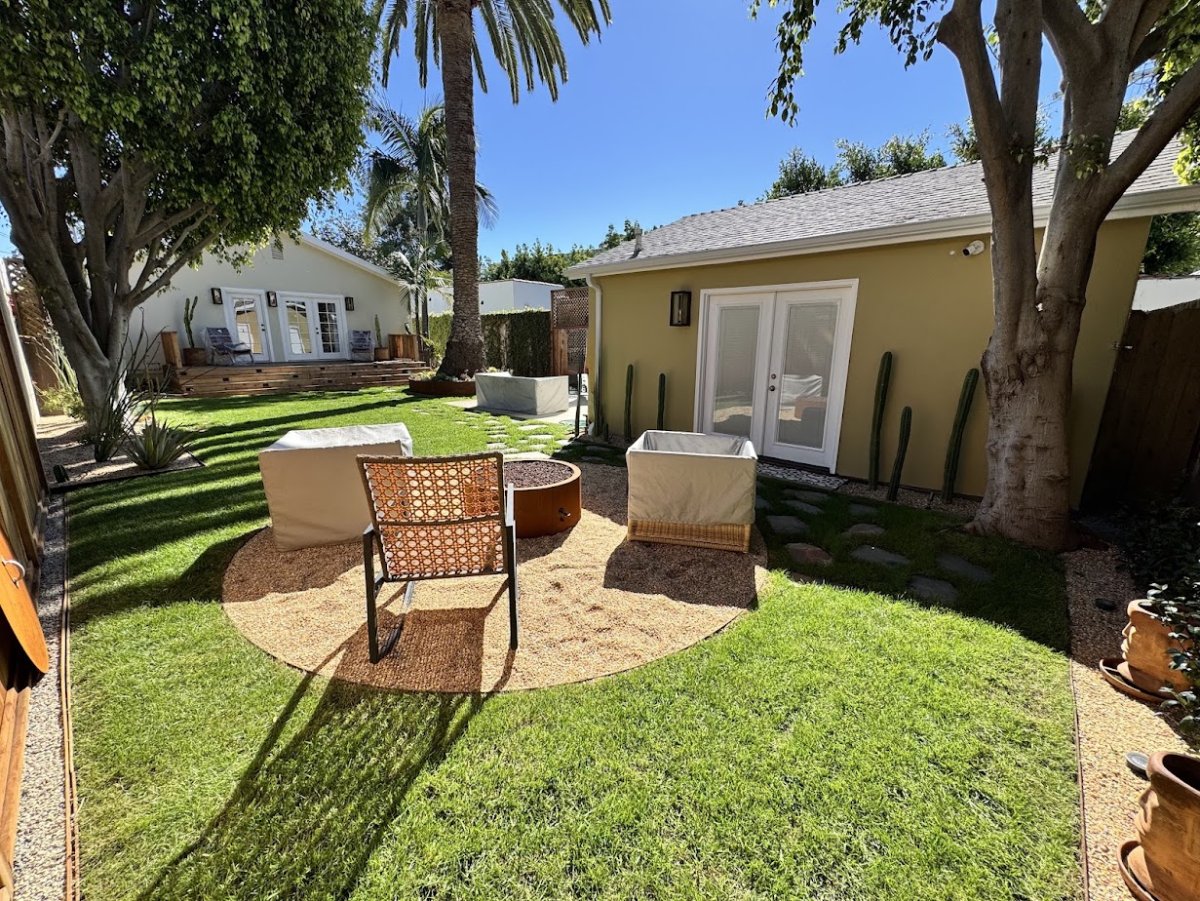
Hardscape Design in Los Angeles: Custom Fire Pits, Patios & Outdoor Living
What matters most in a hardscape project may be the work you won’t see once it’s finished. A beautiful surface can’t make up for poor grading, inadequate drainage, or a layout that doesn’t suit the property. When comparing a hardscape contractor Los Angeles homeowners can rely on, look beyond the finished materials and ask how the team plans the entire site.
Proposals can be difficult to compare when they use different materials, scopes, or levels of detail. The right choice depends on your property’s conditions, how you’ll use the space, and how each element fits together. This guide explains how to assess contractors, compare proposals, plan hardscape work for Southern California, and select materials that suit your goals. It also covers how drainage, access, and project scope can affect a patio or broader landscape plan. The goal is an outdoor space that functions well and feels inviting.
Key Takeaways
- Ask contractors how they’ll assess access, grading, drainage, and installation sequence before recommending a design.
- Compare written proposals with matching scopes, material choices, exclusions, and clearly assigned responsibilities.
- Define how you’ll use the space, then compare pavers and concrete against your property’s needs and design goals.
- Choose a hardscape contractor Los Angeles property owners can discuss coordinated improvements with, including drainage, irrigation, lighting, and outdoor living features.
What a Los Angeles Hardscape Contractor Should Plan Beyond the Surface
Hardscaping means installing built, nonliving landscape features such as patios, pavers, concrete areas, and paths. These elements create structure and usable surfaces. What is Hardscape offers a foundational overview. But installing a surface is not the same as planning an outdoor space. A considered design also accounts for how people will move through the property, where they’ll gather, how crews can access the work area, and where water will flow.
In Los Angeles, sun exposure and heat can affect how comfortable a surface feels underfoot and when you’re likely to use the space. Before settling on a layout or material, assess the actual site: note shade, slope, existing surfaces, and intended use. These details help you discuss practical options rather than choosing from appearance alone.
Which hardscape projects can a contractor help plan?
Projects may include a paver patio, a concrete entertaining area, connecting paths, or an outdoor living space coordinated with an outdoor kitchen or shade structure. Ask how these features will relate to one another, including how people will move between them and how the new work will meet existing surfaces. The appropriate scope depends on your goals, access, property, and site conditions.
Why do drainage and grading belong in the conversation?
Grading influences where water flows across a yard, while drainage planning addresses how to manage that water. A new patio or path changes the surface, so its position and slope should be considered alongside nearby planting areas and structures. Ask the contractor to explain how the design responds to existing water movement and where runoff is intended to go before installation begins. For more detail, see this guide to outdoor drainage system installation.
How to Evaluate a Hardscape Contractor in Los Angeles
A useful proposal lets you compare the work, not just the total. Ask each contractor how the design reflects your intended use, why they recommend particular materials, and what preparation the site needs. Find out whether the plan considers access, grading, and drainage, and ask what is included if related landscape elements need attention. The hardscape industry resource can also provide broader context on professional practices and materials.
What should a hardscape proposal explain?
Look for defined work areas, selected materials, site preparation, drainage plans, and clear project boundaries. Ask how crews will reach the work area, whether existing surfaces need demolition, and how nearby planting, irrigation, or other landscape elements will be handled. Have the contractor identify assumptions and exclusions, explain which site conditions could affect the work, and clarify who is responsible for each part of the project.
A useful proposal describes the work area, materials, preparation, drainage approach, exclusions, and responsibilities in writing.
Which questions help compare paver and concrete work?
Ask how each option suits the space’s intended use, appearance, and existing conditions. For example, find out how the new surface will meet nearby paths or patios and respond to the site’s slope. Ask for an explanation of the preparation and installation sequence, not just a material description. For broader planning ideas, review this guide to hardscape design and installation.
Compare proposals line by line. If one leaves out demolition, drainage, or adjacent landscape work, ask whether that work is excluded or simply not described. Discussing the site, intended use, materials, and scope with Alma Gardening Company can help clarify how related landscape improvements may fit into the project.
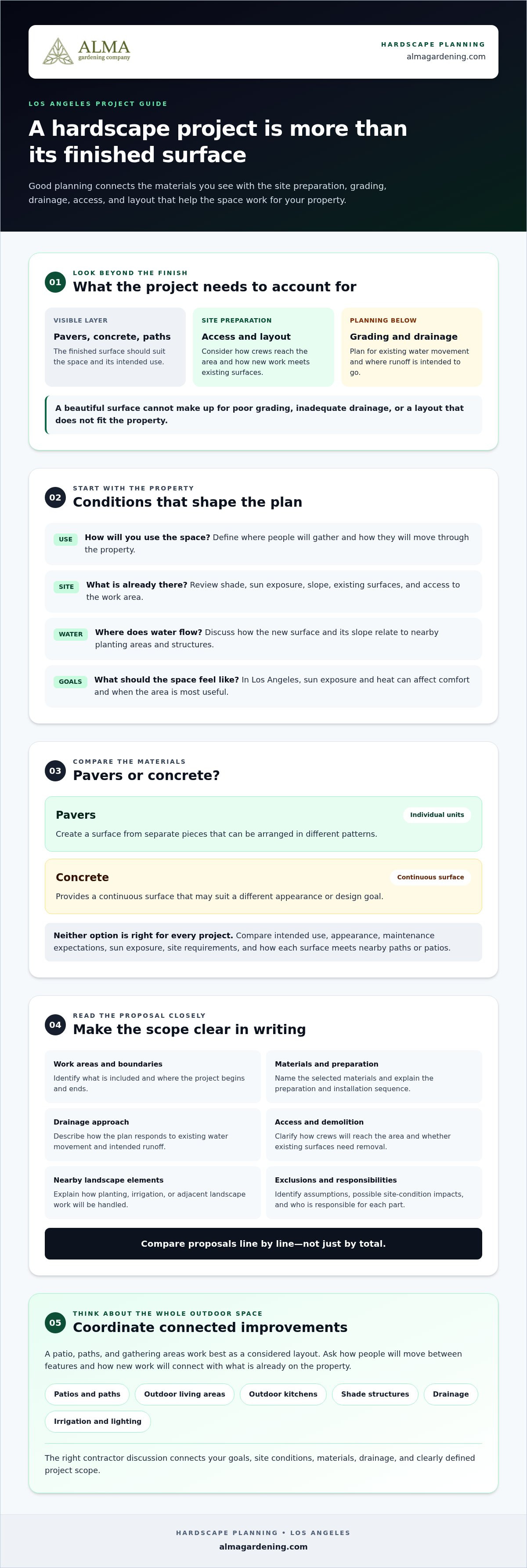
Plan Materials, Drainage, and Project Scope Before Work Begins
A clear plan connects the look of a hardscape project with how it will function on your property. Work through the decisions in order: define how you’ll use the space, review site conditions, compare materials, discuss drainage, and document the agreed scope. Ask the contractor to explain how these choices affect one another instead of treating the surface as an isolated feature.
How should Los Angeles homeowners compare hardscape materials?
Pavers create a surface made of individual units and can be arranged in different patterns. Concrete provides a continuous surface and may suit a different visual goal. Neither is automatically right for every project. Compare appearance, intended use, maintenance expectations, sun exposure, and site requirements, then ask how preparation and installation differ for the options you’re considering. For more material-specific guidance, read about best pavers for Southern California climate.
How can you prepare for a contractor consultation?
Bring photos of the project area, any dimensions you have, inspiration images, and notes about access for workers and materials. Describe how you expect to use the space, such as for dining, seating, or connecting parts of the yard. Point out known drainage concerns and nearby features that may affect the layout. This gives the contractor useful context for discussing design, materials, and site conditions.
Before approving a proposal, check that it documents the project boundaries, preparation, materials, and drainage approach. Costs can vary with access, demolition, design, labor, materials, drainage, permits, and overall scope. Permit needs depend on the specific project and property, so verify applicable requirements with the appropriate local authority before work begins.
Choose a Los Angeles Contractor for a Complete Outdoor Project
A patio rarely works in isolation. If drainage, planting, irrigation, or lighting could affect the same area, plan those elements together to clarify their placement and the project scope before installation. A path or seating area, for example, needs to work with water flow and nearby planting. Lighting can also shape how the space functions after sunset. Explore these backyard hardscape lighting ideas if illumination is part of your plan.
Look for a hardscape contractor Los Angeles property owners can speak with about the whole site, not only the surface material. Alma Gardening Company provides sustainable landscape design and installation for residential outdoor spaces, including hardscaping, paver installation, concrete work, patios, drainage, irrigation, outdoor lighting, and outdoor living improvements. The company serves Los Angeles and nearby communities, including the San Fernando Valley, Sherman Oaks, Encino, Studio City, North Hollywood, Woodland Hills, West Hills, Glendale, Burbank, Beverly Hills, Culver City, Pacific Palisades, and Malibu.
What should you share when requesting a consultation?
Start with the property location and a clear description of how you want to use the space. Share preferred materials, known drainage concerns, access limitations, and priorities such as adding a patio or coordinating hardscape with lighting. Photos and available dimensions can help explain existing conditions, though recommendations depend on reviewing the site and confirming the project scope.
For a more useful initial discussion, explain what matters most and what you’re still deciding. Alma Gardening Company can consider the proposed hardscape alongside related landscape improvements within the project. Contact the team to discuss your property, goals, and potential scope.
Build an Outdoor Space That Works as a Whole
A successful hardscape project starts with more than choosing pavers or concrete. Define how you want to use the space, compare proposals by their full scope, and make sure the plan accounts for site conditions, drainage, and how connected features will work together. The contractor you choose should be prepared to discuss the whole project, not just the visible finish.
Alma Gardening Company provides project-based hardscaping, paver installation, concrete, patios, and outdoor living areas, with related drainage, irrigation, and outdoor lighting services. The company serves Los Angeles and communities across the San Fernando Valley, including Sherman Oaks, Encino, Studio City, North Hollywood, Woodland Hills, West Hills, Glendale, Burbank, Beverly Hills, Culver City, Pacific Palisades, and Malibu. When requesting a consultation, share your property location, priorities, preferred materials, and any known site concerns. These details can help clarify which improvements may suit your property and goals.
Thoughtful planning can bring lasting function and a welcoming feel to your outdoor space. Start with a clear vision, then shape the details around your property.
Frequently Asked Questions
How do I choose a hardscape contractor in Los Angeles?
Explain how you plan to use the outdoor space, then ask how the contractor will assess access, existing surfaces, preparation, material choices, and drainage. Compare written proposals with clear scopes and assumptions, not just totals. Use “hardscape contractor Los Angeles” as a search starting point, and check whether the contractor serves your property’s location, including the San Fernando Valley, Los Angeles, Sherman Oaks, Encino, Studio City, North Hollywood, Woodland Hills, West Hills, Glendale, Burbank, Beverly Hills, Culver City, Pacific Palisades, or Malibu.
What should a hardscape contractor include in a project proposal?
A project proposal should identify the work area, planned installation, material assumptions, site preparation, and any included drainage or related landscape work. Ask what’s excluded, who handles each element, and what site conditions could change the scope or schedule. For permits or other approvals, request project-specific guidance and confirm applicable requirements with the appropriate local authority before committing.
Are pavers or concrete better for a Los Angeles patio?
Neither pavers nor concrete is universally better for a Los Angeles patio. Compare how each suits the intended use and desired appearance, along with maintenance expectations and installation requirements. Sun exposure, drainage, access, and nearby planting can also influence the choice. Ask the contractor to explain the trade-offs for your property and how the selected surface will connect with the surrounding landscape.
How much does a hardscape project cost in Los Angeles?
Hardscape project costs depend on site conditions, access, demolition, materials, design, labor, drainage, permits, and overall scope. Ask for a written estimate that explains the included work and assumptions. Share site details and project goals so contractors can evaluate the same requirements. Comparing proposals is most useful when they describe matching work, rather than different materials or exclusions.
