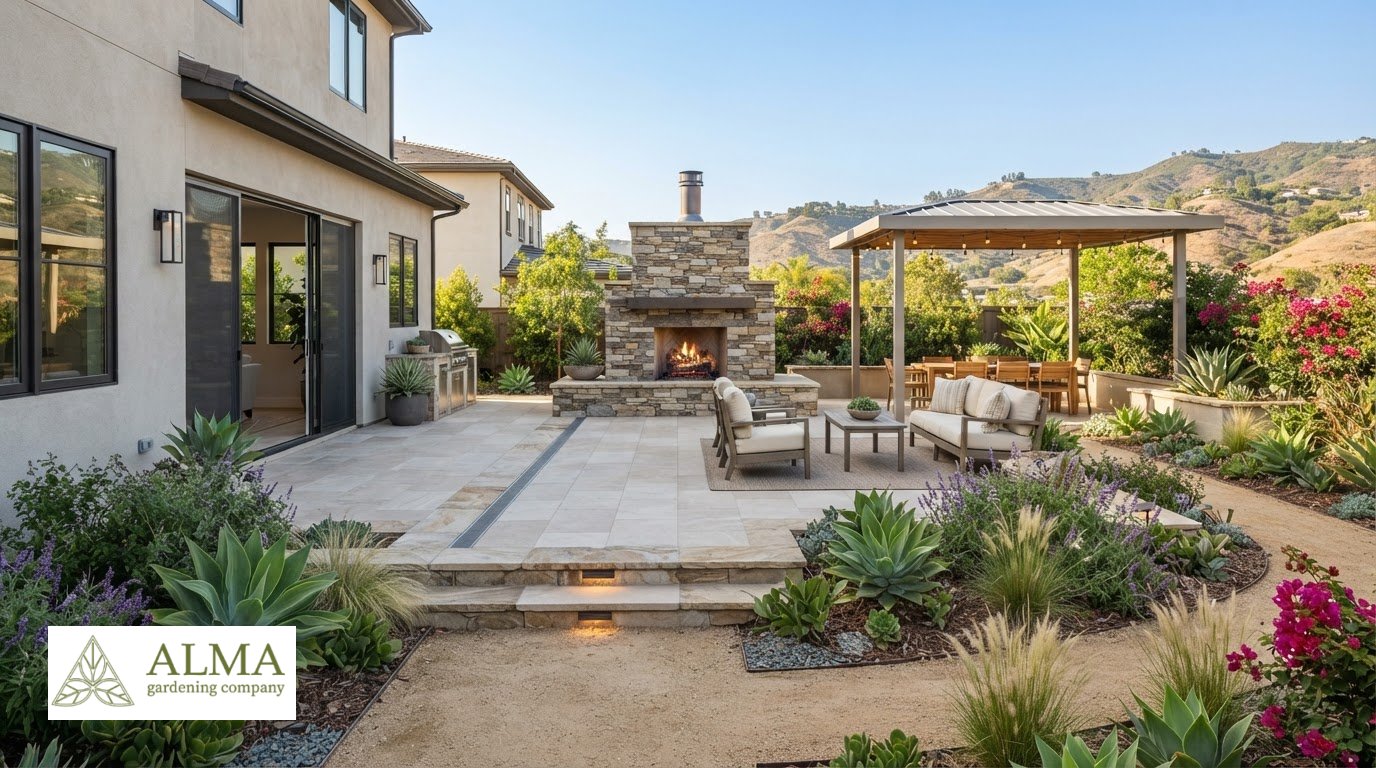
How to Master Outdoor fireplace builder near me for Better Results
A welcoming patio depends on more than its surface. Where the sun falls, how water drains, and how people move between seating, dining, and cooking areas all affect how well the space works. When comparing a patio contractor Los Angeles homeowners can consider, look beyond finished photos and ask how each proposal addresses the whole site.
It’s understandable to feel unsure when bids describe different materials, layouts, or project scopes. A durable patio should suit your property, support the way you plan to use it, and account for Southern California’s heat, sun exposure, and drainage needs.
This guide explains how to assess a contractor’s relevant experience, compare proposals, and decide what belongs in your project, from pavers or concrete to coordinated drainage, irrigation, lighting, and shade. You’ll also learn what to bring to a site-specific consultation and what to clarify before installation begins. With a clear plan, you can make informed choices and create an outdoor living area that feels comfortable, looks cohesive, and functions well.
Key Takeaways
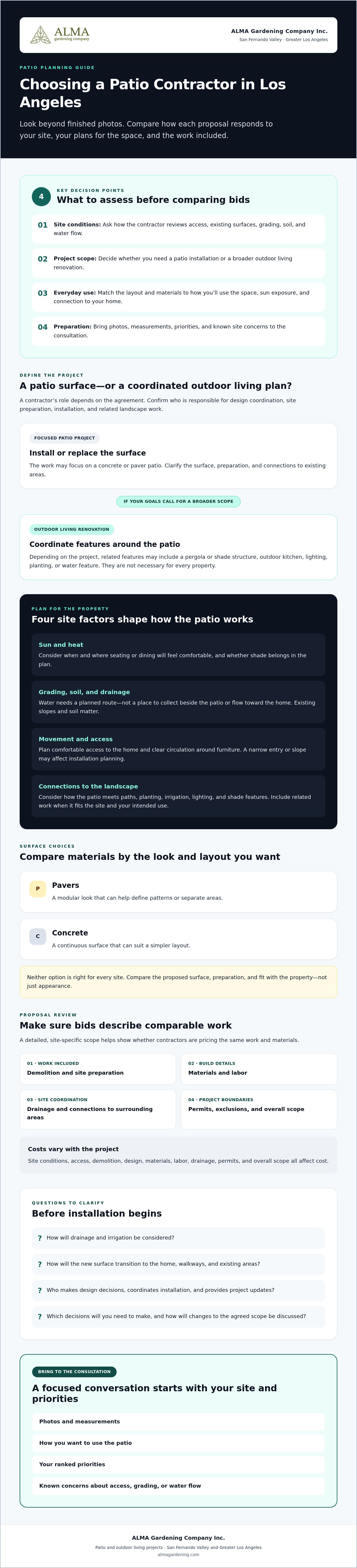
- Assess a patio contractor by asking how they review access, existing surfaces, grading, and water flow.
- Decide whether your project is a patio installation or a broader outdoor living renovation before comparing proposals.
- Match the layout and materials to how you’ll use the space, its sun exposure, and its connection to your home.
- Bring photos, measurements, priorities, and known site concerns to make your consultation more focused.
What to expect from a patio contractor in Los Angeles
A patio contractor coordinates the planning and installation of a hardscape area, aligning its layout, materials, and construction scope with the property and how people will use the space. The contractor’s role depends on the agreement, so confirm who is responsible for design coordination, site preparation, installation, and related landscape work. For a basic overview of patio uses and materials, see What is a Patio?
A patio project may focus on installing or replacing a concrete or paver surface. A broader outdoor living renovation can coordinate the patio with features such as a pergola, outdoor kitchen, lighting, planting, or water feature. These additions aren’t necessary for every property. Choose a scope that fits your goals, site, and budget.
Which patio and outdoor living services may be included?
Depending on the contractor and project, work may include paver or concrete installation, a pergola or shade structure, or an outdoor kitchen. Ask which items are included, which are handled separately, and how each part connects to the overall plan. A patio contractor should be able to explain the proposed work in clear, practical terms.
Why plan the patio with its surrounding landscape?
Los Angeles sun and heat can affect where a seating or dining area feels comfortable throughout the day. Existing slopes, soil, and drainage matter too: water needs a planned route rather than collecting beside the patio or flowing toward the home. Irrigation, planting, and lighting may also affect the layout, but include them only when they suit the site and your intended use.
Planning these elements together can help prevent conflicts between hardscape and landscape improvements. Drainage may need attention before surface installation, for example, while shade or lighting can influence where people gather. Alma Gardening Company provides patio and outdoor living projects alongside related hardscape, drainage, irrigation, and lighting work in the San Fernando Valley and Greater Los Angeles. Discuss your site and priorities to clarify a suitable scope.
How to choose a patio contractor in Los Angeles
Compare the planning behind each proposal, not just its total or finished appearance. Ask how the contractor’s proposal responds to your property and what work it includes.
Patio contractor Los Angeles: what to compare
- Define your goals. Decide how you want to use the patio, such as dining, relaxing, or connecting to an existing outdoor area. Rank your priorities so the proposed design supports daily use.
- Discuss the site. Ask how the contractor will assess access, existing surfaces, grading, soil, and water flow. A narrow entry or slope may affect installation planning, while poor drainage can create problems beyond the patio itself.
- Clarify scope and materials. Confirm the proposed surface, preparation, and related work. Ask how the layout will connect to existing paths, planting, irrigation, or shade features. Michigan State University Extension’s guidance on landscape design principles can help you consider how the patio fits into the wider yard.
- Check communication. Ask who makes design decisions, coordinates installation, and provides project updates. Clear responsibilities help prevent assumptions from becoming disagreements.
Questions to ask before hiring
Ask how drainage and irrigation will be considered, and how the new surface will transition to the home, walkways, and other existing areas. Find out which decisions you’ll need to make and how changes to the agreed scope will be discussed.
How to review a patio proposal
Check whether the written scope addresses demolition, materials, labor, drainage, permits, and project boundaries. Identify what is included and excluded, including site preparation and connections to surrounding areas. Costs vary with site conditions, access, demolition, design, materials, labor, drainage, permits, and overall scope.
A detailed, site-specific scope makes proposals easier to compare because it shows whether contractors are pricing the same work and materials. To discuss your property and priorities, contact Alma Gardening Company about a consultation.
Plan a Los Angeles patio around site conditions and daily use
Start with how you’ll use the space. Dining calls for comfortable access to the home; lounging may call for privacy and shade; clear circulation keeps people from squeezing around furniture. In Los Angeles, sun exposure and heat can make the patio’s orientation and nearby shade as important as its surface. Consider these details alongside existing levels and water flow.
Match patio materials and layout to the property
Pavers offer a modular look and can help define patterns or separate areas. Concrete creates a continuous surface and can suit a simpler layout. Neither option is right for every site. Consider the appearance you want, how the surface connects to doors and paths, access for installation, and how you’ll use the area. Discuss upkeep expectations and surface options with the contractor before choosing a material.
| Project consideration | Question to ask | Design implication |
|---|---|---|
| Sun and heat | Where will shade fall during the hours we use the patio? | May influence seating location or whether a pergola is appropriate. |
| Levels and transitions | How will the patio meet doors, paths, and existing surfaces? | Can shape layout, access, and material selection. |
| Water flow | Where does water move across the site now? | Drainage planning should inform hardscape work. |
| Planting and irrigation | Which areas need planting, and how can irrigation support them efficiently? | Helps coordinate landscape choices with water-conscious goals. |
Coordinate drainage, shade, and landscape features
Plan water flow before hardscape installation so the new surface works with the surrounding yard. Depending on your goals, a pergola can provide shade, outdoor lighting can support evening use, and efficient irrigation can serve nearby planting. These features are options, not requirements. For broader consumer guidance during contractor selection, the Federal Trade Commission’s Hiring a Contractor resource offers useful considerations.
Move from patio ideas to a clear project consultation
A focused consultation starts with useful details about your property and priorities. You don’t need a finished design. A few photos and notes can help a contractor understand the space and discuss practical next steps.
What to prepare before requesting a consultation
- Photos and approximate measurements: Show the proposed patio area, nearby doors, paths, existing surfaces, and access points.
- Intended uses and priorities: Note whether you want space for dining, relaxing, or entertaining, and identify what matters most.
- Site concerns: Record where the area gets sun, where water collects or flows, and any questions about existing irrigation or outdoor lighting.
- Inspiration images: Gather examples of materials, layouts, or shade features you like. Use them to explain your preferences, not as a substitute for evaluating your site.
These details give the consultation a clear starting point. The discussion can then focus on layout, material options, drainage needs, related landscape services, and what belongs in the project scope.
When a coordinated landscape project may make sense
If the patio area also needs drainage attention, irrigation adjustments, lighting, planting, or shade, it may help to discuss those elements together. Coordinated planning lets the project team consider how improvements meet and affect one another. That doesn’t mean every feature should be included; recommendations should reflect the property and your goals. Permits and other project requirements depend on the specific work and location, so clarify what needs review rather than assuming.
Alma Gardening Company provides landscape design and installation, including patios, hardscaping, pavers, concrete, drainage, irrigation, lighting, pergolas, and outdoor kitchens in the San Fernando Valley and Greater Los Angeles. Share your site details and priorities to discuss a suitable scope and confirm service availability for your area.
Build a Patio Plan That Fits Your Property
A successful patio begins with more than choosing a surface. Clarify how you’ll use the space, review the site’s sun exposure and water flow, and compare proposals by their materials and included work. These steps make it easier to assess contractors and arrive at a consultation with clear priorities.
Consider how the patio connects to the surrounding landscape, too. Coordinating hardscaping with drainage, irrigation, or outdoor lighting may make sense when those improvements support your goals. Alma Gardening Company provides patios and outdoor living areas, along with related paver, concrete, drainage, irrigation, and lighting projects across the San Fernando Valley and Greater Los Angeles. Discuss your location, site conditions, and project scope to confirm whether the work fits your needs.
With thoughtful planning and a clear scope, you can take the next step toward an outdoor space that feels inviting and works well for your property.
Frequently Asked Questions
What should I look for when hiring a patio contractor in Los Angeles?
Look for a clear site review and written scope. Ask how the plan addresses your goals, access, existing surfaces, drainage, materials, and transitions to the surrounding landscape. Compare what each proposal includes, not just its total, and confirm service availability for your address. Alma Gardening Company serves the San Fernando Valley and Greater Los Angeles, including Sherman Oaks, Encino, Studio City, North Hollywood, Woodland Hills, West Hills, Glendale, Burbank, Beverly Hills, Culver City, Pacific Palisades, and Malibu.
Do I need a landscape designer as well as a patio contractor?
It depends on the project’s size and how the patio fits into the yard. A focused patio installation may need a clear hardscape plan, while a broader renovation could coordinate the patio with drainage, irrigation, outdoor lighting, shade, or planting. Before agreeing to a scope, ask who will guide design decisions and explain how related work will be planned and included.
How much does a patio project cost in Los Angeles?
Patio project costs vary according to site conditions and the work included, so an estimate should reflect the specific property. Access, demolition, materials, design, labor, drainage, permits, and project complexity can all affect the total. Ask each contractor to spell out included work and identify conditions that could change the scope. This makes proposals easier to compare without relying on a vague overall figure.
What should a patio contractor assess before installation?
A contractor should assess how you plan to use the patio, site access, existing surfaces, levels, drainage concerns, and connections to the home and surrounding landscape. Sun exposure, nearby irrigation, and outdoor lighting can also shape the plan. Share known issues, such as water collecting near the proposed area, and ask how the proposed scope accounts for them before installation begins.
