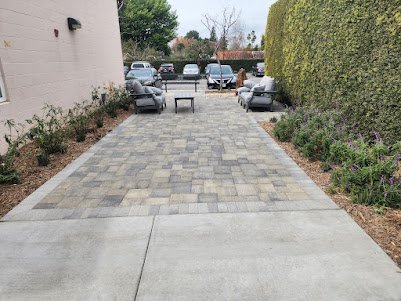
Paver Installation in Los Angeles: Design, Drainage & Material Options
Before reaching for a pressure washer, identify what your outdoor pavers are made of and what is on them. Dust, weeds, and stains may need different approaches, while forceful spraying or an incompatible cleaner can affect the surface, disturb joint material, or send runoff toward plants. Whether you’re cleaning an existing patio or planning permeable paver installation Los Angeles homeowners can incorporate into an outdoor project, begin by checking the pavers, joints, and likely path of rinse water.
This guide walks through a practical cleaning sequence, from sweeping away dry debris to testing a suitable cleaner on a small area. You’ll also find ways to approach common stains, manage weeds without pulling out joint material, and keep rinse water controlled. For homeowners and property managers across the San Fernando Valley and Greater Los Angeles, including Sherman Oaks, Encino, Studio City, North Hollywood, Woodland Hills, West Hills, Glendale, Burbank, Beverly Hills, Culver City, Pacific Palisades, and Malibu, the same principle applies: use the gentlest method that can do the job.
Key Takeaways
- Match the cleaning method to the paver material, finish, joint condition, and type of buildup before treating the whole area.
- Start by sweeping, test any cleaner in a discreet spot, and clean the stain rather than applying products broadly.
- For a larger redesign, consider how permeable paver installation Los Angeles projects can support the intended use of a paved area and its drainage plan.
- Recurring weeds, shifting pavers, damaged joints, or standing water may signal an issue beyond surface cleaning.
How to Clean Outdoor Pavers: Start With the Surface and the Soil
Cleaning outdoor pavers means removing loose debris, surface grime, and suitable stains without damaging the pavers or their installation. Concrete, clay, and stone pavers can respond differently to water and cleaning products. A textured or sealed finish may also need different care from an unsealed surface. Check the joints as well: forceful washing can disturb material that is already loose or worn.
Start with the gentlest method suited to the specific dirt or stain, and use a stronger approach only if needed. Dry dust and leaves usually call for sweeping. Sticky residue or a distinct stain may need a small, targeted test with a cleaner suited to the surface. Treat an unknown stain cautiously. A stronger product or aggressive scrubbing could change the paver’s appearance without removing the mark.
What to check before cleaning a paver patio or walkway
Before adding water, identify the paver and joint materials if possible. Look for loose or uneven pavers, gaps or crumbling joints, and plants close to the paved area. Trace where rinse water could go, including nearby planting beds, drains, and the street. Controlling water and cleaner helps protect the surrounding landscape and limits runoff.
Cleaning won’t correct a sunken section, failed joints, or standing water. These conditions may point to installation or drainage concerns that need a broader solution. Permeable paving is designed to let water pass through the surface, but the system beneath the pavers also affects how it performs. This overview of permeable paving systems explains the basic approach. When planning a paving project, consider drainage and the condition of the entire area as well as its appearance.
Choose a Paver Cleaning Method That Matches the Stain
Choose a cleaning method based on what is on the pavers. Dry sweeping removes dust, grit, and loose leaves without using water. A gentle, controlled rinse may help with ordinary soil, but direct water away from planting beds and avoid spreading dirty runoff. For sticky residue or a distinct stain, test a small amount of a surface-appropriate cleaner in a discreet spot before treating the mark.
Leaf residue can discolor pavers if it sits for a while. Sweep it away first, then check whether a mark remains. Don’t guess at an unknown stain or immediately reach for a solvent. Check the paver manufacturer’s care guidance and the cleaner label for compatibility. The Interlocking Concrete Pavement Institute offers additional guidance on paver cleaning and maintenance, including stain and joint considerations.
| Cleaning need | Gentlest first method | Caution |
|---|---|---|
| Loose dust and grit | Dry sweep | Choose a broom suitable for the surface to avoid scratching delicate finishes. |
| Ordinary soil | Sweep, then rinse selectively if appropriate | Control water near joints, plants, and drainage routes. |
| Leaf residue | Remove debris, then spot-clean if needed | Test first; discoloration may not fully lift. |
| Unknown stain | Identify the likely source and test cautiously | Avoid unverified solvents or specialty products. |
When to be cautious with pressure washers and cleaners
Excessive pressure or close-range spraying can dislodge joint material and affect some paver finishes. If you use a pressure washer, test a discreet area first and begin cautiously. Keep the spray controlled, and stop if the surface changes or joint material starts to wash out.
With permeable paver installation Los Angeles projects, joint material and water movement are part of how the surface functions. If cleaning concerns point to a larger paving or drainage project, explore Alma Gardening Company's paver and drainage work.
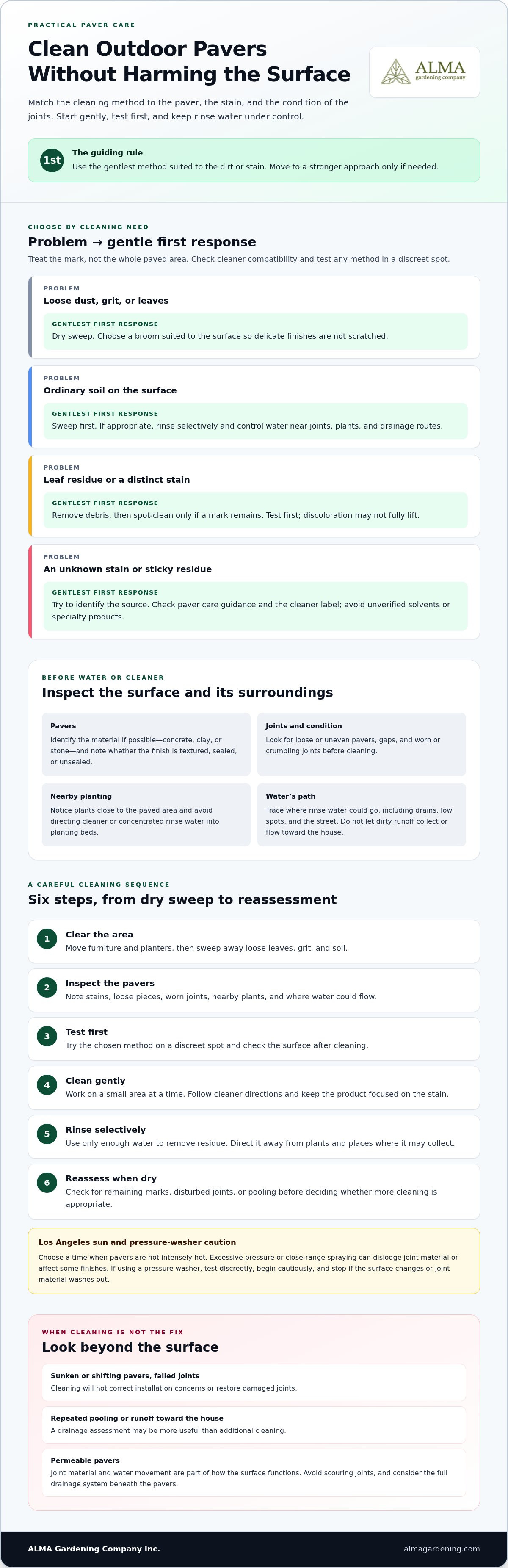
How to Clean Outdoor Pavers Step by Step in Los Angeles
Follow a deliberate sequence: clear the area, inspect the surface, test your method, clean gently, rinse selectively, and reassess. Los Angeles sun can dry surfaces quickly, so choose a time when the pavers are not intensely hot. Follow the cleaner label for application and rinsing.
- Clear the area. Move furniture and planters, then sweep away loose leaves, grit, and soil.
- Inspect the pavers. Note stains, loose pieces, worn joints, nearby plants, and where water could flow.
- Test first. Try your chosen method on a discreet spot and check the surface after cleaning.
- Clean gently. Work on a small area at a time. If using a cleaner, follow its directions and keep it focused on the stain.
- Rinse selectively. Use only enough water to remove residue, directing it away from plants and areas where it may collect.
- Reassess. Once the area is dry, check for remaining marks, disturbed joints, or pooling before deciding whether more cleaning is appropriate.
Keep paver joints, planting, and runoff in mind
Don’t direct concentrated rinse water toward planting beds, structures, or low spots. Avoid scouring joints while treating a stain, particularly on permeable paving. The permeable paver maintenance guide provides additional system-specific context. If water repeatedly pools or flows toward the house, a drainage assessment may be more useful than more cleaning. For homeowners considering permeable paver installation Los Angeles projects, planning for water movement is part of designing a functional paved area.
For persistent pooling or runoff concerns, see ALMA’s outdoor drainage system installation guide.
Keep Clean Pavers Looking Good, and Know When the Issue Is Bigger
Sweep up leaves, grit, and soil before they build up, and address fresh spills promptly with a method suitable for the paver surface. This helps keep a patio or walkway tidy without relying on frequent wet cleaning. Avoid pulling weeds in a way that loosens joint material. If weeds return repeatedly, inspect the joints and surrounding areas for gaps where debris may collect.
When cleaning will not solve the underlying problem
Surface grime may respond to careful cleaning, but movement, deteriorated joints, and persistent pooling are different concerns. Pavers that rock, settle, or leave uneven edges may need installation work. Recurring water accumulation can point to a drainage issue. Repeated washing won’t correct those underlying conditions.
ALMA Gardening Company Inc. provides paver installation and landscape drainage for project-based outdoor improvements. If you’re planning a broader renovation, the hardscape design and installation guide can help you consider how paving fits with the rest of the space. For permeable paver installation Los Angeles projects, drainage and the condition of the full paved area matter alongside the surface finish.
If shifting pavers, failing joints, or standing water are affecting your outdoor space, discuss a paver or drainage project with ALMA Gardening Company Inc.
Protect Your Pavers and Plan for What Comes Next
Good paver care starts with matching the cleaning method to the surface and stain. Sweep away loose debris, test cleaners in a discreet spot, and use water carefully around joints, plants, and drainage routes. If pavers shift, joints deteriorate, weeds keep returning, or water pools, cleaning alone may not address the cause.
Those signs can point to a larger hardscape or drainage project. Whether you’re considering paver installation or permeable paver installation Los Angeles homeowners can include in an outdoor redesign, assess the condition and function of the whole paved area. ALMA Gardening Company Inc. provides paver installation, hardscaping, and landscape drainage systems for outdoor improvement projects in Greater Los Angeles.
With a thoughtful approach, your patio or walkway can look cared for and work in harmony with the surrounding landscape. Begin with gentle cleaning, then address larger concerns with a clear plan.
Frequently Asked Questions
Can I pressure wash outdoor pavers without damaging them?
Pressure washing can harm some paver finishes or wash joint material away if the spray is too strong or held too close. Check the paver care guidance, then test a discreet area with a cautious setting and a wide spray pattern. Keep the nozzle moving and stop if joints loosen or the surface changes. Pressure washing isn’t always necessary.
What is the best way to remove stains from outdoor pavers?
The right method depends on the stain and paver surface. Consider what caused the mark, such as soil or leaf residue, then check the paver manufacturer’s care guidance and the cleaner’s directions. Test a surface-appropriate method in a discreet spot before treating the stain. Some marks may not come out completely, so avoid aggressive scrubbing or stronger products that could alter the finish.
Can I use vinegar or bleach to clean patio pavers?
Don’t assume vinegar or bleach is safe for every patio paver. A product that affects one material or finish may not suit another, and cleaners can reach nearby plants through splashes or runoff. Check the paver manufacturer’s guidance and the product label before use. If compatibility is unclear, skip the chemical and begin with sweeping or another gentle method.
How often should outdoor pavers be cleaned?
There’s no single cleaning schedule for every patio or walkway. Base your routine on how quickly leaves, dust, and soil collect, how often people use the space, and whether spills or visible grime appear. In Los Angeles, exposed surfaces may collect dust, while planted edges can gather fallen leaves. Sweep as needed and use wet cleaning only when it’s useful.
Why do weeds or water keep appearing between my pavers?
Recurring weeds or standing water can point to joint or drainage conditions, not just dirty surfaces. Weeds may take hold where joints are open or fine debris collects. Lingering water may relate to how the paved area and surrounding ground direct runoff. The cause varies by site. A permeable paver installation Los Angeles property owners plan should account for joint materials and water movement across the full system.
