Pet-Friendly Artificial Grass Installation: The Complete 2026 Buying Guide
What if the key to a cleaner dog yard isn’t the grass itself, but what lies beneath it? Urine smells, hot turf under sensitive paws, and poor drainage that leaves a yard damp are common concerns. A successful pet-friendly artificial grass installation is more than a layer of synthetic blades. It’s a complete system designed to handle everyday play, help rinse away waste, and support a cleaner outdoor space.
This guide explains what to look for in pet turf, including drainage, infill, surface comfort, and materials that are easier to maintain. You’ll also learn why careful ground preparation matters and how coordinating synthetic turf with drainage can help direct water away from the home. With thoughtful landscape design, you can create a low-maintenance yard suited to energetic dogs and the needs of your household.
Key Takeaways
- Learn how a pet-focused turf system differs from standard synthetic grass, including the roles of backing and infill.
- See why removing organic material and preparing a well-draining sub-base are essential steps in pet-friendly artificial grass installation.
- Choose turf with your dog’s size and activity level in mind, and compare blade shape and face weight for everyday wear.
- Explore how grading and secure edges can help create a more functional, pet-ready yard in Los Angeles.
What is Pet-Friendly Artificial Grass Installation?
Pet-friendly artificial grass installation creates an outdoor surface designed for the demands of pets, not just the look of a green lawn. It combines synthetic turf with features such as drainage-focused backing and pet-suitable infill to help urine pass through the surface and make routine cleanup easier. For a general overview of turf materials, types, and uses, see Artificial turf.
For Los Angeles homeowners, synthetic turf can reduce reliance on lawn irrigation while providing active dogs with a durable place to play. But the finished yard depends on more than the turf product. Consider three factors together: permeability to move liquid away, durability to withstand running and digging, and surface warmth in sunny areas. Turf can heat up in direct sun, so ask about heat-conscious options and consider how shade and rinsing fit into your yard’s design.
Standard Turf vs. Pet-Friendly Systems
Standard turf may not be designed for frequent pet use. If liquid drains slowly or collects in the backing or base, lingering moisture and waste can contribute to odor and bacterial growth. Pet-focused systems pair drainage-friendly construction with suitable infill. Antimicrobial features may help manage odor, but they don’t replace regular rinsing and maintenance.
Shorter, denser pile can make solid waste easier to remove and help the surface hold up to energetic play. Match the turf to your dog’s habits, and assess how the entire installation will drain, not just how the blades look.
For pet owners, permeable backing is turf backing designed with openings that let liquids pass through into the prepared drainage base instead of pooling on the surface.
That distinction matters. A well-designed system brings turf and drainage together to create a functional outdoor space. Synthetic grass is not simply a carpet to lay over the yard.
The Anatomy of a High-Performance Pet Turf System
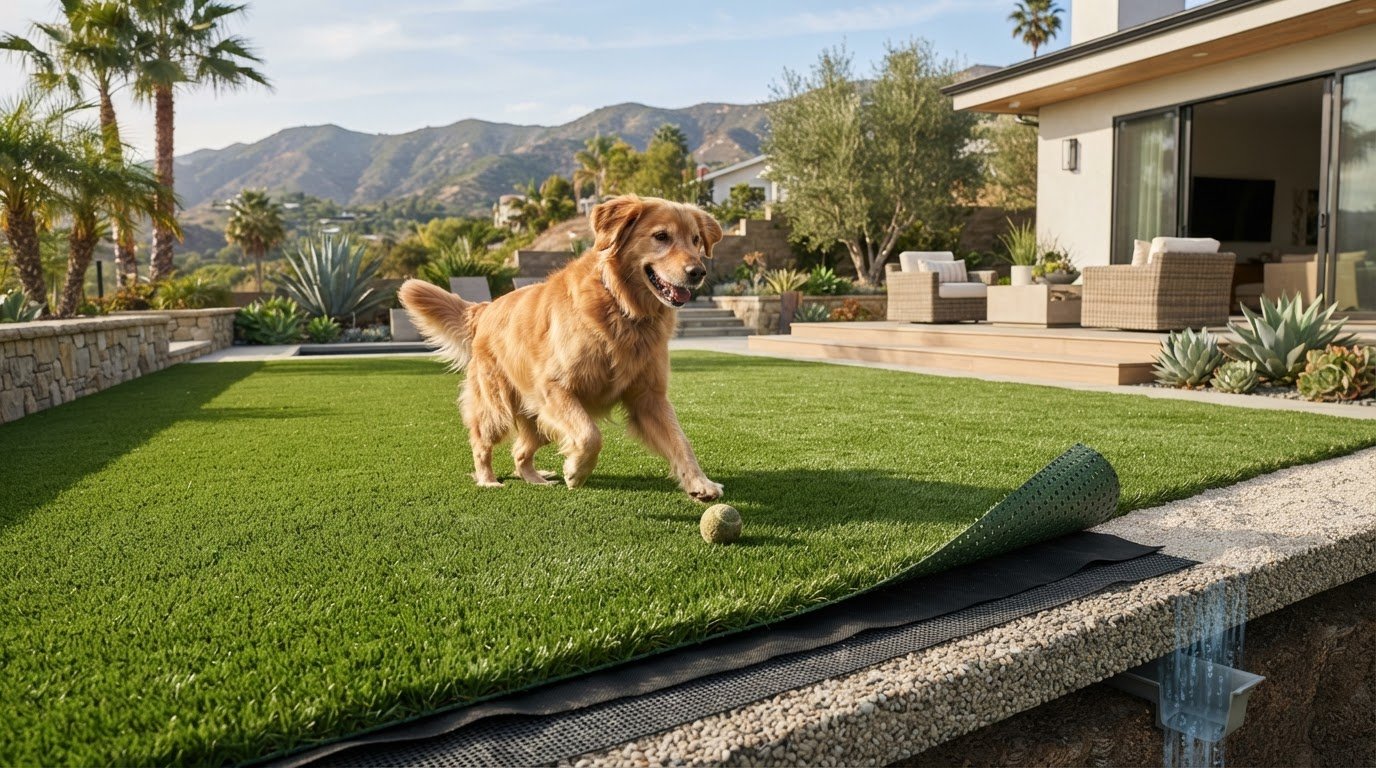
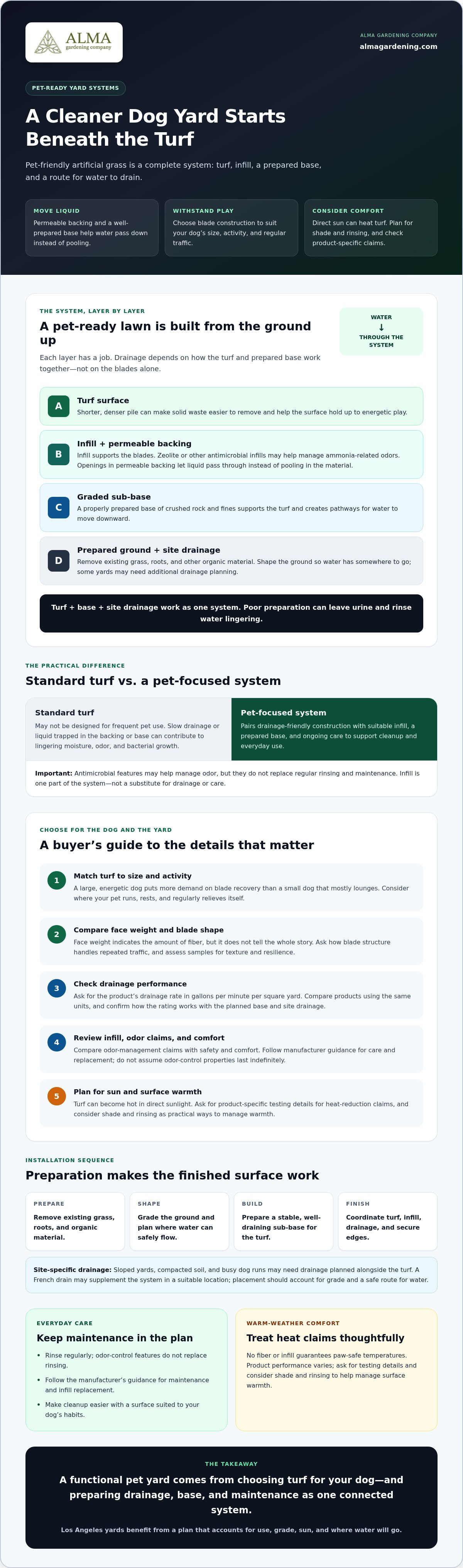
A pet-ready lawn starts below the blades. During pet-friendly artificial grass installation, removing existing grass, roots, and other organic matter helps prevent decay and uneven settling beneath the finished surface. The ground is then shaped and prepared to support a stable base.
A properly graded sub-base of crushed rock and fines supports the turf and creates pathways for water to move downward. If this layer is poorly prepared, or water has nowhere to go, urine and rinse water can linger instead of draining away. The turf backing matters too. Look for a non-absorbent, permeable construction that allows liquids to pass through rather than pool in the material.
Infill helps support the blades. Pet-focused options such as zeolite or other antimicrobial infills may also help manage ammonia-related odors. Infill is one part of the system, not a substitute for drainage, regular rinsing, and care. Check the manufacturer’s guidance for maintenance and replacement instead of assuming odor-control properties last indefinitely.
Advanced Drainage Infrastructure
Sloped yards, compacted soil, and busy dog runs may need drainage planned alongside the turf. Alma Gardening Company’s outdoor drainage system installation guide explains how drainage planning can address persistent runoff concerns. In a suitable location, a French drain may supplement the turf system by collecting and redirecting excess water. Its placement should account for the yard’s grade and where water can safely flow.
Heat-Reduction Technology for Paws
Turf can become hot in direct sunlight, and no fiber or infill should be treated as a guarantee of paw-safe temperatures. Some products advertise heat-reducing fibers or specialized infills, but performance varies. Ask for product-specific testing details, and consider shade and rinsing as practical ways to manage surface warmth.
For a coordinated plan, explore sustainable landscape design and synthetic turf that considers drainage, pet use, and comfort together.
A Buyer’s Guide to Selecting the Best Turf for Your Pets
Choose for the dog that will use the yard, not just the look you want. A sound pet-friendly artificial grass installation matches the turf, drainage, and infill to your pet’s habits and the site’s exposure to sun and wear.
- Assess size and activity. A large, energetic dog puts more demand on blade recovery than a small dog that mostly lounges. Consider where your pet runs, rests, and regularly relieves itself.
- Compare face weight and blade shape. Face weight indicates the amount of fiber in the turf, but it doesn’t tell the whole story. Ask how the blade structure handles repeated traffic, and request samples to assess texture and resilience.
- Check drainage performance. Ask for the product’s drainage rate in gallons per minute per square yard, and compare options using the same units. Confirm how the turf rating works with the planned base and site drainage.
- Review infill choices. Compare odor-management claims with safety and comfort. Ask for material details and documentation, including whether the turf and infill are lead-free and PFAS-free, and follow the manufacturer’s care instructions.
Choosing by Pet Type and Yard Usage
For large breeds and frequent “zoomies,” prioritize durable fibers with good spring-back, and assess samples after bending or pressing the blades. Smaller dogs may do well with a softer-feeling surface and lower pile that makes waste easier to pick up. In Los Angeles sun, ask how the surface feels when warm and plan around available shade.
Aesthetic Harmony with Hardscaping
Turf doesn’t have to cover the entire yard. Pair it with hardscape design and installation to create clean transitions, paths, or pet-free areas. Pavers and borders can define play zones and protect planting areas while giving the landscape a cohesive look.
To see how synthetic turf can fit into a landscape plan with hardscape, explore synthetic turf and landscape design.
Professional Installation and Long-Term Care in Los Angeles
A durable pet lawn depends on careful site preparation as much as turf selection. Alma Gardening offers drainage solutions that can be planned with grading and runoff in mind, helping direct water away from areas where it could collect. Securely anchoring the turf perimeter also helps resist lifting and digging. Ask how the edges will be finished and how the drainage plan accounts for your yard’s slope and soil.
Professional synthetic turf installation in Los Angeles brings these details into one coordinated project. The result depends on site conditions and the scope of work, so confirm the expected schedule with your installer rather than assuming a fixed duration.
The Installation Timeline
During construction, keep pets away from the work zone. Excavation, tools, loose base materials, and unfinished edges can pose hazards or invite digging. Arrange a secure alternative outdoor area, and ask the installation team when the surface is ready for pet use. Confirm how access to gates and the yard will be managed while work is underway.
Maintaining a Fresh Outdoor Sanctuary
A simple routine can help prevent waste and debris from lingering:
- Weekly: Remove solid waste promptly, rinse frequent relief areas with water, and clear leaves or debris.
- Monthly: Check for persistent odors, blocked drainage, loose edges, or flattened fibers. Clean more often if use or conditions call for it.
For urine spots, choose an enzyme cleaner labeled safe for synthetic turf, follow its directions, and rinse as instructed. To lift flattened blades, use a power broom gently and follow the turf manufacturer’s guidance. Overly aggressive brushing may damage fibers. Regular care, secure edges, and effective drainage help keep a pet-friendly artificial grass installation cleaner and more inviting over time.
Create a Yard That Works for Pets and People
A successful pet-friendly artificial grass installation is a complete landscape decision, not simply a choice of turf color or texture. Match the surface to your dog’s size and activity, and consider how the base, drainage, and infill work together. Those details shape how the yard handles daily play and routine cleanup, while thoughtful design helps it feel like a natural part of your home.
In Los Angeles, Alma Gardening brings together sustainable landscape design and installation, synthetic turf, and drainage solutions. A coordinated plan can support a more functional outdoor space that fits your property and your pets’ routines.
Frequently Asked Questions
Does pet-friendly artificial grass smell like dog urine over time?
It can develop odors if urine and moisture aren’t rinsed away or the system drains poorly. Pet-friendly artificial grass installation should account for the backing, infill, prepared base, and site drainage, since each affects how liquids move through the surface. Remove solid waste promptly, rinse regular relief spots, and follow the turf and infill care instructions. Persistent odor can signal that the area needs more thorough cleaning or a drainage assessment.
How hot does artificial grass get for a dog's paws in Los Angeles?
There isn’t one reliable temperature for all artificial grass surfaces. In Los Angeles, direct sun, shade, airflow, and the specific turf and infill can affect surface warmth. Check the manufacturer’s heat-performance information, and test the surface yourself before letting your dog play on it during hot weather. Shade and rinsing may help manage warmth, but don’t assume turf will stay cool in strong sun.
Is antimicrobial infill safe for my pets and children?
Safety depends on the specific infill and its materials, so “antimicrobial” alone doesn’t establish that it’s suitable for pets and children. Ask the manufacturer for product documentation, handling and maintenance directions, and information about lead and PFAS. Follow any guidance about rinsing, contact, or use after installation. If a child or pet may ingest infill, keep them away and seek advice from an appropriate health professional.
Can dogs dig through or chew on synthetic turf?
Dogs can damage synthetic turf by digging or chewing, especially if they focus on an exposed edge or seam. Secure perimeter anchoring and well-finished borders can reduce opportunities to lift the turf, but they can’t prevent a determined dog from trying. Supervise pets as they get used to the yard, redirect digging, and inspect edges regularly. Keep dogs away from loose or damaged material until it’s addressed.
How do I clean solid waste off my pet-friendly artificial grass?
Pick up solid waste promptly with a bag or scoop, taking care not to press it into the fibers. Rinse the spot with water, then use a cleaner labeled safe for synthetic turf if needed. Follow the product directions, including whether to rinse afterward. Remove leaves and other debris regularly as well, since trapped material can interfere with routine cleaning and make the surface less inviting.
Will artificial turf drainage be sufficient for heavy California rains?
It depends on the turf’s drainage capacity, the prepared base, soil conditions, grading, and where runoff can go. Heavy California rain can expose problems that routine rinsing may not reveal. Ask how the proposed system will handle water across your specific Los Angeles property and whether additional drainage may be needed. Integrated drainage planning can help limit pooling, but no turf system can guarantee that a site will never flood.
Planning a pet-friendly yard in Los Angeles? Contact Alma Gardening Company to explore synthetic turf, drainage, and landscape design for your space.
