Complete Cost of pavers vs concrete for patio in LA Guide for Success
The cheaper patio may not be the less expensive choice over time. The cost of pavers versus concrete for a patio in LA usually favors concrete upfront, while pavers can make sense when longer service life and easier spot repairs matter. Paver patios can last 50+ years, compared with 15-25 years for concrete.
It’s understandable to focus on the installation budget, but the finished surface also needs to suit your yard, heat, drainage, and plans for the space. This guide explains how materials and finishes, site preparation and access, and expected lifespan shape the comparison in Los Angeles. You’ll get a practical way to weigh initial cost against repair needs and long-term use, rather than treating either option as automatically better.
Key Takeaways
- Compare plain, stamped, and colored concrete with different paver materials and finishes to see how appearance changes the upfront budget.
- Account for base preparation, grading, drainage, patio shape, and access when estimating the full project scope.
- Weigh the lower initial cost of concrete against pavers’ repair flexibility and potential long-term lifespan.
- Choose the surface that fits your site, outdoor plans, and priorities for installation cost and future upkeep.
Concrete finish and material price differences
For a Los Angeles patio, concrete and pavers offer different looks and installation considerations. Broom-finish concrete creates a straightforward, textured surface. Stamping adds a pattern, while staining or coloring changes the appearance. Pavers offer choices in unit size, color, and layout, with joints between individual pieces.
What is the average installed cost per square foot of a paver patio in Los Angeles? There is no single useful average across all paver types: material, finish, and project scope affect the estimate. Standard concrete pavers, premium products, and porcelain pavers sit in different cost tiers, so compare estimates for the same materials and installation details.
| Option | Finish | Relative upfront cost | Useful consideration |
|---|---|---|---|
| Broom-finish concrete | Simple, textured | Lower | Direct, clean appearance |
| Stamped or colored concrete | Patterned or tinted | Higher than basic concrete | Decorative surface without individual units |
| Concrete pavers | Modular, varied patterns | Higher than basic concrete | Individual units can be replaced |
| Porcelain pavers | Refined, consistent units | Higher material tier | Compare product choice and installation scope |
Do Los Angeles permits or building codes apply to patio paving or concrete work? The Los Angeles Bureau of Engineering describes A-Permits for certain limited driveway-approach, curb, and sidewalk work. That does not establish a blanket rule for every patio. Requirements depend on the work and its location.
For a project-specific figure, account for materials, finish, design, demolition, labor, access, drainage, permits, and scope; the exact price is provided in a quote for your case.
Choose by balancing the finish you want with the installation details and repair approach that suit your patio.
Cost factors including base preparation, shape, grade, drainage, and access
Installed cost depends on more than the surface material. Pavers need a stable, compacted base; concrete needs prepared ground and careful placement. In Los Angeles, soil conditions, existing surfaces, and the patio’s connection to the house can change the work involved. Removing old concrete also adds demolition and disposal steps.
What paver materials and patterns are available, and how do they affect installed cost? Options include concrete pavers, brick, natural stone, and porcelain. Herringbone or curved layouts require more precise cuts than a straightforward running bond, which can increase installation labor and material waste.
Grade and drainage matter in Southern California’s changing climate. A sloped yard may need steps, retaining walls, or a tiered layout. Poor water flow can leave puddles or direct runoff toward the home, so include grading and drainage in the design. Settling or movement can contribute to cracks in concrete or uneven pavers.
- Base: Excavation and compaction create support beneath the finished surface.
- Shape: Curves and borders require additional layout and cutting compared with rectangles.
- Drainage: Channel drains or French drains add installation work where runoff needs control.
- Access: Narrow gates, stairs, and distant staging areas make material handling slower.
Before comparing estimates, confirm they cover demolition, base preparation, grading, drainage, materials, and installation. Comparing the same project scope makes differences easier to understand.
For a patio where drainage and paving need to work together, explore patio drainage planning as part of the overall layout.
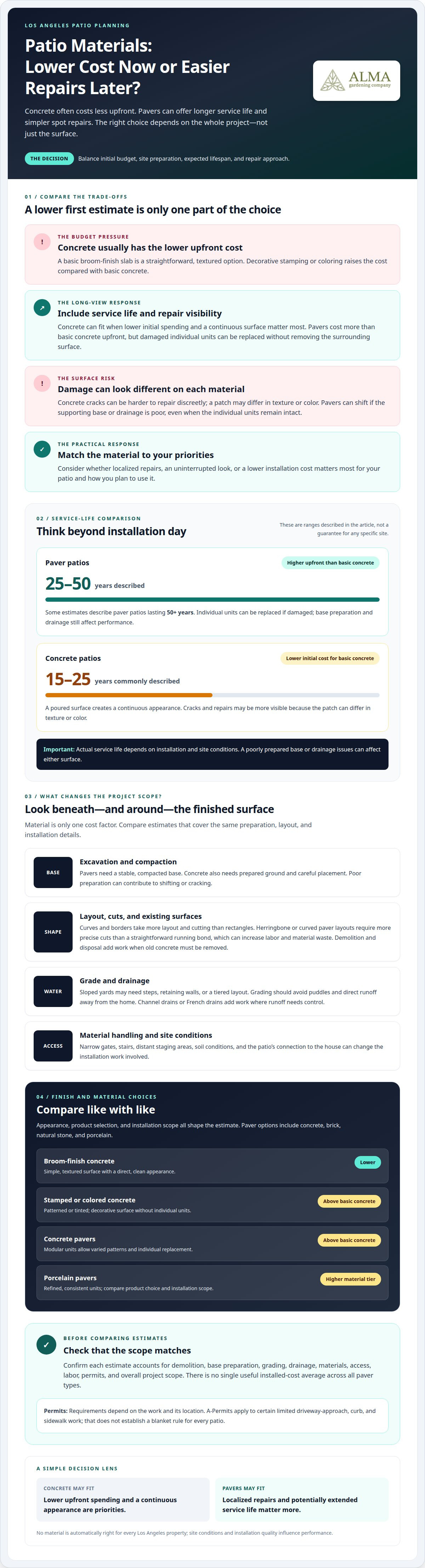
Paver lifespan compared with concrete
Service life affects value beyond installation day. Consider how long you expect to use each surface and how localized damage and repairs may factor into the decision.
Paver Lifespan
A properly installed paver patio can last 25 to 50 years. Some estimates describe paver patios lasting 50+ years, placing them beyond the commonly cited lifespan for concrete. Individual units can be replaced when damaged, without removing the surrounding surface. That repair approach can limit disruption to one area. The supporting base still matters: poor preparation or drainage can cause shifting, affecting the patio even when individual pavers remain intact.
Concrete Lifespan
Concrete patios are commonly described as lasting 15 to 25 years. Poured concrete creates a continuous surface, so cracks can be harder to address discreetly than damage to one paver. A repair may leave a visible difference in texture or color. Those surface changes matter when a patio is prominent or designed as one uninterrupted outdoor area. Concrete’s lower initial cost may appeal, but its shorter expected service life belongs in the comparison.
For a long-term decision, look beyond the first installation estimate. Consider expected lifespan, the visibility of repairs, and whether replacing a small area matters to your plans. Pavers may suit homeowners who prioritize localized repairs and extended use. Concrete may fit a project where a continuous appearance and lower upfront spending matter more. No lifespan is guaranteed for every site; installation and site conditions influence performance.
Alma Gardening Company: Landscape Design and Installation
Alma Gardening Company helps homeowners turn a material comparison into a patio plan suited to their property and outdoor goals. Its landscape design and installation services can bring paver selection, patio layout, and surrounding planting together as one project.
Professional guidance can help when you’re weighing pavers against concrete, planning a new hardscape, or connecting a patio with drought-tolerant landscaping. A clear design accounts for how you’ll use the space, the look you want, and how the patio fits the rest of the yard. Paver installation is one way to create a defined outdoor area with a modular surface.
For help planning a patio that suits your Los Angeles property, contact Alma Gardening Company.
Plan a patio that fits the whole yard
As you compare the cost of pavers versus concrete for a patio in LA, picture how you want to use the finished space. Consider where seating will go, how guests will move through the yard, and which areas need shade. These choices help turn a material decision into a practical everyday layout.
Before moving ahead, note the patio dimensions, preferred seating arrangement, and connections to existing paths or doors. Bringing these details together makes it easier to discuss a clear direction for the project.
When you’re ready to talk through your patio plans, contact Alma Gardening Company.
A thoughtful plan is a strong starting point for an outdoor space you’ll enjoy.
Frequently Asked Questions
Are paver patios worth the extra cost over concrete?
Pavers may be worth considering if a custom layout and varied unit choices are priorities. The cost of pavers vs concrete for a patio in LA also depends on how the patio connects to the home, walkways, and planting areas. Sketch these transitions before selecting materials; a clear layout helps you compare designs as well as surfaces.
What is the average installed cost per square foot of a concrete patio in Los Angeles?
There is no single average that applies to every concrete patio in Los Angeles. A plain finish and a decorative treatment involve different materials and labor, while site access and project scope affect installation. For a useful comparison, define the patio dimensions and desired finish first, then compare estimates based on the same specifications.
How do labor, materials, site preparation, and demolition costs compare for patios in LA?
Labor and material shares vary with the chosen surface and the work needed to prepare the yard. Ask for estimates that separate demolition, hauling, materials, preparation, and installation so you can see what each total includes. This matters when one proposal includes removing and disposing of an old patio while another covers installation only.
How do concrete finishes such as broom, stamped, and colored concrete affect patio costs in LA?
Decorative treatments can change the labor and materials included in a concrete estimate. Before approving a finish, clarify the selected pattern or color and how the edges will be handled. Compare samples against your home’s exterior in sun and shade; Los Angeles light can make the same color look different across the patio.
How do pavers and concrete compare for durability, cracking, maintenance, and repair costs?
Paver joints may need occasional re-sanding with polymeric sand, while concrete care depends on its finish and surface condition. Keep the patio clean and watch for changes in level or appearance. These observations help you spot upkeep needs early and plan care for the material you chose, rather than treating every patio alike.
