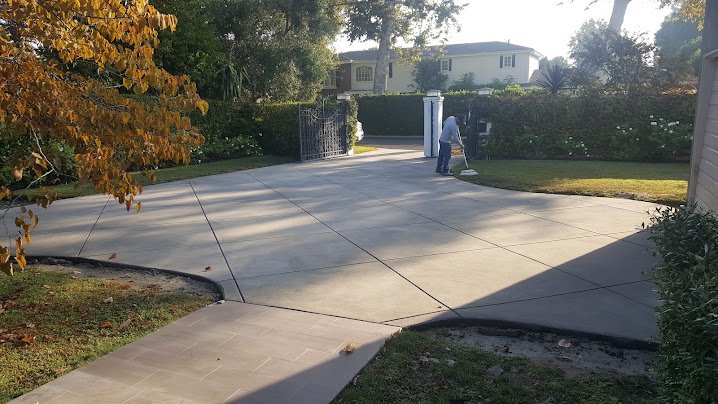
Concrete Driveway Renovation in Los Angeles: Demolition, Design & Installation
What if the old concrete doesn’t need to come out to make room for a better landscape? The answer depends on its condition, the site, and how the new feature needs to function. A decorative concrete contractor Los Angeles property owners work with should consider those details alongside the finished design, not treat removal as a separate decision.
It’s understandable to be unsure whether an existing slab can stay or whether drainage, access, and site conditions will affect the work. This article explains how assessment, removal planning, site preparation, and decorative concrete installation fit together. It also covers practical details that shape the project scope, including the existing surface, intended use, drainage, materials, and connections to patios or other hardscape. With a coordinated plan, you can understand what the work involves and how the finished space will function.
Key Takeaways
- Plan decorative concrete around how you’ll use the space and how it connects with patios and the wider landscape.
- Assess the existing surface before deciding whether it can remain or needs removal as part of the project.
- When reviewing a decorative concrete plan in Los Angeles, consider design intent, drainage, access, materials, and coordination with the landscape.
- Bring your intended use, design goals, existing-surface details, and site concerns to a consultation to help shape the project scope.
Choosing a Decorative Concrete Contractor in Los Angeles: Start With the Finished Space
Planning a concrete upgrade means looking beyond the slab. The surface should suit how you use the yard, connect with nearby landscape features, and fit the character of your property. A decorative concrete contractor Los Angeles homeowners work with should plan the finish as part of the outdoor space, rather than as an isolated detail.
Decorative concrete design determines the surface’s appearance, while the installation project accounts for the site work and construction needed to create the finished feature. A change to an existing surface can involve a different scope from a new layout that requires adjustments to the concrete or surrounding landscape.
Which outdoor areas can decorative concrete help define?
Patios and outdoor living areas are natural places to use decorative concrete. A thoughtful layout can define space for seating, dining, and circulation, while the finish contributes to the overall look. For example, stamped concrete uses patterns to create a textured appearance. When choosing a finish, consider how it will look beside nearby hardscape and planting, and whether it suits the way you plan to use the area.
When might an existing concrete surface affect the plan?
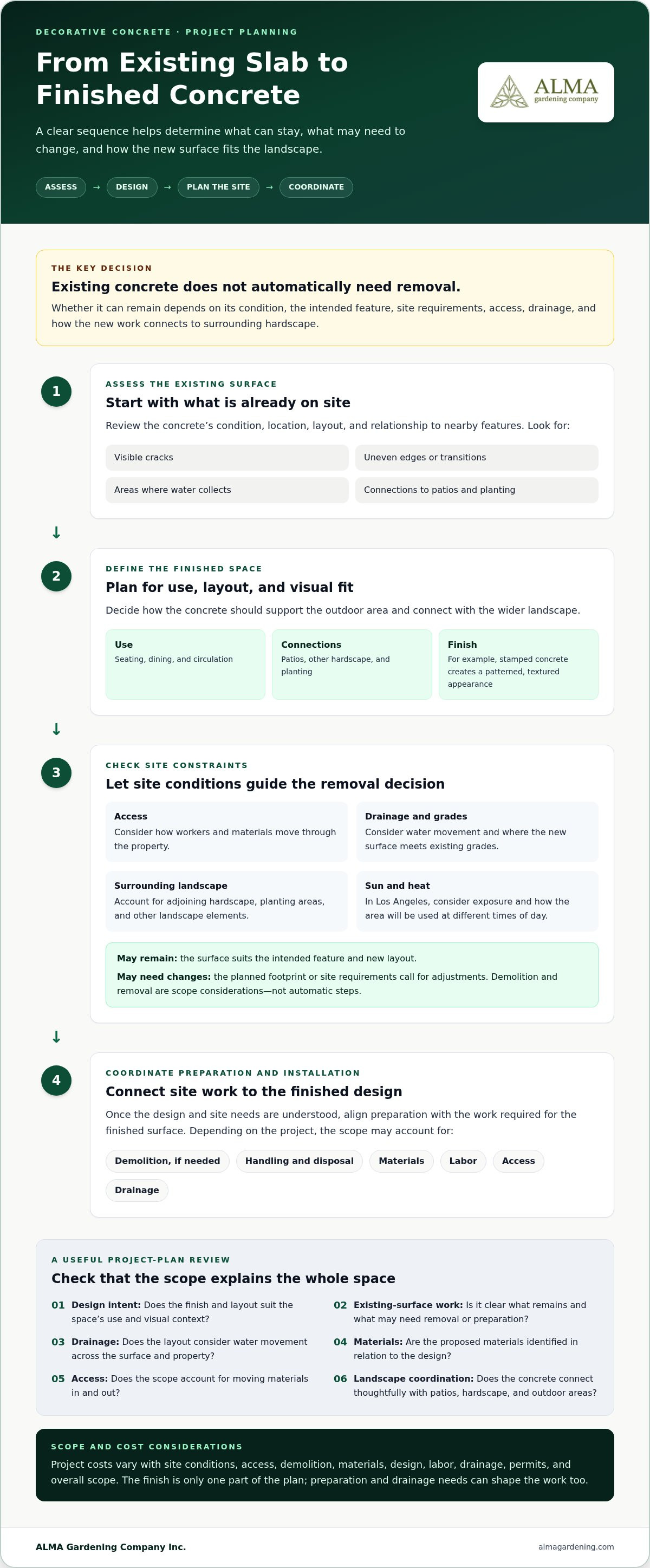
Start by looking at the surface’s condition and layout, then compare them with the design you want. Note visible cracks, uneven transitions, areas where water collects, and how the concrete meets adjoining patios or planting areas. Existing concrete may remain if it suits the intended feature. A different footprint or site requirements may call for changes. Demolition and removal are project-scope considerations, not automatic steps. Their role depends on the existing conditions, access, and how the new work will connect with hardscaping and drainage.
Alma Gardening Company includes concrete and decorative concrete in its landscape design and installation work. Planning the finish alongside the surrounding landscape helps connect the desired look with the space it needs to serve before installation details are set.
Concrete Demolition and Removal in Los Angeles: Plan the Site Before Installation
Once you have a design direction, plan the work in sequence. That connects any removal needs to the new surface and the surrounding landscape, rather than treating demolition as a decision made in isolation.
- Assess existing concrete: Review its condition, location, and relationship to nearby features. Note cracks, uneven edges, and any areas where water collects.
- Define the new layout: Decide how the surface will support its intended use and connect with patios or other hardscape.
- Account for site constraints: Consider access, drainage, sun exposure, and surrounding landscape elements.
- Coordinate installation: Align site preparation with the materials, labor, and work needed for the finished design.
Removal decisions depend on the existing conditions and the design planned for the finished space. A surface that fits the new layout may not need removal. Changes to the footprint or adjoining work can affect the scope. ALMA plans concrete as part of a broader landscape project, considering its connections to hardscaping, patios, and drainage.
What site conditions can change removal planning?
Limited access can affect how work and materials move through a property. The existing surface’s condition, adjoining hardscape, and connections to planting areas also matter. Look at how water moves across the site and where the new surface meets existing grades and landscape features. In Los Angeles, strong sun and heat are also practical design considerations. Think about the area’s exposure and how you’ll use it at different times of day.
How should removal lead into the new concrete installation?
Preparation and installation are connected stages. Depending on the site and design, the project scope may account for demolition, handling and disposal needs, materials, labor, access, and drainage. Safety planning is essential for demolition work; consult OSHA demolition safety standards for general guidance. Specific methods and requirements depend on the site.
For a coordinated concrete and landscape design project, discuss your outdoor improvement plans with ALMA.
How to Compare Decorative Concrete Project Plans for Los Angeles Properties
A useful project plan explains more than the surface appearance. Look for a clear connection between the finish, existing conditions, drainage, and the rest of the outdoor space. When a plan identifies what is included and how site conditions shape the work, it is easier to understand the proposed scope and make informed design decisions.
| Planning detail | What to look for |
|---|---|
| Design intent | Does the finish and layout suit the space’s use and visual context? |
| Existing-surface work | Is the plan clear about what remains and what may need removal or preparation? |
| Drainage | Does the layout consider water movement across the surface and property? |
| Materials | Are the proposed materials identified in relation to the design? |
| Access | Does the scope account for site access and moving materials in and out? |
| Landscape coordination | Does the concrete connect thoughtfully with patios, hardscape, and outdoor areas? |
Which project details shape scope and cost?
Project costs vary with site conditions, access, demolition, materials, design, labor, drainage, permits, and overall scope. The decorative finish and layout are only part of the plan. Existing-surface preparation and drainage needs can also shape the work, even if they are less visible in the finished space. Review the scope for both the visible design choices and the site preparation needed to carry them out.
How should concrete fit with drainage and surrounding hardscape?
Review where the new surface meets patios, planting areas, and other hardscape, and consider how water moves through those connections. Drainage planning helps coordinate the concrete layout with the property rather than treating it as an isolated feature. ALMA considers concrete, patios, hardscaping, and landscape drainage together as part of outdoor design and installation. For demolition safety context, see the OSHA demolition standards.
Plan a Decorative Concrete Installation With ALMA Gardening Company
A focused consultation starts with how you want the outdoor area to work, not just how you want the concrete to look. Before meeting with a decorative concrete contractor Los Angeles property owners can bring a few practical details to help shape the design and project scope.
What to prepare before discussing your project
- Intended use: Note whether the area should support dining, seating, circulation, or another outdoor activity.
- Existing surface: Describe where concrete is located and any visible condition concerns.
- Design goals: Gather your preferred look and ideas for how the finished surface should relate to the property.
- Site concerns: Record access limitations, drainage issues, and nearby planting, patios, or hardscape.
Photos and simple notes can make these details easier to discuss. You don’t need a finished design before the conversation begins.
From project goals to a coordinated outdoor plan
ALMA Gardening Company Inc. provides landscape design and installation that can bring concrete, hardscaping, patios, and drainage into one project discussion. A consultation connects your goals with site conditions and the work involved, including how the concrete will meet adjoining outdoor features. If the project includes other hardscape elements, the hardscape design and installation guide can help you consider how those pieces fit together.
Considering the full landscape helps connect the planned surface to adjoining hardscape and the way you want to use the outdoor area. Discussing these elements together can clarify the project direction before installation details are set.
Bring Your Concrete Plans Into Focus
A successful decorative concrete project starts with the intended use and the finished landscape, then works back through the existing surface, site conditions, and installation scope. Removal may be needed, but it isn’t automatic. The condition and layout of the concrete, drainage needs, access, and design goals all help shape the plan.
ALMA Gardening Company includes concrete and decorative concrete in its landscape services, alongside hardscaping, patios, and landscape drainage systems. Considering these elements together helps connect the new surface with nearby outdoor spaces and the way you want to use them. A decorative concrete contractor Los Angeles property owners consult should account for both the appearance of the finished surface and the site preparation involved.
Bring your ideas, questions about the existing surface, and any drainage or access concerns to your planning conversation. ALMA Gardening Company serves the San Fernando Valley and Greater Los Angeles, including Sherman Oaks, Encino, Studio City, North Hollywood, Woodland Hills, West Hills, Glendale, Burbank, Beverly Hills, Culver City, Pacific Palisades, and Malibu.
Your vision is a practical starting point. With thoughtful planning, the finished space can feel connected, useful, and distinctly yours.
Frequently Asked Questions
What does a decorative concrete contractor do?
A decorative concrete contractor plans and installs concrete surfaces with a considered finish and layout. Design defines the surface’s appearance, while the broader project accounts for site preparation, materials, and connections to the landscape. For example, a patio finish should suit how the area will be used and relate to nearby hardscape or planting. ALMA Gardening Company includes concrete and decorative concrete in its landscape design and installation projects.
Does old concrete always need to be demolished before installing decorative concrete?
No. Demolition isn’t automatically required before a decorative concrete project. The existing surface’s condition and layout, along with the intended design, help determine whether it can remain or whether changes are needed. Consider how the new feature will connect with patios, hardscape, and drainage. A site assessment can clarify whether the existing concrete fits the plan and what preparation the overall project may involve.
What affects the cost of concrete demolition and removal?
Concrete demolition and removal costs depend on site conditions, access, demolition scope, materials, design, labor, drainage needs, permits, and overall scope. The amount of material and how it must be handled can also affect planning. These factors vary from property to property, so a general estimate may not reflect the work involved at a specific site. Clarify what existing-surface work and preparation are included in the project plan.
How do I choose a decorative concrete contractor in Los Angeles?
Look for a project plan that connects the desired finish with existing concrete, site access, drainage, and nearby landscape features. A decorative concrete contractor Los Angeles property owners work with should explain how these decisions shape the project scope. ALMA provides landscape design and installation, concrete, hardscaping, patios, and drainage projects across the San Fernando Valley and Greater Los Angeles, including Los Angeles, Sherman Oaks, Encino, Studio City, North Hollywood, Woodland Hills, West Hills, Glendale, Burbank, Beverly Hills, Culver City, Pacific Palisades, and Malibu.
Can decorative concrete be planned with patio and drainage improvements?
Yes. Decorative concrete can be considered alongside patio design, hardscaping, and landscape drainage as part of a coordinated outdoor project. The layout should account for how the surface meets adjoining features and how water moves across the site. Discuss intended use, the existing surface, design goals, and drainage concerns together to give the landscape plan a clear relationship between appearance, function, and site conditions.
