Drainage Solutions for Clay Soil in Los Angeles
When water puddles in a yard, another drain may not be the answer. The water may have no suitable route off the surface, or the soil may be holding it in place. In Los Angeles, clay soil can absorb rain and irrigation slowly, but grading, compaction, paving, and watering patterns also affect drainage. The right drainage solutions for clay soil depend on where water comes from and where it can safely go.
Start by tracking when and where water collects. That helps distinguish surface runoff from water that is slow to move through the soil, and it can prevent a quick fix from sending runoff toward a foundation or another part of the yard. Below, we compare practical options and explain what to consider when coordinating drainage with planting, hardscape, and irrigation.
Key Takeaways
- Note where and when water collects to help identify whether the issue is surface runoff, slow absorption, or both.
- Choose drainage solutions for clay soil based on how they collect, redirect, or manage water, and where the water can go.
- A dry creek bed can guide runoff while contributing a defined feature to the landscape.
- Plan drainage alongside grading, patios, pavers, planting, and irrigation so the design accounts for site conditions and water flow.
Why clay soil drains slowly, and how to identify the water problem
Clay is only one possible factor in a drainage problem. Compacted ground, a low spot, water flowing downhill from another part of the property, or hardscape that redirects runoff can create similar wet areas. Soil layers matter too: water can collect above a denser layer even when the surface appears level. Reading about the properties of clay soil provides background, but the conditions on your property determine the right solution.
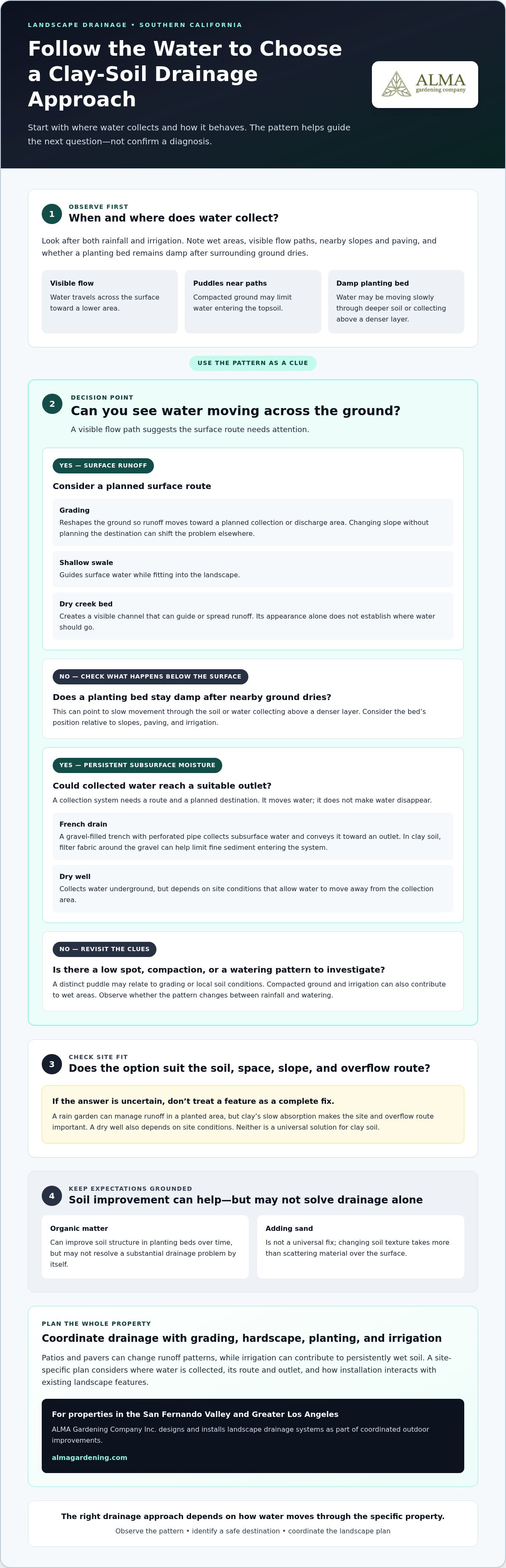
Look for three common patterns. Surface runoff travels across the ground toward a lower area. Compacted soil can limit water entering the topsoil, leaving puddles near paths or frequently used areas. Water held deeper in the soil may keep a planting bed damp after the surface has dried. These patterns can overlap, so don’t select drainage solutions for clay soil based on one symptom alone.
What does the water pattern in your yard suggest?
Observe wet areas after both rain and irrigation. A puddle in a distinct low spot may point to grading or local soil conditions. A visible flow path suggests that the route across the yard needs attention. If a planting bed stays damp while nearby ground dries, note its position relative to slopes, paving, and irrigation zones.
Record where moisture appears and whether the pattern changes between rainfall and watering. These observations are useful clues, not a complete diagnosis. Soil, slope, and drainage behavior vary across Southern California and from one property to the next. Consider how the yard’s features work together before choosing a fix.
Compare drainage solutions for clay soil by how they manage water
First determine whether water needs a clearer route across the surface or a way to be collected and moved below ground. Grading reshapes the ground so runoff flows toward a planned collection or discharge area. A shallow swale can guide surface water while fitting into the landscape. Both address water moving across the ground, but changing the slope without planning the destination can shift the problem elsewhere.
When might grading, a French drain, or a dry creek bed fit?
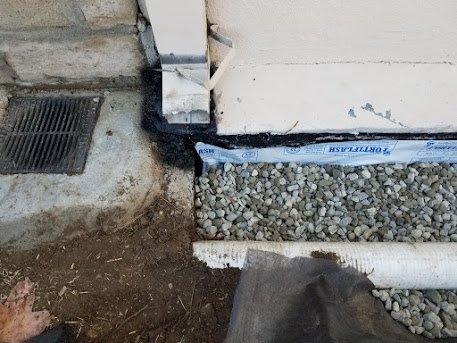
A French drain collects subsurface water in a gravel-filled trench with a perforated pipe, then conveys it toward an outlet. It needs a suitable route and a planned discharge point; it does not make water disappear. In clay soil, filter fabric around the gravel can help limit fine sediment entering the system. A dry creek bed creates a visible channel that can guide or spread runoff as part of the landscape. It may complement drainage, but its appearance alone does not establish where water should go.
A rain garden can manage runoff in a planted area, but clay’s slow absorption makes the site and overflow route important considerations. A dry well is another way to collect water underground, but it relies on site conditions that allow water to move away from the collection area. Neither is a universal solution for clay soil; the available space, slope, soil, and destination for excess water all matter.
Soil amendments address a different issue. Organic matter can improve soil structure in planting beds over time, but it may not solve a substantial drainage problem by itself. Adding sand is not a universal fix either; changing soil texture takes more than scattering material over the surface. Oregon State University Extension explains improving clay soil drainage with organic matter.
Drainage can also be planned alongside patios, pavers, and irrigation during a landscape project. Alma Gardening Company designs and installs landscape drainage systems as part of coordinated outdoor improvements.
Plan a clay-soil drainage solution for a Southern California landscape
Effective planning starts with the whole property, not just the wettest spot. Observe where water collects after rain or irrigation, then consider the slope, soil, paved areas, and access. Next, identify a practical route and destination for runoff. This sequence helps determine whether the design calls for surface grading, an underground collection system, or a combination.
What belongs in a site-specific drainage plan?
A useful plan accounts for where water is collected, the route it will follow, the outlet, and how installation may interact with existing landscape features. Patios and pavers can change runoff patterns, while irrigation can contribute to persistently wet soil. Coordinating drainage with grading, hardscape, and irrigation design helps address those relationships before construction begins.
ALMA Gardening Company Inc. starts with a free on-site consultation, then moves through design, approval, scheduling, and professional construction. The design process considers layout, permits, and material preparation, with updates as the project progresses. This allows drainage solutions for clay soil to be considered within a larger landscape plan rather than as an isolated fix. Learn about outdoor drainage system installation and how drainage can be coordinated with hardscape design.
For property owners in the San Fernando Valley and Greater Los Angeles, a site-specific consultation is a practical starting point for a drainage or landscape improvement project.
Make drainage part of your next landscape plan
Plan drainage at the same time as paths, patios, planting, and irrigation, rather than treating it as an afterthought. The right approach should fit both the property and how you intend to use the space. A coordinated design helps each landscape feature work with the way water moves through the site.
ALMA Gardening Company Inc. is family-owned, was founded in 1982, and is licensed and insured. A free on-site consultation includes a detailed plan, accurate quote, and clear timelines, providing a defined starting point for your project.
Contact ALMA Gardening Company Inc. to discuss drainage planning as part of your landscape design and installation project.
Frequently Asked Questions
Is clay soil always unsuitable for planting?
No. Clay soil can support planting, but suitability depends on its condition, drainage pattern, slope, sun exposure, and watering. A bed that stays damp may need different plant choices and irrigation settings than a nearby area that dries more quickly. Use observed moisture and drainage behavior to guide decisions; soil amendments are not a guaranteed fix.
Can a rain garden work in clay soil?
It may be an option if the design accounts for slow absorption and provides a route for excess water. The location, surrounding slope, and nearby paved areas all affect whether it fits. Assess the whole site before deciding.
Can drainage improvements help protect a home’s foundation?
Drainage improvements may help manage pooling by directing surface water away from areas beside a foundation, but no drainage approach can guarantee protection. The suitable route depends on the property’s grade, soil, and a practical destination for runoff. Consider drainage before changing nearby paving or planting, since those features can affect how water travels.
How can I tell whether a drainage problem is caused by runoff or saturated soil?
A small hand trowel can help compare conditions just below the surface. If the soil is wet only at the surface, runoff or limited absorption may be involved; moisture extending deeper suggests water is being held in the soil profile. Compare a damp spot with nearby ground, and treat the result as a clue rather than a definitive diagnosis.
