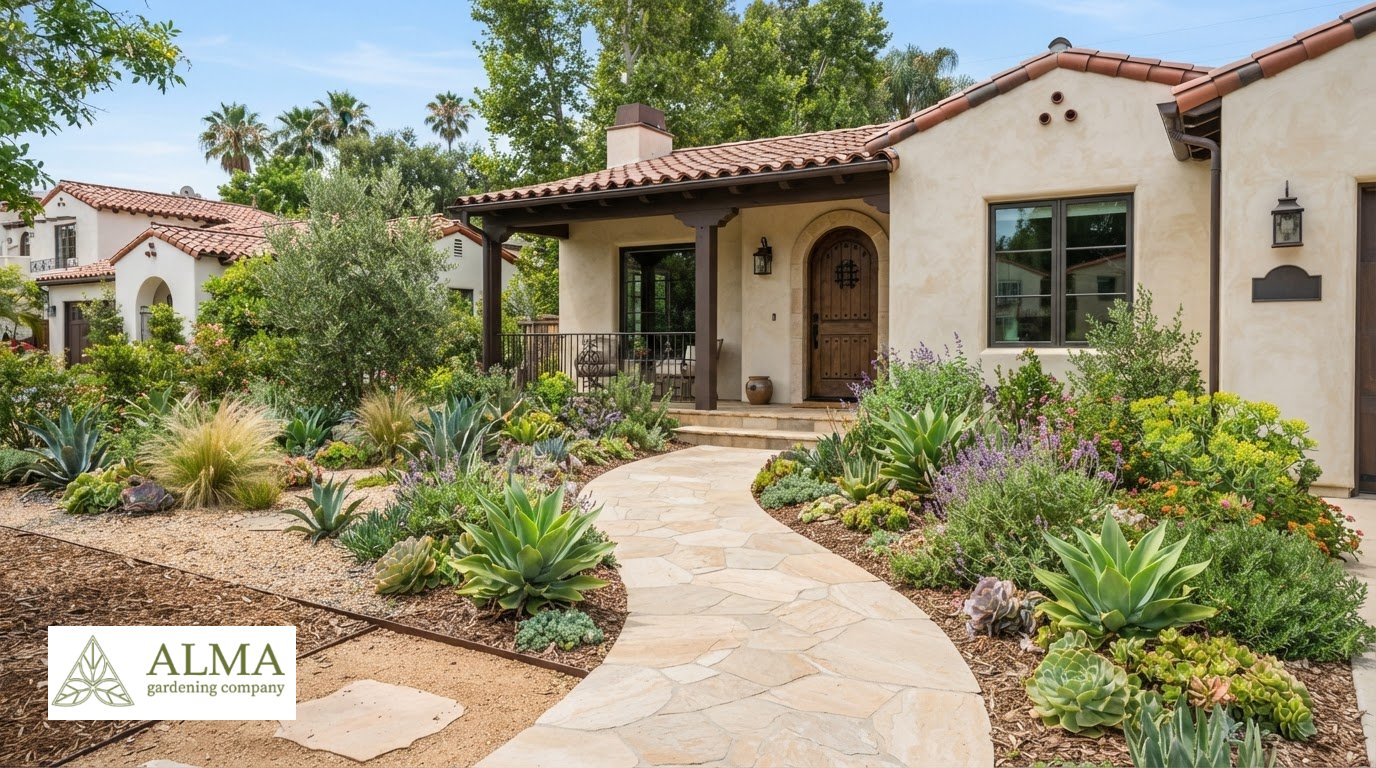
Front Yard Landscape Design Ideas for Los Angeles Homes
Most front yard landscaping and hardscaping in Los Angeles doesn’t require a permit, but retaining walls over 3 feet high and new electrical circuits for lighting are exceptions. For front yard landscape design in Los Angeles, that distinction matters: knowing what your project includes helps you plan the work and avoid surprises.
It’s natural to want a welcoming entry without a water-hungry landscape or an unclear renovation budget. This guide to front yard landscape design in Los Angeles explains how to choose drought-tolerant plants and materials, improve curb appeal, understand what affects project costs, and identify when permits may apply. You’ll have a practical starting point for planning a front yard suited to your home and Southern California conditions.
Key Takeaways
- Choose drought-tolerant plants suited to your front yard’s sun, soil, and irrigation needs to create a landscape that fits Southern California conditions.
- Improve curb appeal by coordinating the entry path, planting areas, and hardscape into a clear, welcoming design.
- Plan your remodeling budget around the project’s scope, materials, site preparation, and installation requirements.
- Understand how your project’s specific features can affect permit requirements before construction begins.
1. What's the best drought-tolerant landscaping for LA?
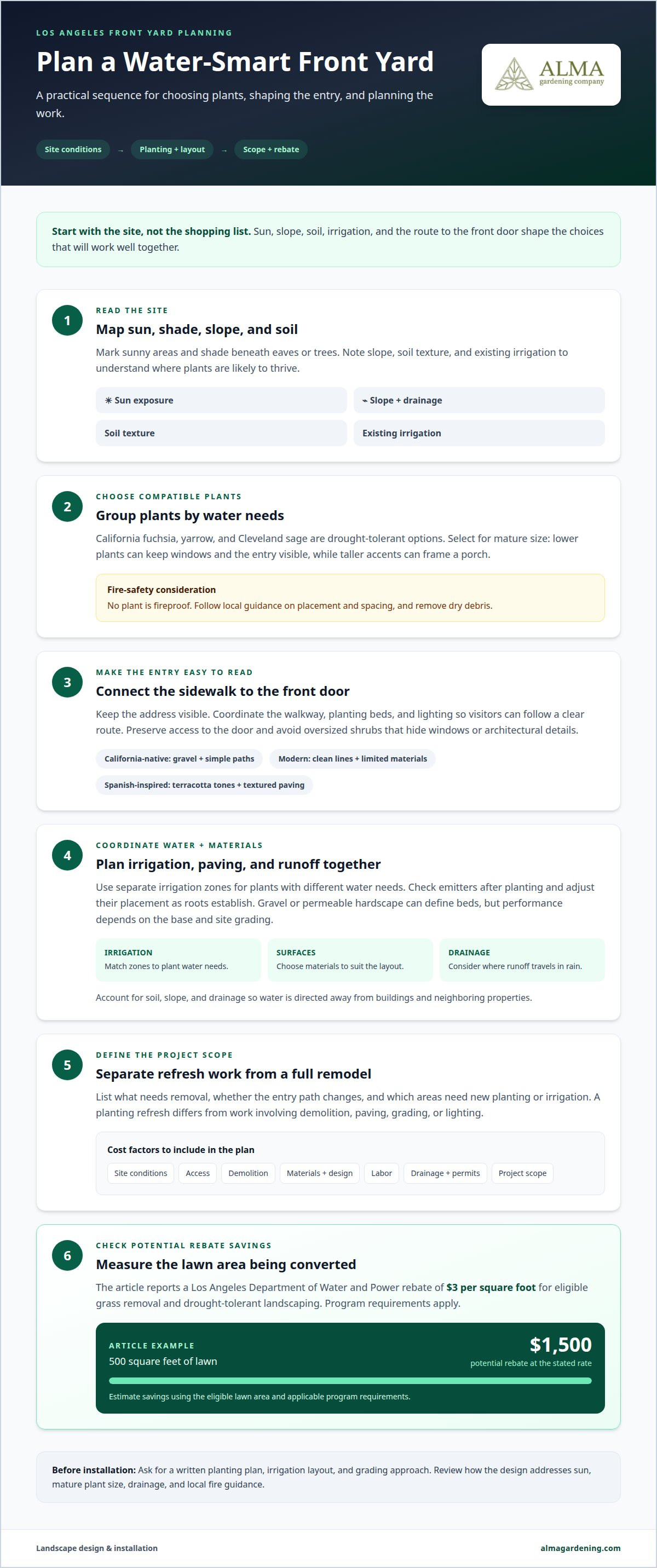
Start with a site map, not a nursery list. Note sun exposure, slope, soil texture, and existing irrigation to understand where plants are likely to thrive. Mark sunny areas and shade beneath eaves or trees, then group plants with similar water needs. This approach helps prevent low-water plants from receiving more irrigation than they need.
California fuchsia, yarrow, and Cleveland sage are drought-tolerant options, but no plant is fireproof. Follow local fire guidance on plant placement and spacing, and remove dry debris. Choose plants for their mature size, not how they look in a nursery pot. Lower plants can keep windows and the entry visible; taller accents can frame a porch without hiding the doorway. Use gravel or permeable hardscape to define beds, leaving room for plants to grow and for water to reach their roots.
Check applicable local requirements for irrigation before planning a new landscape installation. Plan separate irrigation zones for plants with different water needs. Check emitters after planting, then adjust their placement as roots establish. The Los Angeles Department of Water and Power offers a $3-per-square-foot rebate for removing grass and replacing it with drought-tolerant landscaping. At that rate, a 500-square-foot lawn would qualify for a $1,500 rebate.
When hiring a landscape designer or contractor, ask for a written planting plan, irrigation layout, and grading approach. Find out how the design accounts for sun, mature plant size, drainage, and local fire guidance. These details make it easier to judge whether the proposed landscape suits your property and priorities.
California fuchsia, yarrow, and Cleveland sage are drought-tolerant options for Los Angeles yards. No plant is fireproof, so follow local guidance on placement and spacing, and remove dry debris.
2. First impressions and curb appeal
A front yard landscape design in Los Angeles should make the entry sequence easy to read. Start at the sidewalk, then trace the path to the front door. Keep the address visible from the street. Align lighting, planting beds, and the walkway to guide visitors naturally. Buyers form an opinion about a Los Angeles home within 7 seconds of pulling up. A distinct, well-kept entrance can make those first moments feel considered.
Los Angeles front yards can suit California-native, modern minimalist, or Spanish-inspired designs. California-native planting pairs naturally with gravel and simple paths. Modern minimalism uses restrained planting, clean concrete lines, and a limited palette of materials. Spanish-inspired entries can feature terracotta tones, textured paving, and patterned accents. Choose one direction, then repeat its materials or colors near the porch for a cohesive look.
Keep proportions in balance. A broad driveway can overwhelm a narrow entry, while oversized shrubs can hide windows and architectural details. Plant low beside the walkway, then add a focal point near the door, such as a sculptural container or small ornamental tree. Carefully aimed outdoor lighting can define the entry and improve visibility in the evening without lighting every corner.
Los Angeles homeowners spend 90% of their remodeling budget on the backyard, leaving the front yard as an afterthought. Set priorities before choosing finishes: make the path easy to follow, preserve access to the door, and coordinate paving with the home’s exterior. A scaled layout helps test those choices before installation. For a more cohesive entry, explore front yard design options that bring planting, paving, and lighting together.
3. How much does front yard remodeling cost in Los Angeles?
Define the work before setting a budget. A planting refresh is different from a remodel involving demolition, paving, grading, or lighting. Costs depend on site conditions, access, demolition, materials, design, labor, drainage, permits, and project scope. Alma Gardening Company provides a clear proposal and accurate quote after a free on-site consultation, based on the project details.
Break the plan into components before comparing proposals. Note which existing surfaces need removal, whether the entry path will change, and which areas need new planting or irrigation. Replacing a narrow walkway, for example, involves different preparation from reworking a driveway and its adjoining beds. A clearly defined scope makes estimates easier to compare.
Permeable surfaces allow some water to pass through, but their performance depends on the base and site grading. Consider where runoff travels during rain and whether the design directs it away from buildings and neighboring properties. Surface material, soil, slope, and drainage all shape a practical stormwater plan.
Turf-removal rebate savings depend on the eligible lawn area and program requirements. Measure the area being converted and use the applicable rebate calculation to estimate potential savings.
For a small Los Angeles lot, sketch the driveway, entry, and walking route first. Keep circulation clear, choose planting suited to the available width, and select one focal feature. Repeating a paving material can visually connect compact spaces without overcrowding them.
Alma Gardening Company: Landscape Design and Installation
Alma Gardening Company designs and installs coordinated front yard landscapes. Professional support can be especially useful when replacing a lawn, combining drought-tolerant planting with hardscape, or redesigning paths and planting areas together.
A thoughtful design accounts for the home’s architecture, sun exposure, access, grading, and how water moves across the site. Drought-tolerant and xeriscape landscaping bring planting and water-conscious planning together, while hardscaping and pavers define walkways and entry areas. Coordinating these elements helps create a front yard that feels intentional and works well.
Bring your goals, preferred materials, and key site concerns to a project conversation. Contact Alma Gardening Company to discuss your front yard landscape design and installation, or visit almagardening.com.
Shape a Front Yard That Fits Your Home
Give your design a clear starting point: decide what the entry should communicate and how you want to move through the space. A simple sketch can mark the walkway, driveway, planting areas, and features you want to keep. This helps turn ideas for front yard landscape design in Los Angeles into practical choices for your property.
Think beyond the first impression. Consider how afternoon sun affects the entry, where rainwater flows, and how much room plants need as they mature. Addressing these details early can help the finished landscape feel connected to the home and work well through changing seasons.
A thoughtful plan can make the space welcoming, useful, and distinctly yours. Start with the details that matter most to your household, then shape the design around them.
Frequently Asked Questions
Do I need a permit for front yard landscaping in LA?
Permit needs depend on the work planned, not simply on whether it’s in the front yard. Before scheduling construction, list each change, including ground work, structures, and utility connections. Determine which parts require review under the rules for your property. This scope-first approach helps distinguish a planting refresh from a construction project.
How much does front yard remodeling cost in Los Angeles?
There’s no single useful total for every remodel. A limited redesign and a full replacement of existing surfaces involve different scopes, so compare estimates describing the same work. Ask for clear separation between demolition, preparation, materials, and installation. That makes it easier to identify which design choices affect the project total and where adjustments could simplify the plan.
What's the best drought-tolerant landscaping for LA?
Choose a design that suits how your household uses the yard, not just its water goals. A front entry used for walking needs durable circulation space, while a mostly decorative area can devote more room to planting. Group plants by similar water needs, and plan for their establishment period as well as their mature size. This helps make the landscape easier to manage over time.
Which drought-tolerant plants are best for Los Angeles front yards?
No single plant selection suits every Los Angeles yard. Match plants to each bed’s conditions, including direct sun, shade, soil drainage, and available room at maturity. A sunny strip beside a driveway, for example, may need different plants from a shaded porch bed. Consider mature width near paths and windows to prevent crowding later.
What is the average cost of front yard landscaping in Los Angeles?
An average can be misleading because landscaping projects involve different amounts of work. A planting-focused plan isn’t comparable to one that replaces paving or changes the site layout. For a meaningful comparison, define the areas, materials, and installation tasks you want included. Then review estimates with matching scopes rather than relying on a broad average.
