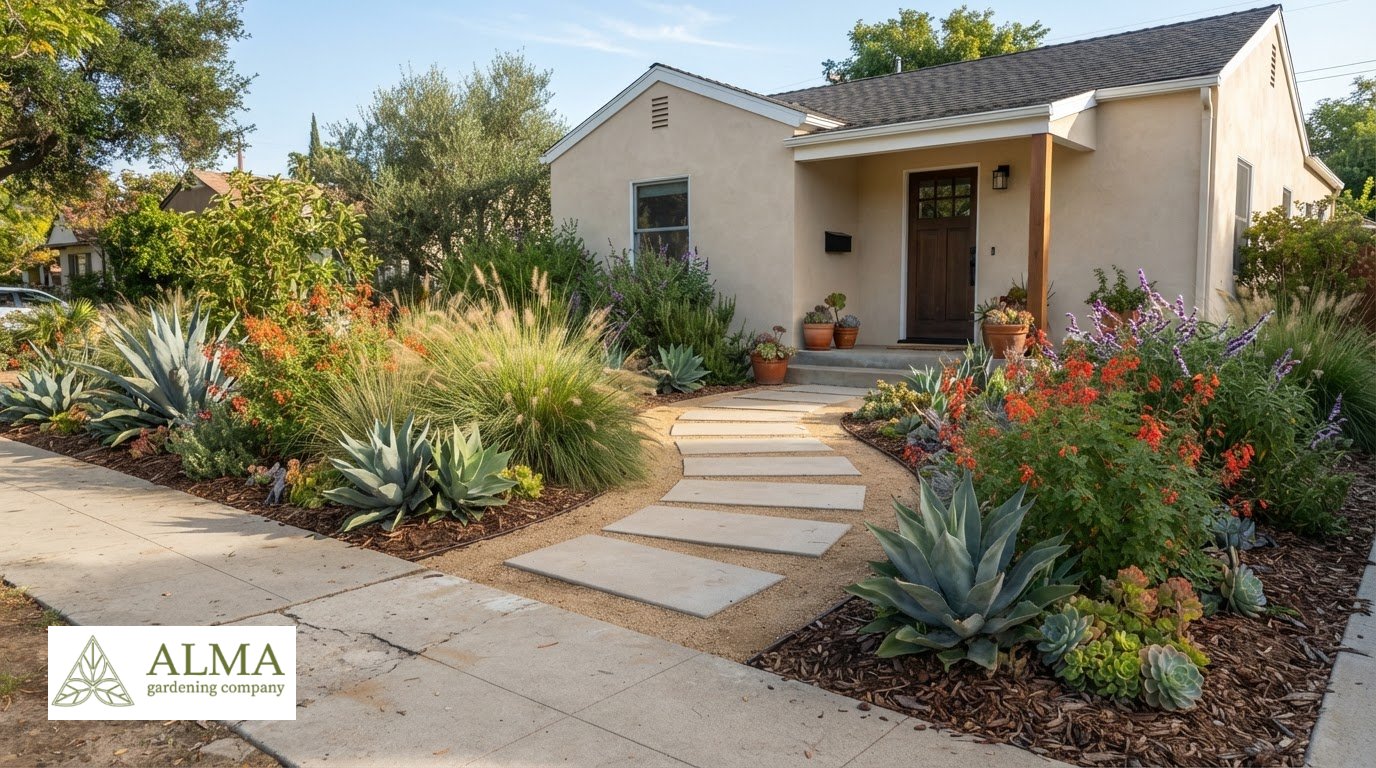
Hiring a Xeriscape Design Contractor in Los Angeles
What if a lower-water yard could still feel lush, inviting, and distinctly Los Angeles? Xeriscaping makes that possible through thoughtful plant choices, efficient irrigation, and a layout designed for local conditions. A xeriscape design contractor in Los Angeles can bring these elements together in a cohesive landscape, rather than simply replacing lawn with gravel.
If you want to conserve water without giving up curb appeal or comfortable outdoor space, the details matter. Sun exposure, soil, drainage, and neighborhood microclimates all influence which plants and materials will suit your yard.
In this article, you’ll learn what xeriscaping involves, why it suits the region, how local conditions guide design, and which drought-tolerant plants can work in a Los Angeles yard. You’ll also see how irrigation, mulch, and hardscape choices contribute to a landscape that’s practical as well as attractive.
Key Takeaways
- Xeriscaping can bring together drought-tolerant plants, efficient irrigation, and hardscape for a lower-water landscape that still feels welcoming.
- Sun exposure, soil, and drainage help determine which plants and layout choices will suit your Los Angeles property.
- Compare contractors by how clearly their design accounts for site conditions, irrigation, and installation details.
- Learn how professional landscape design and installation can turn xeriscape ideas into a cohesive outdoor space.
Why Should You Consider Xeriscape Landscape Design?
Xeriscaping combines drought-tolerant plants, efficient irrigation, mulch, and hardscape to reduce water loss while keeping a yard beautiful. When choosing a contractor, look for relevant landscape design and installation experience. For planned construction, consult California Contractors State License Board guidance about licensing. Turf-replacement rebates, if available, are set by local water providers, so check current program terms for your address.
Climate and Drought-Tolerant Landscaping
Heat and dry periods make water needs a central design consideration in Los Angeles. Before choosing plants or irrigation, assess sun exposure, soil, and drainage. A shaded side yard and a sunny slope may call for different plants and watering schedules. California native plants, succulents, agave, ornamental grasses, and low shrubs offer varied textures. Grouping plants by water needs helps create a coherent plan.
Drought- and Fire-Resistant Design
Drought-tolerant doesn’t mean fireproof. A fire-conscious layout considers plant placement, spacing, irrigation, and the relationship between vegetation and hardscape. Dead growth and dry plant material can affect fire behavior, so planned upkeep matters alongside plant selection. Paths or other hardscape can separate planting areas where appropriate. The site’s slope, exposure, and existing vegetation also shape the design.
Drought-Tolerant Project Types
Projects can include converting lawn into planting beds, updating irrigation, or combining drought-tolerant planting with gravel, stone, and defined hardscape. A front yard may prioritize a clear entry and layered plant heights; a backyard may retain room for seating and paths. Existing trees, walkways, and plants that already thrive can inform the layout. Xeriscape landscape design works best when plant choices, irrigation, and site preparation are planned together.
Landscape design tailored to Los Angeles microclimates
Los Angeles properties can have distinct sun, shade, wind, and soil conditions within the same yard. Good planning connects those differences to plant choices, water delivery, and how you want to use the space.
Microclimate-Specific Planning
Assess each area separately before finalizing the layout. A south-facing wall may reflect heat onto nearby plants, while a shaded courtyard can stay cooler. Slopes and wind exposure also influence plant performance. Landscape designers use these conditions to place plants and paths where they can function well, rather than applying one planting scheme across the property.
Low-Water, Low-Maintenance Landscapes
Gravel, paths, and defined seating areas can reduce the amount of planted ground that needs attention. California native plants suited to the site can support a regionally appropriate design, while mulch helps slow moisture loss. Low maintenance doesn’t mean no care: new plants need water while establishing, and beds still need occasional weeding and tidying.
Design and Build Services
Design-and-build planning ties the layout to grading, planting, and construction. It can coordinate planting zones with circulation and hardscape before installation begins. Xeriscape itself shouldn’t be treated as a universal construction requirement. For a Los Angeles project, distinguish design preferences from any water-use guidance or property-specific requirements that apply to the work.
Irrigation and Water-Saving Features
Drip lines deliver water to planting beds, and grouping plants by similar needs helps limit overwatering. Mulch slows evaporation, while permeable paving lets water soak into the ground instead of running off. Xeriscape still needs establishment watering and occasional tidying. If runoff is a concern, consider how paving and planting affect where stormwater travels.
Find and Compare Xeriscape Contractors in Los Angeles
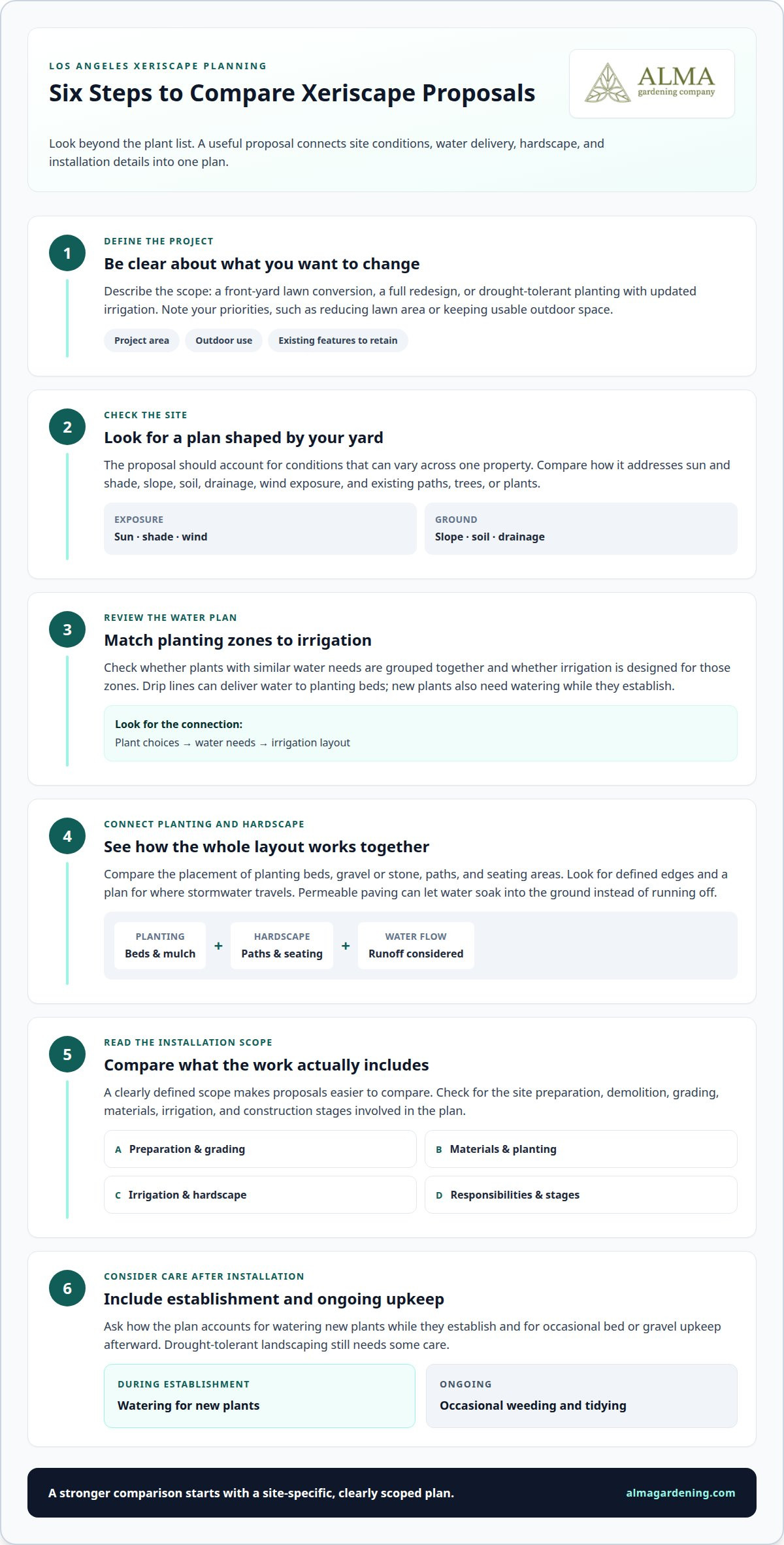
The landscape architect and designer category lists 559 local professionals serving Los Angeles. A clear project brief helps narrow your options: identify whether you want a front-yard conversion, a full redesign, or drought-tolerant planting with updated irrigation. Note the property’s sun exposure, existing paths, drainage concerns, and intended outdoor use.
Compare proposals by scope, not plant lists alone. A useful plan connects site preparation, plant selection, irrigation layout, hardscape, and installation sequence. Gravel beds need defined edges and runoff planning, while new planting needs irrigation suited to its needs during establishment. Look for a design that responds to your site rather than treating Los Angeles as one uniform climate.
- Site assessment: Does the plan account for sun, slope, soil, and existing features?
- Water strategy: Are planting zones and irrigation designed around differing water needs?
- Installation scope: Are demolition, grading, materials, and construction stages clearly described?
- Long-term care: Does the proposal explain establishment watering and ongoing bed or gravel upkeep?
Review each proposal for clear responsibilities, project boundaries, and material selections. For example, a plan combining native plants, drip irrigation, and concrete paths should show how these elements fit together. Compare the proposed layout and installation details with your priorities, such as reducing lawn area or preserving usable outdoor space. A well-defined scope makes proposals easier to compare.
Alma Gardening Company: Landscape Design and Installation
Alma Gardening Company can turn a xeriscape plan into a coordinated outdoor project, from design through installation. Our drought-tolerant and xeriscape landscaping can pair planting choices with hardscaping and paver installation, creating defined areas for paths, gathering, and planting. This approach suits homeowners planning a lawn conversion or a broader landscape renovation. We shape each project around the site’s existing features, intended use, and preferred materials, rather than treating every yard the same. Landscape design and installation bring the layout and built elements together. Contact Alma Gardening Company to discuss your xeriscape project.
Shape a Landscape That Fits Your Property
Before moving into design, decide what you want your outdoor space to do. A quiet seating area, a more defined entry, or room for gatherings will each influence the layout and material choices. Share those priorities alongside the site’s existing features to help turn general ideas into a workable project direction.
Choosing a xeriscape design contractor in Los Angeles is an opportunity to shape a landscape around your property’s character and everyday use. Alma Gardening Company brings landscape design and installation together with drought-tolerant landscaping and hardscaping, connecting the planting plan with the finished spaces. Start with the changes that matter most, then develop a cohesive design from there.
A thoughtful plan can make your outdoor space more useful and distinctly yours.
Frequently Asked Questions
What Is Xeriscaping?
Xeriscaping is a landscape approach that reduces water demand through coordinated planting, irrigation, and site design. It doesn’t require a gravel-only yard or a single look. For example, a design can combine flowering plants, shade from existing trees, defined paths, and focused irrigation. The goal is a landscape that suits local conditions and supports how you use your outdoor space.
Can I get an estimate for converting my current yard to xeriscape?
ALMA Gardening Company can assess the xeriscape conversion scope, including features to retain, materials, site preparation, and installation needs, and provide a project proposal and quote. The estimate can reflect whether you’re updating planting beds or reworking several parts of the yard.
Can you keep existing trees and pathways when redesigning the yard?
Yes, a redesign can incorporate existing trees and pathways when they suit the layout and project goals. The plan should account for tree root areas, path condition, access, and how new planting will meet existing edges. Keeping a useful path, for example, can preserve a familiar route while planting beds are adjusted around it.
Does xeriscape mean removing every plant from the yard?
No. Xeriscaping doesn’t require removing every plant or starting with a bare yard. A design can retain plants that suit the site and complement them with new planting, adjusted irrigation, or hardscape. For instance, a healthy shrub can remain as an anchor while surrounding beds are reshaped. The final selection depends on the plant’s condition, location, and role in the layout.
Is xeriscape a good option for Los Angeles yards?
Yes. Xeriscaping can suit Los Angeles yards because it supports water-conscious planting choices for local conditions. It can work in a sunny front garden, a shaded side yard, or a compact courtyard. Consider how you use the space and how much upkeep you prefer. ALMA Gardening Company can tailor a landscape design to your priorities and the property’s site conditions.
