How to Master Privacy screening plants for Southern California for Better Results
Choosing privacy screening plants for Southern California means matching mature size and water needs to your yard, not simply picking the fastest-growing hedge. California lilac varieties range from 2 to 20 feet tall, so some may suit a screen while others work better as lower planting. The right choice depends on the height and width you need, available space, sun exposure, and how much irrigation the planting can receive.
A dense green boundary can add privacy, soften a fence, and make an outdoor space feel more settled. But plant size, growth habit, and water needs all affect how well a screen fits over time. This guide compares practical choices and irrigation considerations, with a closer look at California lilac as a screening option. You’ll have a clearer way to narrow the options for your yard and plan a screen that complements the landscape.
Key Takeaways
- Choose an evergreen hedge based on the space it will occupy as it matures, not just its size at planting.
- Compare plants by how their irrigation needs fit your yard’s sun, soil, and water-conservation goals.
- Look closely at California lilac varieties to see whether their growth habit suits the privacy you want.
- Thoughtful landscape design and installation can coordinate screening plants with hardscaping for a more cohesive yard.
1. Which Privacy Plant Is Right For You?
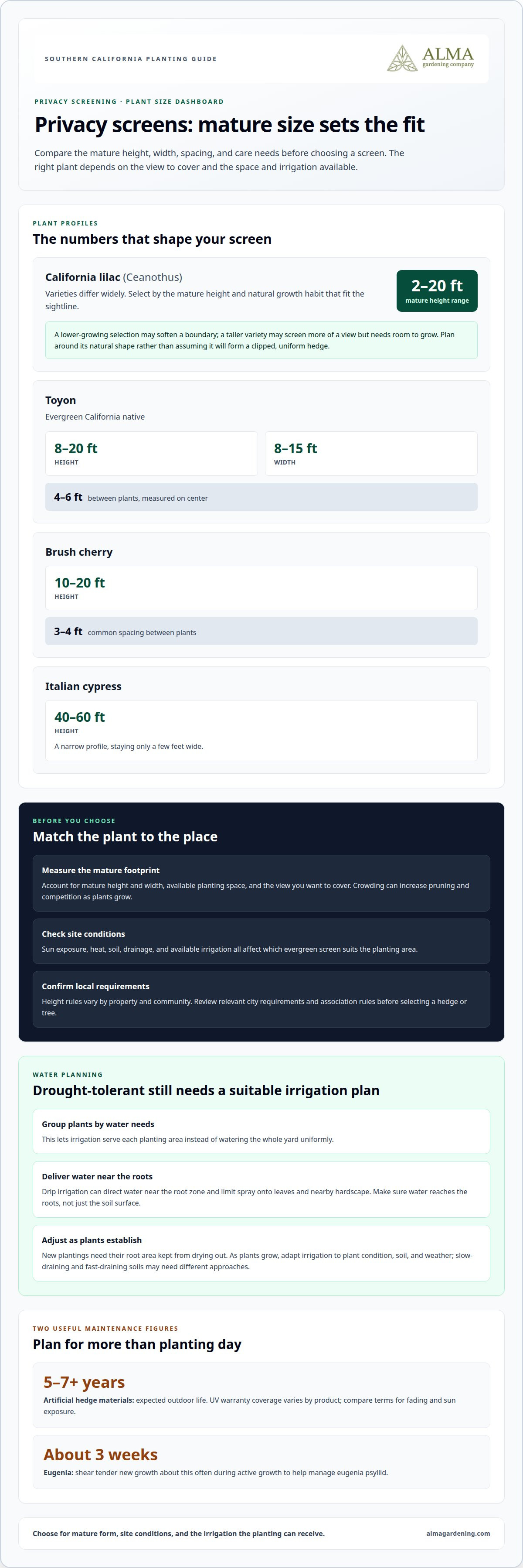
Start with mature height, width, and pruning needs. Toyon is an evergreen California native that can reach 8-20 feet tall and 8-15 feet wide; space plants 4-6 feet apart on center. Brush cherry reaches 10-20 feet tall and is commonly spaced 3-4 feet apart. Italian cypress offers a narrow profile, reaching 40 to 60 feet tall while staying only a few feet wide.
Local rules and HOA restrictions vary by property and community, so there’s no single Southern California height limit that applies everywhere. Review the relevant city requirements and association rules before choosing a hedge or tree.
In coastal, inland, and desert yards, weigh sun exposure, heat, soil, and available irrigation rather than choosing based on region alone. These site conditions help determine which evergreen screen suits the planting area.
Space plants according to their recommended mature form: Toyon needs 4-6 feet between plants, while Brush Cherry needs 3-4 feet. Crowding can increase pruning and competition as the hedge grows.
Pittosporum tobira is listed as non-toxic to cats, dogs, and horses, but that does not mean it is safe for children to eat. Keep children from tasting landscape plants, and consider household needs when selecting species.
Artificial hedge materials have an expected outdoor life of 5-7+ years. UV warranty coverage varies by product; compare terms for fading and sun exposure. For a five-year cost comparison, weigh installation and replacement against a living hedge’s irrigation and trimming. Eugenia needs particular attention: according to UC, shear tender new growth about every three weeks during active growth to help manage eugenia psyllid.
2. Drought tolerance and irrigation needs
Drought-tolerant does not mean a privacy hedge needs no water. Plant choice, sun exposure, soil, and establishment all shape irrigation needs. A hedge in hot afternoon sun may dry faster than the same species in partial shade. Dense foliage can also affect how water reaches the soil beneath the canopy. A successful plan for privacy screening plants for Southern California accounts for these site differences from the start.
Group plants with similar water needs. This makes it easier to direct irrigation to each planting area instead of watering the whole yard uniformly. Drip irrigation can deliver water near the root zone and limit spray onto leaves and nearby hardscape. Make sure water reaches the roots, not just the soil surface.
New plantings need a different approach from established screens. During establishment, keep the root area from drying out; as plants grow, adjust irrigation to their condition, soil, and weather. Avoid frequent, shallow watering that wets only the surface. Slow-draining soil may need a different watering approach than fast-draining soil.
California morning glory, Calystegia macrostegia, should remain evergreen with adequate summer water. It illustrates a practical tradeoff: conserving water still means matching irrigation to a plant’s needs. A drought-tolerant planting can combine suitable shrubs with ground-level watering and mulch to help limit surface evaporation.
For a lower-water screen, coordinate the planting bed, irrigation layout, and surrounding landscape. A drought-conscious landscape plan can help align plant placement and water delivery with the yard’s conditions.
3. California lilac privacy screens
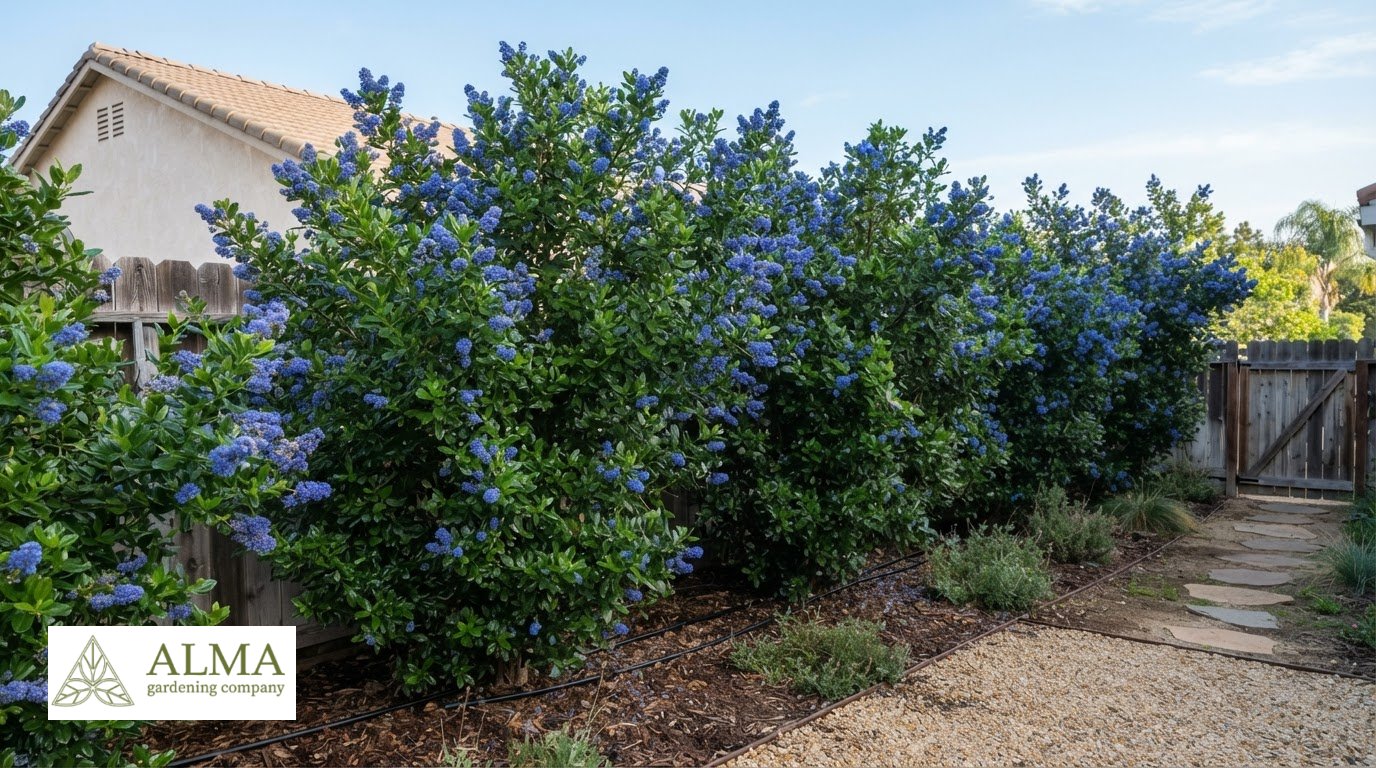
California lilac, or Ceanothus, deserves consideration when a screen should combine privacy with a naturalistic landscape. Varieties range from 2 to 20 feet tall, so the plant name alone doesn’t tell you whether a particular selection will block a view. Match the mature height and growth habit to the sightline you want to screen.
Start by identifying what needs covering: a low window, a fence line, or an upper-story view. Then choose a variety whose mature size suits that purpose and the available planting space. A lower-growing selection may soften a boundary without forming a tall visual barrier. Taller varieties may provide more screening, but need enough room to grow.
California lilac also differs from a formal laurel hedge. Rather than assuming it will tolerate frequent clipping into a uniform wall, plan around its natural shape. Consider how its flowering foliage will look beside fences, paths, and neighboring plants. A mixed landscape can pair it with other screening plants where continuous coverage matters.
Water and site conditions matter. During establishment, provide irrigation suited to the planting area; once established, avoid treating California lilac like a high-water hedge. Check drainage and sun exposure during design, since poorly matched conditions can undermine plant health and leave gaps in the screen. The practical takeaway: select a variety for its mature height first, then match its form and care needs to the yard.
Alma Gardening Company
Alma Gardening Company can turn your screening priorities into a planting plan suited to your yard. Through landscape design and installation, we consider the desired screen height, available planting space, sun exposure, and irrigation needs together. This connects plant selection with the way the rest of your landscape functions.
For a project that combines privacy planting with a dry-climate approach, drought-tolerant and xeriscape landscaping can coordinate plant choices and water use. Hardscaping or paver installation can also define paths and outdoor areas beside a screen, keeping the planting layout purposeful.
If you’re planning a new screen or reworking an existing landscape, contact Alma Gardening Company to discuss your project.
Shape a screen that fits the whole yard
Privacy planting works best as part of the yard’s overall layout, not as an isolated green wall. When planning privacy screening plants for Southern California, consider how the screen relates to outdoor seating, paths, windows, and the views you want to keep. A thoughtful layout can create separation while preserving an open, comfortable feel.
Before moving ahead, decide what you want the finished space to do. A quiet patio, a more secluded dining area, or a softer boundary may each call for a different arrangement. That purpose can guide your plant choices and help the screen feel integrated with the landscape.
With a clear goal and a considered plan, your yard can become a more private, welcoming place to spend time.
Frequently Asked Questions
Which Privacy Plant Is Right For You?
Choose a plant that suits the view you want to block and the space available at maturity. For a narrow landscape strip, Italian cypress grows tall while remaining only a few feet wide. For a fuller hedge, compare mature width and pruning needs before planting. In Los Angeles yards, consider whether the screen faces strong afternoon sun or sits beside a shaded wall.
What evergreen plants grow best for privacy screens in Southern California?
Good options depend on the screen’s purpose and available width. Texas privet grows 8-12 feet tall and 6-8 feet wide, while Pittosporum tobira reaches 8 to 13 feet tall and 4 to 8 feet wide. Oleander can reach about 8 to 12 feet tall and wide. These mature dimensions help distinguish a compact boundary hedge from a broader visual screen.
Which privacy screening plants tolerate Southern California drought and heat?
California lilac is worth considering for a water-wise landscape, particularly once established. Still, heat exposure and soil drainage affect how a screen performs. In a hot San Fernando Valley yard, account for afternoon sun and reflected heat from walls or paving. Choose a variety suited to those conditions, and plan irrigation for establishment and ongoing needs.
What are the best fast-growing privacy hedges for Southern California?
Carolina cherry is a candidate when you want a screen to gain height relatively quickly. In a Southern California planting example, it exceeded 12 feet by its third year and reached 15-18 feet after 10 years. Treat those figures as an example, not a schedule for every yard. Plant health, site conditions, and pruning all influence how a hedge develops.
How tall and wide do popular Southern California screening plants grow?
Compare both dimensions before deciding where a hedge belongs. Wax leaf privet can reach 8-12 feet tall; Pittosporum tobira grows 8 to 13 feet tall and 4 to 8 feet wide. Oleander typically reaches about 8 to 12 feet in both height and width. These mature sizes help you judge whether a plant will fit beside a path or fence.
