Landscape Design for Modern Homes in Los Angeles
A modern landscape is defined by clean geometry, restrained planting, and materials that connect outdoor spaces with the home. In Los Angeles, landscape design for modern homes also needs to account for strong sun, heat, and water use.
A polished yard need not feel stark or be hard to live in. A considered mix of structure, texture, greenery, and usable outdoor areas can create a calm, welcoming setting that suits the architecture and daily routines. Modern landscapes bring that balance to life through thoughtful forms, planting, hardscape, and coordinated installation.
Key Takeaways
- Use clear lines and simple forms to make outdoor areas feel intentional and connected to the home.
- Choose planting for local sun, heat, and water conditions, then use varied textures to keep a restrained palette inviting.
- Coordinate paving, concrete, and other hardscape materials with grading and drainage so the finished space works as well as it looks.
- For a cohesive project, ALMA Gardening Company provides landscape design and installation, drought-tolerant landscaping, hardscaping, and paver installation.
WHAT IS A MODERN STYLE LANDSCAPE?
Modern garden design emerged in the 20th century, blending formal European traditions with modern aesthetics. It favors function, simplicity, and visual appeal, treating the outdoor garden as an extension of the home.
Modern yards need not feel stark. Mediterranean and European influences can add evergreen structure, clipped forms, and stone paths, while restrained colors and ornamental grasses soften geometric spaces. A welcoming seating area can connect the garden with outdoor living.
Edible landscaping can also suit a modern design. A kitchen garden of herbs, vegetables, and defined planting beds can replace a conventional front lawn for homeowners who enjoy cooking. Arrange crops in clear rows or raised beds for a deliberate, orderly look.
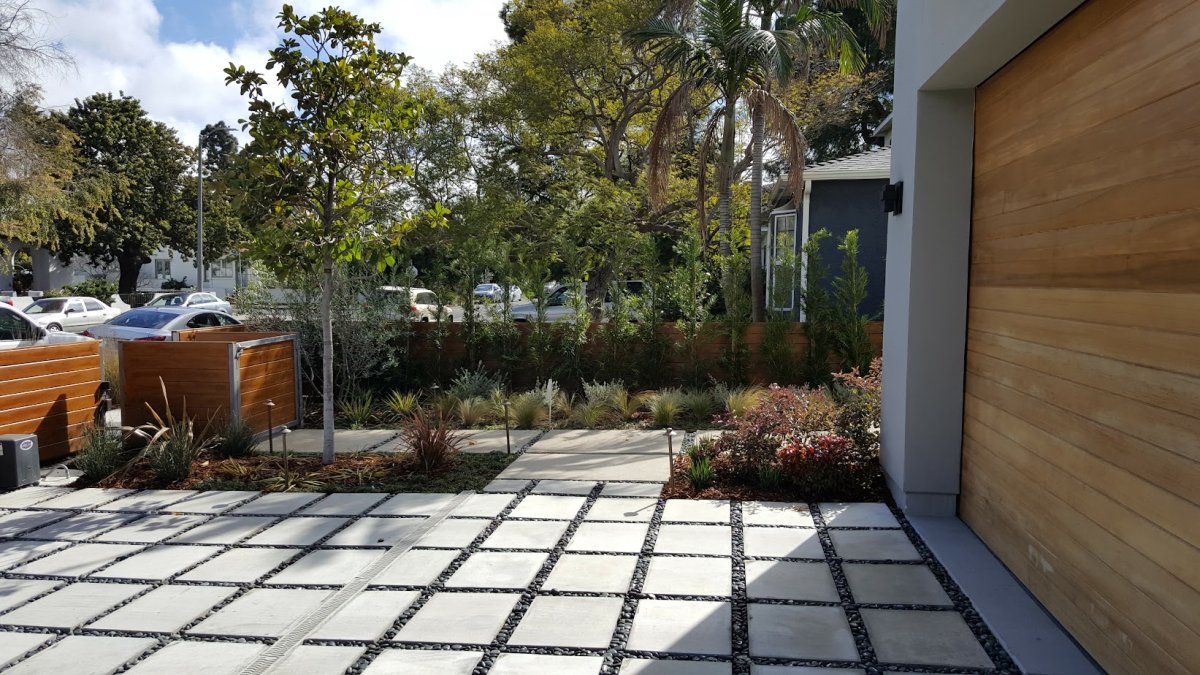
Paths and pavers organize movement from the entrance to a patio or seating area. Square concrete pavers set in gravel, for example, create a crisp route, while planting at the entrance adds softness. This balance gives landscape design for modern homes both structure and visual appeal.
Permits, zoning rules, and HOA restrictions can affect landscaping, particularly structures, grading, and drainage. Requirements depend on the property and project, so identify applicable rules before construction begins.
Affordable DIY updates include grouping existing containers, planting culinary herbs, or laying out a simple gravel path. Test the arrangement first, then choose plants suited to the site’s sun exposure.
Avoid grading that directs water toward the home, uneven pavers that create trip hazards, and plants that block entry visibility. Keep paths stable and clear, and leave electrical and drainage work to qualified professionals.
Modern landscape forms, planting, materials, and elements
Modern compositions combine clean lines, layered foliage, durable surfaces, and purposeful focal points. In Los Angeles, sun exposure and drainage should guide material and plant choices.
Structured Plantings and Statement Features
Structured planting uses deliberate rows, blocks, or repeated forms, while a focal feature draws the eye. Evergreen shrubs can frame a concrete path, for example, with ornamental grasses softening its edges. A fountain or sculptural boulder can anchor a seating area. Plan the focal point and circulation together to keep a front yard architectural rather than cluttered.
Blending Modern and Traditional Planting
Mixing styles pairs modern geometry with looser, familiar planting forms. A clipped evergreen hedge can define a clean boundary, while flowering perennials soften the bed beyond it. Keep the contrast intentional: repeat a restrained palette, then vary foliage texture and plant height. This approach adds warmth to modern architecture without losing the design’s clear shape.
Native Plants and Water-Conscious Landscaping
Native plants are adapted to local conditions and can support a water-conscious garden when matched to the site. In Los Angeles, group plants with similar sun and watering needs, then use gravel or mulch to cover exposed soil. Plan grading and planting together to direct runoff away from structures. These choices can add privacy and curb appeal while helping manage water.
Choosing Plants for Climate Zones
Choose plants suited to the property’s climate zone, sun, soil, and seasonal conditions. Across cooler regions, evergreen shrubs and ornamental grasses can provide structure; warmer, drier sites may suit locally adapted native planting. For a modern plan, first map sun and drainage, then set paths and seating, select materials, and arrange plants by mature height. Compare concrete, pavers, gravel, and stone by material, labor, access, preparation, drainage, permits, and project scope, since costs depend on these factors. Bring planting, paving, and grading together in one coordinated design.
Professional landscape design and installation
Professional design turns a visual concept into a coordinated plan for planting, circulation, drainage, and construction. A minimalist layout might pair rectangular paving with layered shrubs, flowers, and varied textures. The contrast gives contemporary architecture character without unnecessary elements.
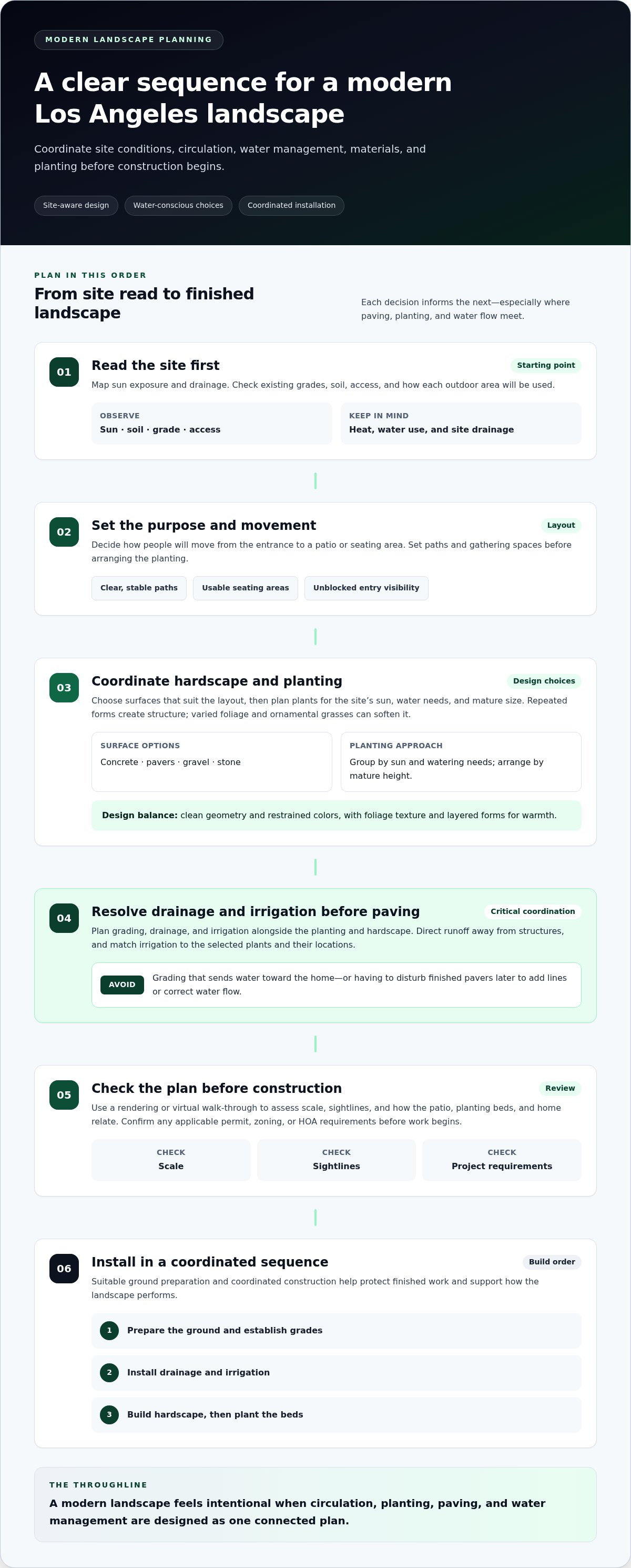
Start planning with the site: existing grades, soil, sun exposure, access, and how each outdoor area will be used. A designer can match plant species to local conditions and arrange them by mature size, helping prevent crowded beds and keeping paths, seating, and views usable as plants grow.
In Los Angeles, plan drainage and irrigation before paving or planting begins. Grading should direct water away from structures, and irrigation should suit the selected plants and their locations. A fountain needs a stable setting and a plan for surrounding surfaces, splash, and runoff.
Installation follows the coordinated plan. Crews prepare the ground, establish grades, install drainage and irrigation, build hardscape, and plant the beds. This sequence reduces the chance of disturbing finished pavers to add lines or correct water flow later. Concrete, pavers, and planted areas each need suitable ground preparation.
Before construction, 3D renderings or virtual walk-throughs can help homeowners visualize a proposed design. Use them to assess scale, sightlines, and the relationship between a patio, planting beds, and the home. A clear plan aligns appearance with site performance and makes design decisions easier to resolve before work begins.
ALMA Gardening Company Inc.: Landscape Design and Installation
Alma Gardening Company can help homeowners turn a modern landscape concept into a coordinated outdoor project. Its landscape design and installation service brings planting plans, paths, and hardscape together, shaping the yard around the home and how it’s used.
Consider professional help when a project involves redesigning several areas, selecting drought-tolerant or xeriscape planting, or combining pavers with garden beds. Coordinating these elements early helps account for site conditions and how people move through the space. A focused paver installation can also define an entry or seating area.
For a modern outdoor project in Los Angeles, contact Alma Gardening Company or visit almagardening.com.
Shape an Outdoor Space Around Your Daily Life
Give your outdoor space a clear purpose before choosing an upgrade. Decide what should feel different in daily life: a comfortable place to sit, a more usable entrance, or planting suited to Los Angeles sun and water conditions. That priority helps landscape design for modern homes feel cohesive, with each element supporting how you want to use the property.
Before work begins, note which areas already function well and where movement feels awkward. A simple site sketch can mark entrances, existing trees, sunny areas, and views to preserve. Use these observations to set priorities and make design decisions with greater clarity.
A considered plan turns a broad vision into practical choices for your home and outdoor routine.
Take the next step toward an outdoor space that feels distinctly yours.
Frequently Asked Questions
What are the key principles of landscape design for modern homes?
Modern design relies on proportion, repetition, and a consistent visual language. Repeat a material or plant form in different parts of the yard to create continuity, and align details such as edging and containers with the home’s architecture. Matching planter finishes at the entry and patio, for example, can connect separate outdoor areas without adding more features.
What are popular modern landscaping ideas for front yards and backyards?
In a front yard, use a narrow planting strip to soften a blank exterior wall, or screen utility equipment with a simple enclosure that suits the home. In a backyard, consider a small courtyard with movable chairs and a sculptural planter. These ideas add useful character while preserving open ground and avoiding a crowded mix of features.
How can homeowners design a water-wise, low-maintenance modern landscape?
Keep upkeep manageable by limiting plants that need frequent shaping and choosing durable finishes that do not require specialized cleaning. A modest planting palette can simplify care, while mulch helps protect exposed soil. Leave room around shrubs for mature growth so routine pruning does not become the main task.
What hardscaping materials suit modern homes, and how do their costs compare?
Concrete, pavers, gravel, and stone all suit modern landscapes. Project costs depend on material, labor, access, preparation, drainage, permits, and scope.
