Landscape Lighting Design & Installation in Los Angeles
When an outdoor path or patio goes dark, the transformer may be involved, but it isn’t the only possible cause. A timer setting, tripped outlet, loose connection, or failed fixture can also interrupt a low-voltage lighting system. Checking the system in a safe order can help you describe the problem and choose a sensible next step. That same attention to function matters in hardscape lighting design Los Angeles homeowners want to enjoy, from illuminated walkways to comfortable outdoor living areas.
This guide covers basic checks you can make without opening equipment, clues that may point to controls, wiring, or fixtures, and situations where you should stop troubleshooting. It also explains how planning fixture locations, wire routes, lighting zones, and controls alongside the landscape can make an installation easier to understand. Whether you’re dealing with an outage or planning an upgrade, a clear process helps you move forward safely.
Key Takeaways
- Use the pattern of an outage, flickering, or dim lights to narrow down whether the issue may involve controls, wiring, or fixtures.
- Start with simple visual checks, follow the manufacturer’s instructions, and stop if the next step involves opening energized equipment or handling exposed wiring.
- Note which fixtures are affected and where they are located. These details can help explain the issue without attempting a remote diagnosis.
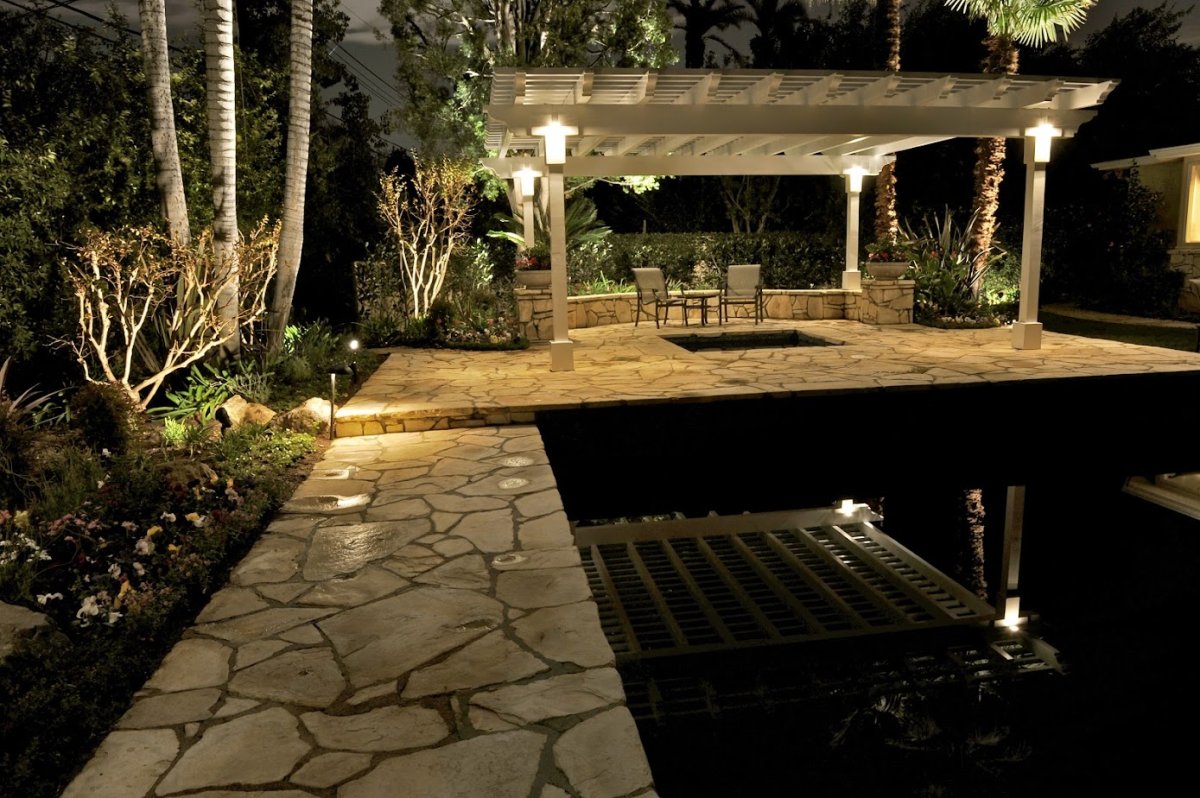
- Thoughtful hardscape lighting design Los Angeles projects coordinate fixture placement with hardscape, planting, irrigation, and drainage, making the system easier to understand later.
Outdoor Lighting Transformer Troubleshooting in Los Angeles: Start With the Symptoms
A transformer is an important part of a low-voltage landscape lighting system, but it’s only one part. It supplies low-voltage power to compatible fixtures through the lighting circuit. A timer or photocell may control when the system turns on, so a schedule or control issue can look like a power failure. This overview of landscape lighting systems explains how transformers, wiring, and fixtures work together.
What does an outdoor lighting transformer do?
The transformer converts the power supplied to the system into low-voltage power for the landscape lights. A timer may turn the lights on according to a schedule, while a photocell responds to light levels. Before assuming the transformer has failed, check the accessible switch and control settings, then consider whether the lights may simply be operating on a different schedule.
Which symptoms point to a wider system issue?
If every fixture is dark, the cause could involve the power supply, a control, or a shared connection. If one light is out, the issue may be closer to that fixture. If a group in one area is dark, a zone or wiring connection may be involved. Flickering and unexpectedly dim lights are useful clues, but neither symptom confirms a specific cause.
A whole-system outage raises suspicion about shared power or controls; a problem limited to one fixture more often points toward that fixture or its local connection. Treat the pattern as a clue, not a diagnosis. In Los Angeles, outdoor equipment is exposed to sun, heat, and the elements, so visible condition and placement are worth noting. Observe the area without opening equipment or touching wiring. Coordinating lighting with hardscape and planting can help the system fit the property and remain easier to understand.
How to Troubleshoot a Low-Voltage Lighting Transformer Step by Step
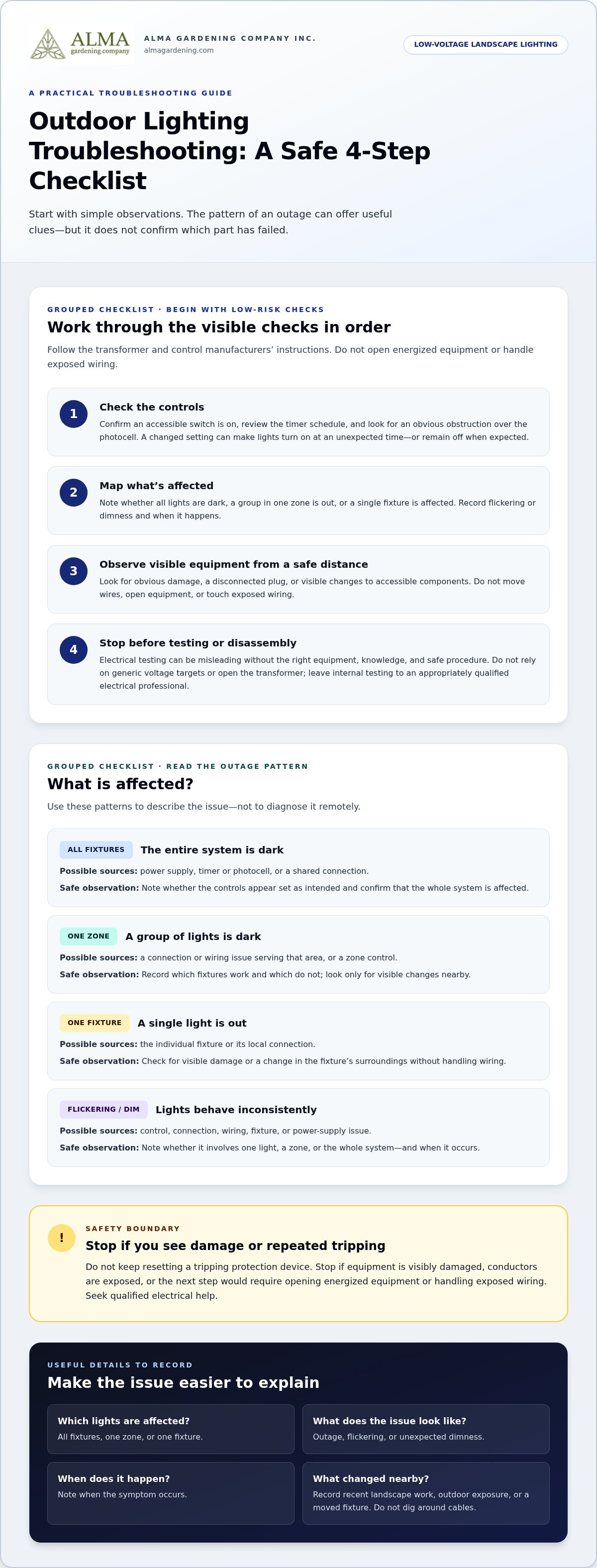
Start with visible, low-risk checks before considering more technical questions. Follow the transformer and control manufacturers’ instructions. Do not open energized equipment or handle exposed wiring.
- Check the controls. Confirm that an accessible switch is on, review the timer schedule, and look for an obvious obstruction over the photocell. A changed schedule or control setting may make the lights turn on at an unexpected time or remain off when you expect them to be on.
- Map what’s affected. Note whether all lights are dark, a group in one zone is out, or a single fixture is affected. Record any flickering or dimness and when it occurs. This pattern can help distinguish a control or shared-system issue from a problem closer to an individual fixture.
- Inspect visible equipment from a safe distance. Look for obvious damage, a disconnected plug, or visible changes to accessible components. Do not move wires, open equipment, or touch exposed wiring. Repeated tripping or visible damage is a reason to stop, not to keep resetting the system.
- Stop before testing or disassembly. Electrical testing can be misleading without the right equipment, knowledge, and safe procedure. Don’t rely on generic voltage targets or open the transformer. Leave internal testing to an appropriately qualified electrical professional.
If you see damage, repeated tripping, or would need to open energized equipment or handle exposed wiring, stop and seek qualified electrical help. The U.S. Department of Energy offers guidance on selecting exterior lighting. For a broader hardscape lighting design Los Angeles project, Alma Gardening Company designs and installs landscape lighting alongside outdoor improvements. Explore landscape lighting design.
Transformer, Wiring, or Fixture? Compare the Likely Causes
The pattern of a lighting problem can help narrow down where to look, but it can’t confirm which part has failed. Use these clues to describe the issue rather than diagnose it remotely.
| Symptom pattern | Possible source | Safe next observation |
|---|---|---|
| All fixtures are out | Power supply, timer or photocell, or a shared connection | Note whether the controls appear set as intended and whether the whole system is affected. |
| One zone or group is dark | A connection or wiring issue serving that area, or a zone control | Record which fixtures work and which do not; look only for visible changes nearby. |
| One fixture is out | The individual fixture or its local connection | Check for visible damage or a change in the fixture’s surroundings without handling wiring. |
| Lights flicker or seem dim | Possible control, connection, wiring, fixture, or power-supply issue | Note whether the effect involves one light, a zone, or the whole system, and when it occurs. |
Recent landscape work, outdoor exposure, or a fixture that has been moved may provide useful context. Look for disturbed soil or visible damage, but don’t dig around cables, pull connections, or open the transformer. In a hardscape lighting design Los Angeles project, a record of fixture locations and lighting zones can make it easier to describe a future problem precisely.
When should troubleshooting stop?
Stop if you see exposed conductors, damaged equipment, or a protection device that trips repeatedly. Don’t keep resetting it or attempt electrical testing. Transformer, wiring, and fixture problems can produce similar symptoms, and identifying the cause may require testing by an appropriately qualified professional. Notes about which lights fail and when they fail can help you explain the issue without taking electrical risks.
Prevent Repeat Lighting Problems With a Thoughtful Los Angeles Landscape Plan
Planning can make a lighting system easier to understand when an issue comes up, though it can’t prevent every fault. Keep a simple record of which fixtures belong to each zone, where the transformer and controls are located, and which switch or schedule operates the system. Clear fixture placement and accessible equipment also give you helpful reference points when describing an outage.
Plan lighting around the whole outdoor space
Paths, patios, planting beds, and architectural features all affect fixture placement and wiring routes. Coordinate lighting with hardscape installation, irrigation lines, and drainage so future landscape work is less likely to disturb lighting components. A well-planned hardscape lighting design Los Angeles project considers both the nighttime effect and how the system fits the site. For more ideas, explore Outdoor Lighting for Home Security and Beauty: The Ultimate 2026 Guide and these backyard hardscape lighting ideas.
Choose the next step based on what you found
If a control setting explains the issue, monitor the system’s operation. If symptoms persist, wiring is exposed, equipment appears damaged, or the cause remains unclear, stop troubleshooting and seek evaluation from an appropriately qualified electrical professional. Avoid repeated resets or attempts to open equipment. For a new lighting design or installation, Alma Gardening Company can coordinate outdoor lighting with hardscape, planting, irrigation, and drainage as part of a broader improvement project.
Plan Outdoor Lighting That Works With Your Landscape
A dark landscape lighting system doesn’t automatically mean the transformer has failed. Check accessible controls first, note whether the outage affects every fixture or only one zone, and avoid opening equipment or handling exposed wiring. Symptom patterns can guide your next step, but they can’t confirm which component is at fault.
For persistent problems, visible damage, or recurring trips, stop troubleshooting and seek qualified electrical help. When planning new lighting, consider the zones, accessible equipment, and fixture locations in relation to hardscape, planting, irrigation, and drainage. Thoughtful hardscape lighting design Los Angeles projects balance practical use with a welcoming outdoor setting.
Alma Gardening Company designs and installs landscape and outdoor lighting, with hardscaping, drainage, irrigation, and broader landscape design to coordinate the overall improvement. The company serves the San Fernando Valley and Greater Los Angeles, including Sherman Oaks, Encino, Studio City, North Hollywood, Woodland Hills, West Hills, Glendale, Burbank, Beverly Hills, Culver City, Pacific Palisades, and Malibu.
Frequently Asked Questions
Why is my outdoor lighting transformer not working?
The transformer may not be receiving power, or a timer, photocell, switch, wiring connection, or fixture could be interrupting the system. Check accessible controls and note whether every light is out or only one zone or fixture. That pattern can help narrow the possibilities, but it doesn’t identify the failed component. Follow the manufacturer’s instructions, and don’t open the transformer or handle exposed wiring.
How do I know if my landscape lighting transformer is bad?
You can’t confirm a failed transformer from symptoms alone. A complete outage may involve the transformer, power supply, controls, or a shared connection; dim or flickering lights can have several causes. Note what’s affected and look for visible damage from a safe distance. Confirming the cause may require electrical testing, so don’t rely on guesswork or open energized equipment.
Can I reset an outdoor lighting transformer myself?
Use a reset procedure only if the manufacturer’s instructions describe one and the control is safely accessible. Don’t open the unit, touch exposed wiring, or repeatedly reset a device that trips again. A recurring trip or visible damage means you should stop troubleshooting. Record what happened and seek qualified electrical help rather than trying to force the system back on.
Why are some of my outdoor lights dim or flickering?
Dimness or flickering can relate to a fixture, connection, wiring, control, or power-supply issue. Note whether it affects one light, a group, or the entire system, and whether it happens at particular times. Changes after landscape work or fixture relocation may also be useful context. These clues help you describe the issue, but don’t prove which component is at fault.
When should I call a professional about outdoor lighting transformer problems?
Stop and seek qualified electrical help if wiring is exposed, equipment looks damaged, a protection device trips repeatedly, or the cause remains unclear. For a planned hardscape lighting design Los Angeles project, Alma Gardening Company designs and installs outdoor lighting alongside broader landscape improvements. The company serves the San Fernando Valley and Greater Los Angeles, including Sherman Oaks, Encino, Studio City, North Hollywood, Woodland Hills, West Hills, Glendale, Burbank, Beverly Hills, Culver City, Pacific Palisades, and Malibu.
