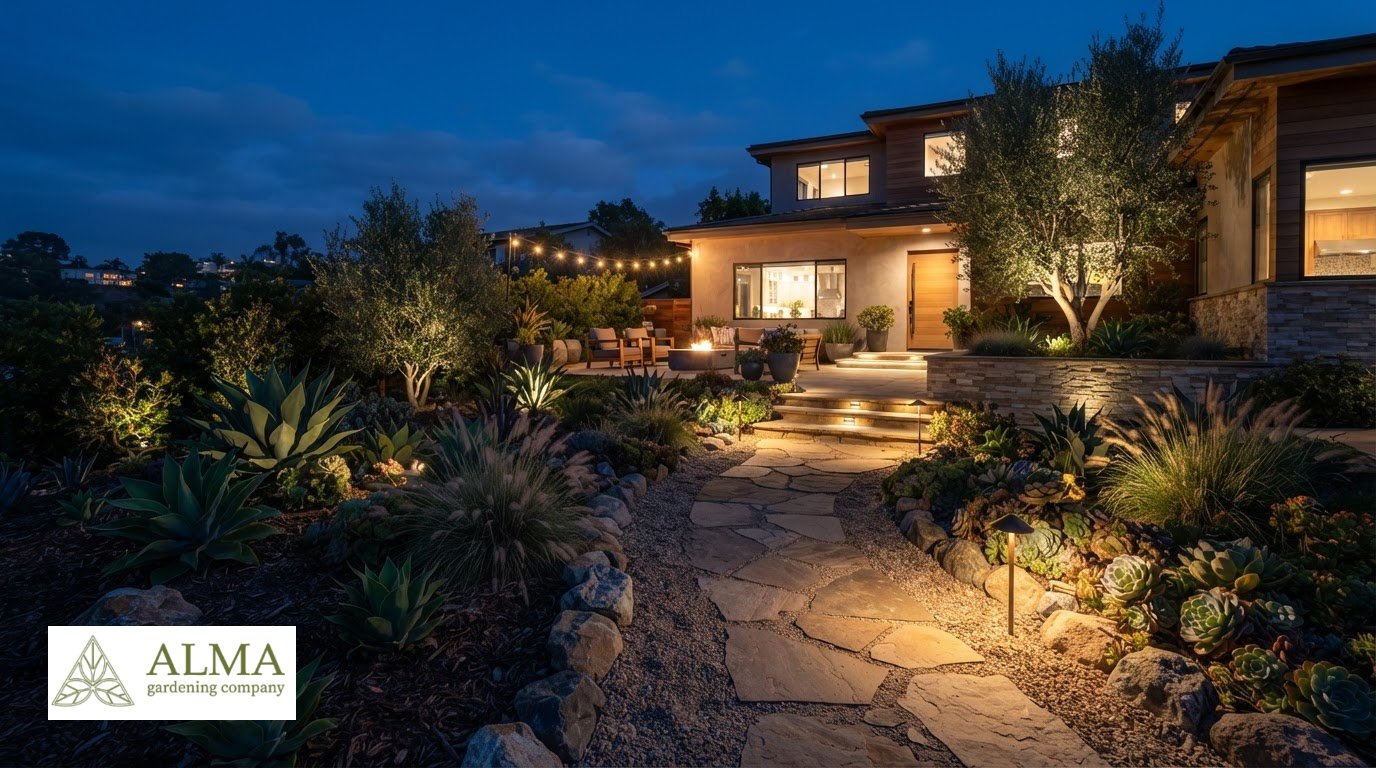
Landscape Lighting Design & Installation in Los Angeles: A Homeowner’s Guide
Thoughtful outdoor lighting can make a yard more useful after sunset, not just more visible. A landscape lighting installation in Los Angeles can be worthwhile when you want safer paths, inviting outdoor spaces, or focused accents on plants and architectural details. LED fixtures are generally brighter and more durable than solar landscape lights, which need direct sunlight and may provide weak or unreliable light.
It’s reasonable to wonder how long a system will last and whether installation will disturb your landscaping. This guide explains what can affect replacement needs and how a project moves from lighting goals and fixture placement to wiring, installation, and final adjustments. You’ll also learn how site layout, fixture choices, and project complexity shape the work, helping you decide whether lighting suits your home and what to expect.
Key Takeaways
- Weigh the practical benefits of lighting paths and outdoor areas against your yard’s layout and how you use it after dark.
- Compare LED and solar options by considering brightness, durability, and the sunlight available in your landscape.
- Plan the installation around fixture placement, wiring routes, existing hardscape, and protection for plants and soil.
- Understand how an experienced outdoor lighting contractor can coordinate the design and installation with the rest of your landscape.
Is landscape lighting worth installing on my house?
Landscape lighting can be worthwhile when you want clearer paths, more usable outdoor areas, or highlighted garden features. In Los Angeles, start by identifying the spaces you use after sunset.
Consultation and Custom Lighting Design
A useful design consultation begins with a nighttime walkthrough and a prioritized list of goals. Identify the front entry, steps, garden paths, and patio seating where light could improve visibility or comfort. Consider sightlines from inside your home and from neighboring properties. A good plan balances practical coverage with selective accents instead of adding fixtures to every planting bed.
Custom Landscape Lighting Installation
Custom installation translates the plan into fixture locations, wiring routes, and coordinated site work. Before digging, map routes around existing irrigation lines, tree roots, and planned pavers. Position each fixture to illuminate its target without blocking walkways or shining into windows. Placement matters: a path light aimed across a walkway can create glare rather than useful guidance.
Lighting Types for Los Angeles Homes and Gardens
For Los Angeles homes, path lights can define walkways, while step lights illuminate changes in elevation. Uplights can highlight a mature tree or textured wall, and downlights can create a softer effect near seating. Choose fixtures for the task and location. Solar lights need direct sunlight to work properly and may provide weak or unreliable lighting.
Glare and Light Pollution Reduction
Reduce glare by aiming fixtures toward the ground or their intended features, not toward windows, streets, or neighboring yards. Add shields if a visible bulb creates harsh brightness, and avoid placing several fixtures in the same sightline. At night, walk the property from the patio and sidewalk. Adjust angles and remove unnecessary lights so paths stay visible without lighting the whole yard.
Will I need to replace my outdoor lighting system frequently?
Replacement usually depends on which component fails, not just on the system’s age. One dark path fixture may need attention even when nearby lights still work. Inspect individual fixtures, connections, controls, and wiring before considering a full replacement. This helps distinguish a localized fault from broader wear across the installation.
A landscape lighting professional can assess these components together and identify likely causes. For example, repeated failures along one garden path may indicate damaged wiring or exposed connections. The assessment can also consider fixture placement and system performance, helping determine whether targeted repairs or replacement are appropriate and avoid replacing functioning components unnecessarily.
LED fixtures are generally brighter and more durable than solar landscape lights, though performance still depends on suitable fixtures, sound connections, and proper installation. Plan for individual fixtures to remain accessible, so future troubleshooting does not require disturbing nearby pavers or planting beds. Replacing a failed fixture may be more practical than rebuilding the entire system.
For Los Angeles conditions, choose fixtures labeled for outdoor use and materials suited to local exposure. Near the coast, corrosion-resistant finishes and protected connections can help address salt air. Use wiring and connections designed for outdoor or buried installation, routed to reduce exposure to digging and landscape work.
Reliable outdoor lighting can make entries, steps, and evening seating areas easier to use. A coordinated design can also balance practical needs with the landscape’s appearance, for example, lighting a patio without washing out nearby garden features. Review the system after dark to find dim areas, glare, or fixtures that no longer serve their purpose.
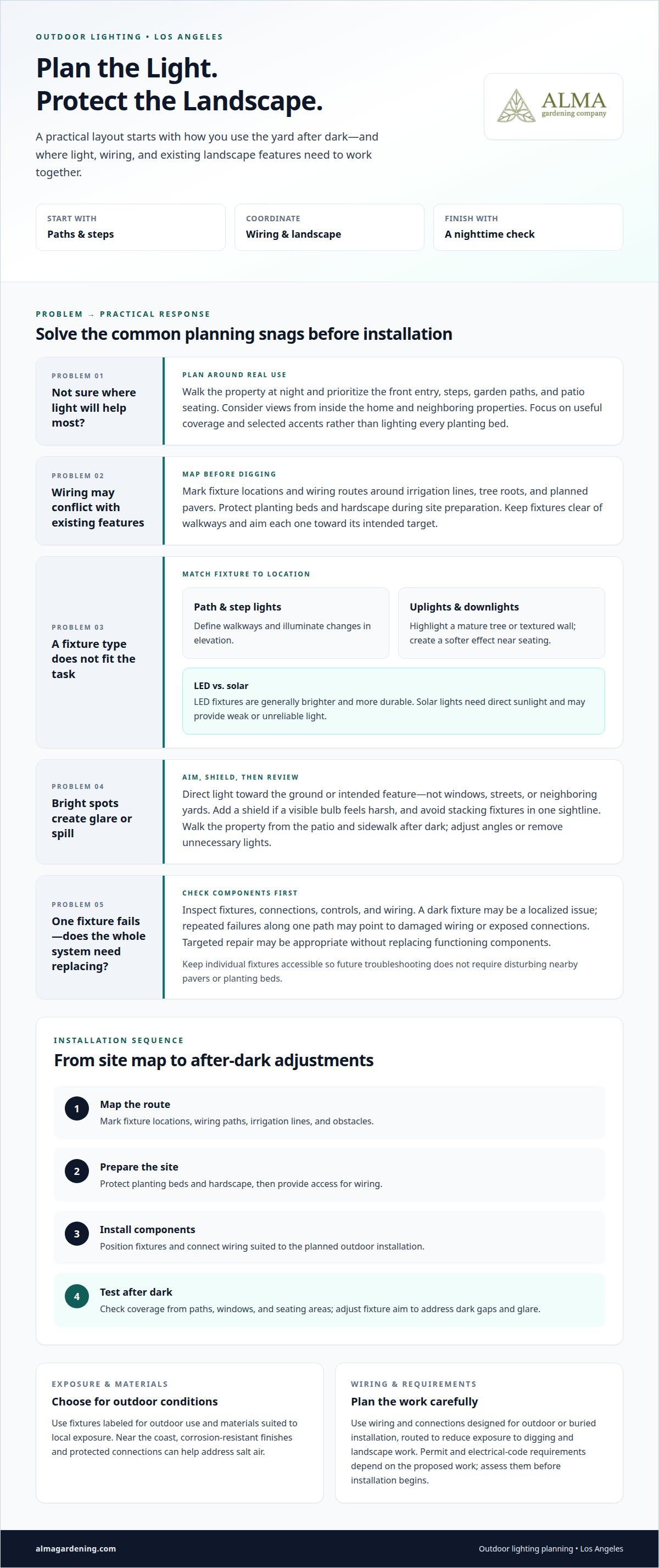
Landscape lighting installation process
Plan a landscape lighting installation in Los Angeles around how you move through your property after dark. Mark entries, paths, steps, and gathering areas, then note existing irrigation, paving, planting, and drainage features. A simple site map helps coordinate fixture locations and identify wiring routes that need protection.
Next, decide which locations need functional light and which would benefit from visual accents. A front walkway may need consistent guidance, while a patio may call for softer illumination. Choose fixture positions based on the target and viewing angles, and review the layout before excavation or hardscape work begins.
- Map the route: Mark fixture locations, wiring paths, irrigation lines, and obstacles.
- Prepare the site: Protect planting beds and hardscape, then provide access for wiring.
- Install components: Position fixtures and connect wiring suited to the planned outdoor installation.
- Test after dark: Check coverage from paths, windows, and seating areas, then adjust aim.
Permit and electrical-code requirements depend on the proposed work. Before landscape lighting installation in Los Angeles, assess the project scope and any wiring changes. Household-voltage work deserves particular attention, and applicable requirements should be addressed before installation begins.
Finish with a nighttime walkthrough. Check for dark gaps, distracting glare, and light entering windows. Adjust fixture angles or positions so the completed layout serves its purpose without spilling light into unwanted areas.
Alma Gardening Company: Landscape Design and Installation
Alma Gardening Company can coordinate outdoor lighting with a broader landscape project. Its landscape design and installation work brings paths, planting areas, and hardscape into a cohesive plan, so lighting fits the finished layout rather than becoming an afterthought.
Consider involving a landscape design and installation team when updating pavers, adding drought-tolerant planting, or reworking several areas at once. These choices affect fixture locations and how wiring routes around paving and planting beds. Coordinated planning connects practical illumination with the way you use your yard.
For homeowners in the San Fernando Valley and Greater Los Angeles, Alma Gardening Company provides hardscaping, paver installation, and drought-tolerant and xeriscape landscaping. Contact Alma Gardening Company to discuss your landscape design and installation project.
Shape a More Usable Outdoor Space
Think beyond individual fixtures. A lighting plan can connect the yard, from the front entry to a quiet seating area. If you’re considering landscape lighting installation in Los Angeles, first decide how you want evenings outdoors to feel and function. Note the areas you want to use, the views you want to preserve, and any upcoming landscape changes.
That preparation makes a consultation more productive. Discuss how lighting can work with your property’s layout and broader landscape design, then shape the plan around your priorities. Start with a clear vision, and refine the details from there.
A considered plan can make nighttime another inviting part of home.
Frequently Asked Questions
Which location areas do you service?
Alma Gardening Company serves the San Fernando Valley and Greater Los Angeles, including Los Angeles, Sherman Oaks, Encino, Studio City, North Hollywood, Woodland Hills, and West Hills. Service areas also include Glendale, Burbank, Beverly Hills, Culver City, Pacific Palisades, and Malibu. Local conditions, including sun exposure, planting, and existing hardscape, help shape each lighting plan.
Which Los Angeles landscape lighting installers have strong reviews and portfolios?
Alma Gardening Company provides landscape and outdoor lighting as part of landscape design and installation projects. For your decision, prioritize documented customer reviews and portfolio examples that show comparable properties and clear nighttime results. Look closely at whether paths and entries are illuminated without harsh glare, and whether lighting complements planting, patios, and hardscape.
What are the steps to plan and install landscape lighting?
Start by listing the areas you want lit and noting existing irrigation, paving, and planting. Develop a fixture layout, then coordinate wiring routes and site preparation before installation. Once the system is connected, test it after dark from the entry, patio, and nearby sightlines. Make final adjustments to coverage and aiming before the work is complete.
How long does landscape lighting installation typically take?
The schedule depends on the property and project scope, including fixture count, wiring access, existing paving, and coordination with other landscape work. A straightforward layout with clear wiring routes calls for different preparation than a project crossing established planting beds or hardscape. The installation plan should account for site access and coordination with related outdoor improvements.
What are the pros and cons of LED, solar, and low-voltage landscape lighting?
LED fixtures are generally brighter and more durable than solar landscape lights. Solar lights need direct sunlight to work properly and may provide weak or unreliable lighting in shaded areas. Low-voltage lighting uses a wired system, so layout and wiring routes matter during planning. Compare options based on the location’s sunlight, desired brightness, and need for consistent coverage.
