Stamped Concrete vs. Pavers: Which Is Better for Los Angeles Patios?
The surface that looks simpler to install may be harder to repair later. In Los Angeles, choosing between stamped concrete and pavers is not just an appearance decision. Sun exposure, soil movement, drainage, and access to utilities can all affect how a patio performs. If you’re weighing the stamped concrete vs pavers pros and cons, it helps to compare long-term upkeep, repair options, and project costs before committing.
Neither option is right for every property. Stamped concrete creates a continuous surface with a patterned finish, while pavers are separate units that can be adjusted or replaced individually. This comparison covers appearance, repairs, maintenance, installation, and site conditions across the San Fernando Valley and Greater Los Angeles, so you can match the material to your layout and how you plan to use the space.
Key Takeaways
- Compare stamped concrete vs pavers pros and cons by considering appearance, layout flexibility, repair options, and upkeep.
- Account for sun exposure, soil conditions, grading, and water movement when choosing a patio surface for a Los Angeles property.
- Plan the patio’s use and layout before selecting materials, then coordinate site preparation and drainage with the design.
- Project costs vary with access, demolition, materials, design, labor, drainage, permits, and overall scope.
Stamped Concrete vs. Pavers: What Each Surface Offers
Stamped concrete is poured as a continuous slab, then imprinted with a pattern that can resemble stone, brick, or another texture. Pavers are separate units arranged with joints between them. To compare their advantages and drawbacks, look beyond the finished appearance to how repairs and upkeep fit your patio’s use.
| Consideration | Stamped concrete | Pavers |
|---|---|---|
| Visual style | Pattern and color across one continuous surface | Distinct units, colors, shapes, and joint lines |
| Layout | Works well for broad, flowing patterns | Modular arrangement suits defined edges and varied layouts |
| Repairs | Patch or crack repairs may remain visible | Affected units can be lifted and replaced |
| Upkeep | Care depends on the finish and protective treatment | Joints may need attention as the surface is used |
| Installation | Requires forming, pouring, and imprinting before the concrete sets | Requires a prepared base and careful placement of each unit |
Stamped Concrete vs Pavers: Pros and Cons for Appearance and Repairs
A continuous stamped pattern can create a unified look, but a crack or patch may interrupt it and be difficult to blend. Concrete control joints should be planned as part of the design, since they create intentional breaks in the surface. Pavers make joints part of the pattern. If a unit is damaged or access below the patio is needed, repairs can focus on that area. Replacement colors, shapes, and finishes may not match the original exactly. For an overview of stamped concrete, see its history and common applications.
Neither surface is a universal winner. Material quality, installation, and site conditions all affect performance. Choose based on the look you want and how you prefer to handle future repairs.
Which Patio Surface Fits Southern California Conditions?
In the San Fernando Valley and Greater Los Angeles, strong sun and heat can affect how comfortable a patio feels. Color and finish matter: a dark surface in full sun may feel hotter underfoot than a lighter option. Consider the patio’s exposure throughout the day, along with nearby walls and shade structures, before settling on a material or finish.
Soil and water movement matter, too. Some local soils can shift as moisture conditions change. Pavers can be adjusted in localized areas, but that flexibility depends on a well-prepared base and stable edge restraints. A concrete slab creates a continuous surface, so its performance depends on sound preparation and appropriate joint placement. Neither material can compensate for poor site work.
Use your layout, exposure, and upkeep preferences to decide
Curved borders, transitions to planting, and a continuous decorative pattern may suit the visual flow of stamped concrete. Pavers offer distinct units that can create borders or change direction across the patio. Consider upkeep as part of the design: stamped finishes may need sealing, while paver joints may need attention, including replenishment of joint material. Specific needs vary with materials, use, and site conditions.
Drainage is a planning issue, not an automatic advantage of either surface. The patio’s slope should direct water appropriately and account for nearby structures, planting areas, and existing drainage. Nitterhouse Masonry’s comparison of stamped concrete and pavers offers another perspective, but local exposure and the relationship between the patio, home, and garden should guide the final design.
Plan the Installation Before Choosing Stamped Concrete or Pavers
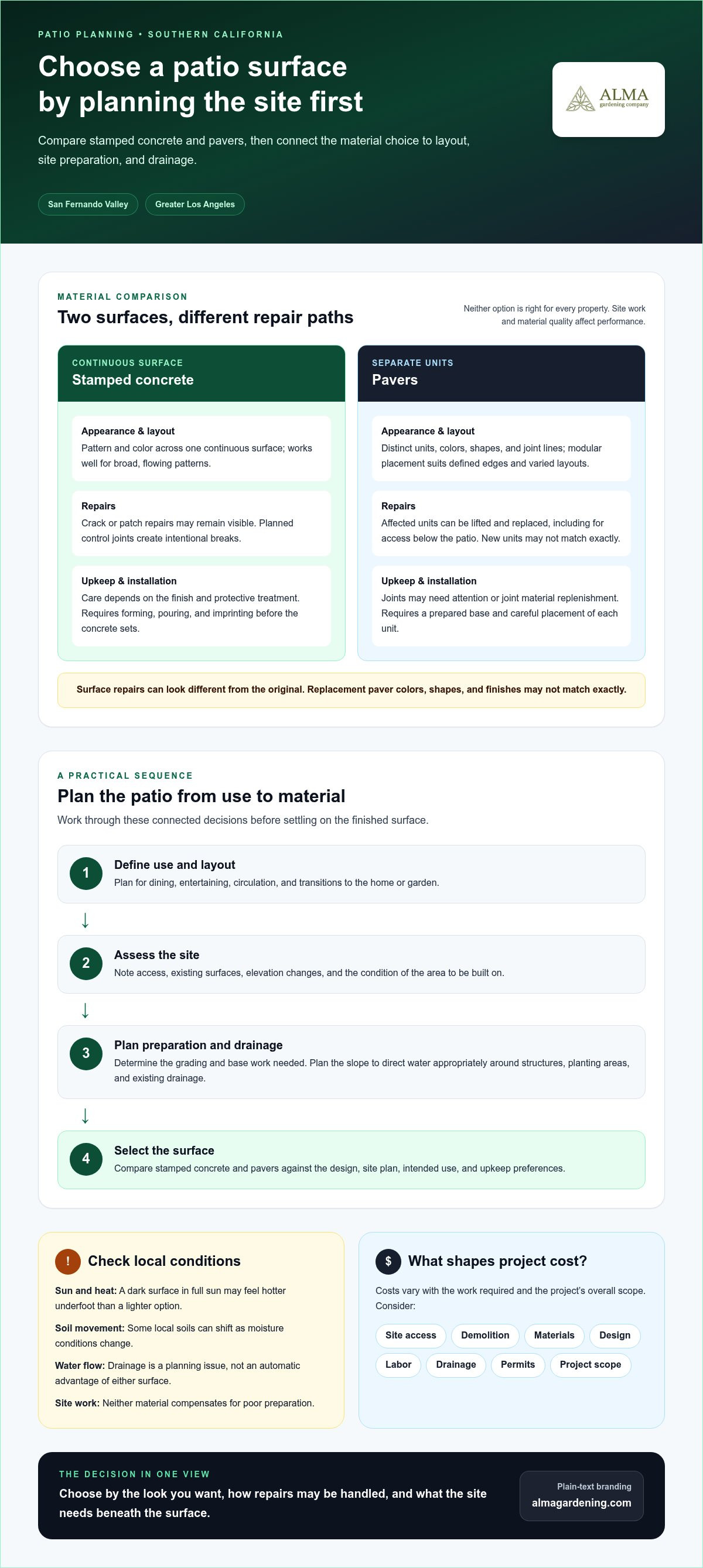
Make the material decision part of a wider patio plan. A clear sequence connects the surface to how you’ll use the space and what the site requires:
- Define the use and layout. Plan for dining, entertaining, circulation, and transitions to the home or garden.
- Assess the site. Note access, existing surfaces, elevation changes, and the condition of the area to be built on.
- Plan preparation and drainage. Determine the grading and base work needed before selecting a finish.
- Select materials. Compare stamped concrete and pavers against the design, site plan, and intended use.
What site preparation and drainage mean for the final choice
Both surfaces depend on sound preparation below the finished patio. Pavers need a suitable, compacted base and properly secured edges to support the units. Concrete work requires a properly prepared area before the pour, with joints planned for the slab. The existing surface, soil, access for equipment, and required excavation all shape that preparation. Coordinate drainage with the overall landscape design so water management is addressed before installation, rather than treated as a finish detail.
The stamped concrete vs pavers pros and cons comparison may narrow your options, but site access, demolition, materials, design, labor, drainage, permits, and project scope all affect project costs. A constrained entry or extensive removal can shape the work as much as the chosen surface.
With the site plan established, the patio material can be selected as part of a cohesive hardscape design.
Shape a Patio That Works With Your Landscape
Think beyond the patio’s footprint. Its edges, paths, planting areas, and connection to the home can make the whole yard feel more intentional. A well-planned surface should support how you gather and move through the space while fitting the character of your property.
The stamped concrete vs pavers pros and cons decision becomes clearer when it’s part of a complete outdoor design rather than a material choice on its own. Alma Gardening Company designs and installs paver, concrete, and decorative concrete features, and can coordinate landscape drainage as part of an integrated project. The company serves the San Fernando Valley and Greater Los Angeles, including Los Angeles, Sherman Oaks, Encino, Studio City, North Hollywood, Woodland Hills, West Hills, Glendale, Burbank, Beverly Hills, Culver City, Pacific Palisades, and Malibu. Contact Alma Gardening Company to plan a patio or hardscape project around your layout, site conditions, and priorities.
Frequently Asked Questions
Can stamped concrete be repaired if it cracks?
Yes. Before arranging a repair, note where the crack begins and ends, whether it crosses a control joint, and whether it appears to change over time. This information can help determine whether the repair should address only the surface or whether the underlying cause needs attention too. The suitable approach depends on the crack and the original installation.
Is stamped concrete more slippery than pavers when wet?
Neither surface is automatically safer when wet. Traction depends on the specific finish, texture, slope, and condition of the patio. For an area likely to get wet, such as a route near a hose or outdoor water feature, consider how the surface will be used and exposed. Evaluate the actual finish and layout together rather than choosing by appearance alone.
Can stamped concrete and pavers be combined in one patio?
Yes. A design might use stamped concrete for a main seating area and pavers as a border or transition to a path. Plan the meeting point carefully so the patterns, joints, and finished heights work together. Coordinate grading and drainage as well, so the two materials function as one outdoor space rather than separate surfaces.
