Standing Water in Your Yard? Drainage Solutions for Los Angeles Homes
A drain can move water, but a well-planned yard manages it without working against the landscape. Effective yard drainage solutions in Los Angeles may combine catch basins, channel or area drains, French drains, and grading. The right approach depends on where water collects and how it moves across the property. Coordinating drainage with planting, patios, and other hardscape helps manage runoff while keeping the yard cohesive.
Standing water can make outdoor spaces difficult to use and leave parts of the yard persistently soggy. The key is matching the drainage method to the problem, rather than simply adding a drain where water pools. This article explains how common drain types work, which site conditions guide the choice, and how drainage can fit naturally into a landscape plan.
Key Takeaways
- Match catch basins, channel drains, and area drains to where water collects and how it travels across your yard.
- Understand when a French drain can help manage underground moisture, including near retaining walls.
- Plan grading, planting, and hardscape together so water has a clear route away from vulnerable areas.
- Use a coordinated landscape design and installation plan to bring drainage features into a functional, cohesive yard.
Catch basins, channel drains, and area drains
During a Los Angeles rainstorm, track where water from the roof and yard gathers. Gutters, downspouts, and surface inlets need a coordinated route to a suitable outlet.
Catch Basin and Area Drain Collection
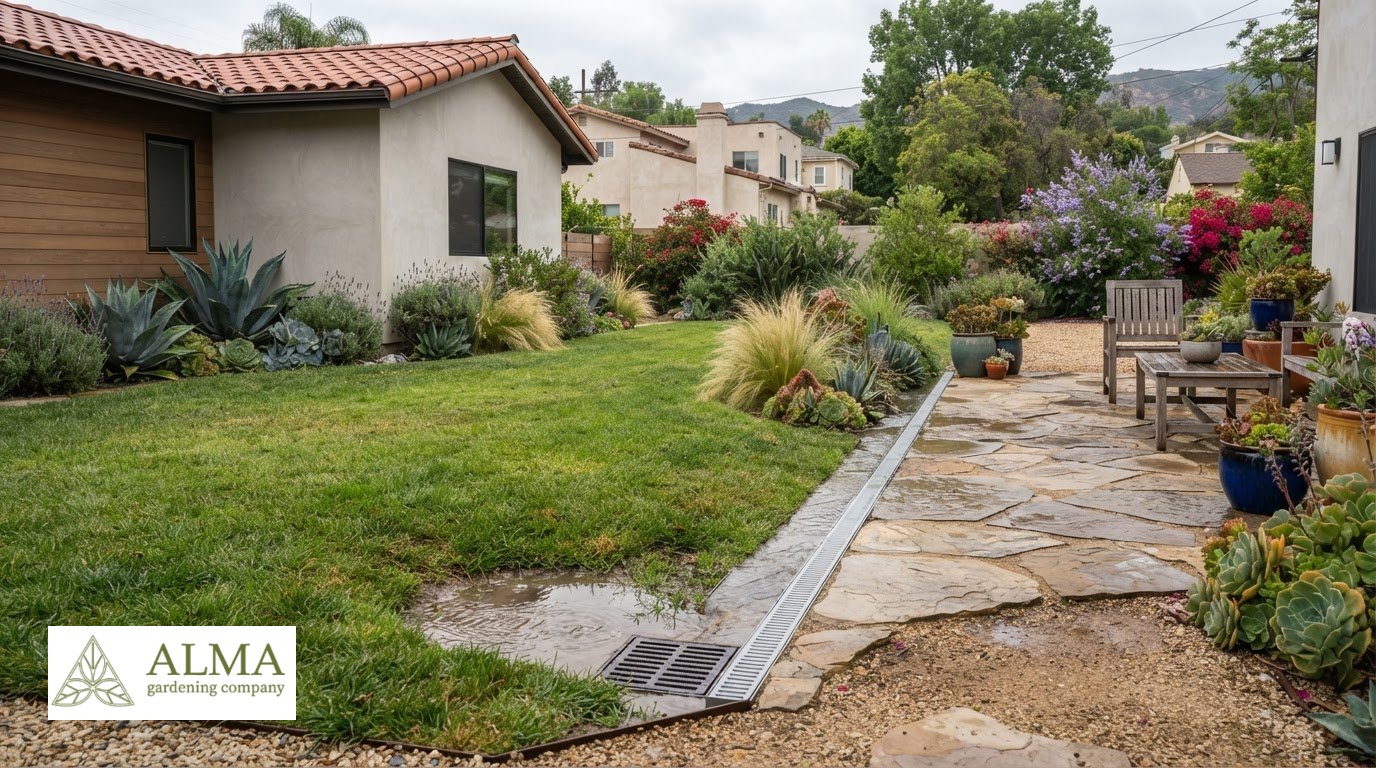
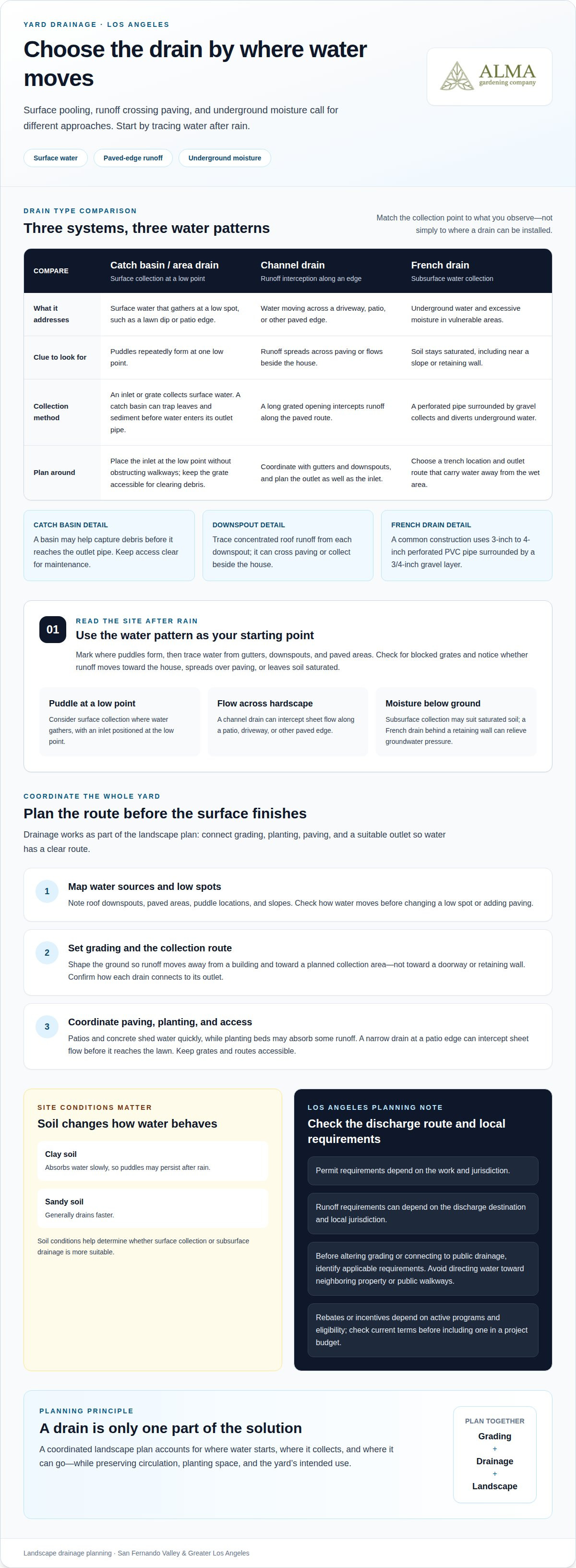
A catch basin or area drain collects surface water at a low point, such as a lawn dip or patio edge. A catch basin can also trap leaves and sediment before water enters its outlet pipe. Note where puddles form, then check whether an inlet can sit at that low point without obstructing walkways. Keep the grate accessible for clearing debris.
Channel Drain Runoff Capture
A channel drain uses a long grated opening to intercept water along a driveway, patio, or other paved edge. Coordinate it with gutters and downspouts: roof runoff concentrated at one outlet may otherwise cross paving or collect beside the house. During rain, trace the downspout discharge and consider whether a channel drain can capture the flow. Plan the outlet as well as the inlet.
A drainage plan should address more than pipework and water collection. Alma Gardening Company coordinates drainage with landscape grading and paving, so the project scope can account for the water’s route across the yard.
Residential permit requirements in Los Angeles depend on the work and jurisdiction. Before altering grading or connecting to a public system, identify the local requirements that apply to the property.
Los Angeles County runoff requirements can depend on the discharge destination and local jurisdiction. Plan a route that avoids directing water toward neighboring property or public walkways, and establish applicable requirements before connecting to public drainage.
Clay soil absorbs water slowly, so puddles may persist after rain; sandy soil generally drains faster. Soil conditions help determine whether surface collection or subsurface drainage is more suitable.
To investigate poor drainage, mark puddle locations after rain and trace water from gutters, downspouts, and paving. Check for blocked grates and runoff flowing toward the house.
Improper grading can direct runoff toward a home’s foundation or trap water beside paving. Before changing a low spot, check the ground’s slope and the route water needs to take.
French drains and surface drain systems
French drains address underground moisture, while surface systems collect water flowing across lawns and paving. To choose between them, identify where water travels and whether it pools above or below ground.
French Drain Installation
A French drain collects and diverts underground water away from areas vulnerable to accumulation and excessive moisture. A common construction uses a 3-inch to 4-inch perforated PVC pipe surrounded by a 3/4-inch gravel layer. The trench location and outlet route matter: water needs a path away from the wet area. Behind a retaining wall, a French drain can relieve groundwater pressure.
Surface Drain System Components
Surface drains intercept water before it seeps into the soil. A grate or inlet collects runoff, and a connected pipe carries it toward an appropriate discharge point. For example, a low lawn beside a paved patio may need an inlet where water pools, while a French drain may suit moisture moving through soil. Keep grates accessible for debris removal, and plan the outlet before installation.
Use the puddle pattern after rain to guide the choice. Water spreading over paving points toward surface capture; saturated soil near a slope or retaining wall may call for subsurface collection. A site plan can coordinate both systems, their outlets, and grading. For a coordinated approach, explore landscape drainage planning as part of a broader yard design.
Drainage integration with landscapes and hardscapes
Treat drainage as part of landscape design, not a pipe-only fix. Coordinate grading, planting beds, hardscape, and drain routes before installing a patio or walkway. Planning the route first helps prevent paving over a low area that needs to carry runoff.
Yard grading channels water away from a building, especially its foundation. Shape the ground so runoff moves toward a planned collection area, such as a planted basin, rather than toward a doorway or retaining wall. Confirm how each route connects before work begins.
Patios and concrete can shed water quickly, while planting beds may absorb some runoff. At a patio edge, a narrow drain can intercept sheet flow before it reaches the lawn. Permeable surfaces let water pass into underlying layers, but performance depends on base preparation and soil conditions.
Rebates or incentives for rain gardens, permeable landscaping, or stormwater capture in Los Angeles depend on active programs and eligibility. Don’t assume a project qualifies; check current program terms before including an incentive in the project budget.
Start by mapping roof downspouts, paved areas, and low spots. Then decide whether runoff should flow to a rain garden, a drain, or permeable paving. Keep the route accessible for maintenance and avoid directing water onto neighboring property. A coordinated plan preserves circulation, planting space, and the yard’s intended use.
Alma Gardening Company: Landscape Design and Installation
Alma Gardening Company helps homeowners incorporate drainage into a broader landscape design and installation plan. Bring the team in when standing water affects an area you’re planning to renovate, such as a patio, planting bed, or paved walkway. Coordinating grading and hardscaping with the layout helps keep water routes functional instead of treating drainage as an afterthought.
Drought-tolerant landscaping can complement carefully planned hardscape and paver installation for a cohesive, water-wise yard. The right layout depends on the property’s slope, soil, existing surfaces, and intended use. Share where water collects and what you want to change to start planning for both function and appearance.
Contact Alma Gardening Company to discuss your landscape project.
Plan Your Next Step With Confidence
A useful next step is to define what you want the outdoor space to do, not just which area needs attention. Consider how you use the yard now and what would make it more comfortable or practical. For yard drainage solutions in Los Angeles, those priorities can guide decisions about which spaces to preserve, change, or make easier to enjoy.
Write down your project goals and any constraints, such as existing paths, planting areas, or preferred outdoor activities. A clear picture of both the drainage problem and your intended use gives the planning conversation a stronger starting point.
Thoughtful planning can turn a persistent yard concern into an opportunity to create a more inviting outdoor space.
Frequently Asked Questions
What are the most effective yard drainage solutions for Los Angeles homes?
The most effective approach starts by finding the water source, not choosing hardware first. Track whether wet areas appear after irrigation, rainfall, or both. If they persist when irrigation is off and the weather is dry, inspect valves and buried lines for leaks. Note whether the wet area grows, shifts, or stays confined, since that pattern can help narrow down the cause.
How should rainwater be directed away from a house foundation in Los Angeles?
Keep the ground beside the house clear enough to observe after rainfall, and note where water first gathers. Check whether soil has settled near the wall or landscaping has created a hollow that holds runoff. Avoid adding soil or paving without considering door thresholds, vents, and existing drainage openings. These details can help prevent a quick surface change from creating a new path for water to enter.
Are French drains, dry wells, and catch basins suitable for Los Angeles yards?
These systems can suit Los Angeles properties when site conditions support the planned design. Before selecting one, assess how quickly the soil takes in water, the available installation area, buried utilities, and a workable outlet or overflow route. A dry well needs adequate space for infiltration, while a narrow side yard may limit placement. These practical constraints help determine which option fits the property.
Which drainage contractors serve Los Angeles and how do their services compare?
A drainage plan should address more than pipework and water collection. Alma Gardening Company coordinates drainage with landscape grading and paving, considering how each plan routes water across the property.
What are Los Angeles County rules for discharging or redirecting stormwater runoff?
Runoff requirements depend on the discharge destination and local jurisdiction. Avoid directing water toward neighboring property or public walkways, and establish applicable requirements before connecting to public drainage.
